
Editor’s Note: This article is a review and contains subjective thoughts, opinions and critiques.
It is a truth universally acknowledged that a group of starving Ph.D. students must be in want of a four-foot Treehouse burrito. At the Tresidder eatery offering seven options priced from $62.95 to $67.95 –– Baja Fish, Cuban Missile, Cal Veggie, Grilled Chicken, Grilled Steak, Mexi Veggie and Thai –– the four-foot burrito is objectively the best way to feed 10 to 12 grad students. But how exactly does this colossal culinary feat come to be?
Tucked into boxes wider than a standard doorframe, the logistics of the four-foot burrito have (probably) plagued the minds of thousands of students, while the burrito itself has been the focus of exactly one Daily Humor article. During a recent grad student meeting, seated around two long boxes of the burritos in question, the catering-only menu item was at the forefront of our minds.
“Do they have a four-foot tortilla?” asked Meghan Marangola, a second-year Ph.D. student.
“Surely they don’t stop the entire kitchen for two minutes to fold the burrito!” exclaimed Tom-Lukas Luebbeke, a first-year Ph.D. student.
“They just cut up a bunch of burritos and put them in a box,” theorized Ben Sherwin, a third-year Ph.D. student. Which raised the all-important question: What does Treehouse do with the ends of the burritos?
Needless to say, riddled with questions aplenty, someone had to get to the bottom of this.
However, in order to understand the four-foot burrito, one must understand Treehouse itself. Treehouse was founded by owner Ray Klein, who also opened Ray’s Grill and CoHo. Years before it transformed into the beloved Treehouse, Pollo Rey (a.k.a. Pollo’s) opened its Stanford campus location in 1997, according to Palo Alto archival records. Founded in 1990 in Mountain View, Pollo Reys popped up all over the western U.S. with locations in California, Idaho and Oregon. Alas more answers necessitate more questions: Why the switch from a Mexican restaurant to Treehouse, which serves up everything from Hawaiian teriyaki to tikka masala?
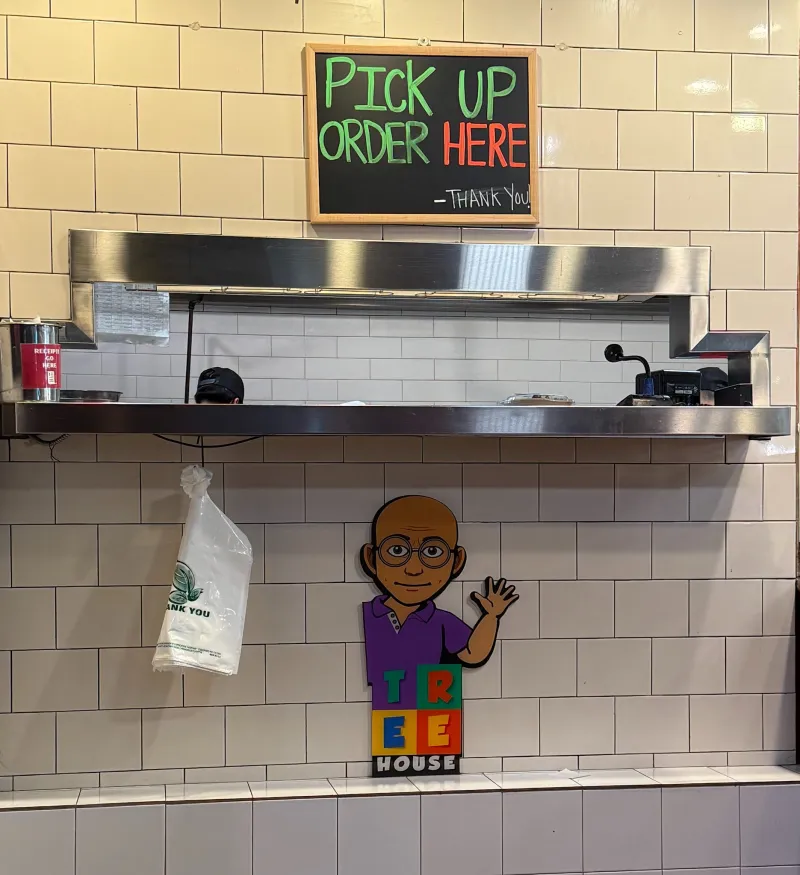
The first order of business was getting in contact with the restaurant, a task that proved to be rather arduous. After a week of radio silence, I realized no one checks the Treehouse website’s contact us form.
Option two was to ring up Treehouse. I called at 3:30 p.m. on a Wednesday afternoon and rambled about how I was a writer for The Daily, wanted to learn about the four-foot burrito, was there someone I could talk to, etc. The man who picked up the phone simply said, “Uh, can you call back later? We’re kinda busy with catering orders right now.”
Well, alright. I called back again and was directed to swing by Treehouse Friday morning. “I know how to make the burrito, but I don’t know nothing else about it,” the same man on the phone told me. Despite my growing confusion, at least I had an appointment with The Big Boss at Treehouse, 10:00 a.m., Friday morning.
I met with Ishmael Chipres, manager of Treehouse, and spoke with him about his nearly 30 years at the establishment. He told me that behind the transition from a traditional chicken shop was a desire to cater more to the diverse Stanford community.
“There are a lot of students of different backgrounds, so we added things like hamburgers and Asian food,” Chipres said. “I want students to come to Treehouse and find something they like.” Chipres said he created the recipes himself and that for as long as he works at Treehouse, the menu will stay the same.
But I digress: People are here to learn about the burrito. The four-foot burrito has been around since the times of Pollo Rey’s, where it started as the humble chicken burrito. Roughly three decades and six variations later, the method for making the burrito remains unchanged. Evidently, name-dropping The Daily gets you far: I was invited into the kitchen to personally watch operations take place.
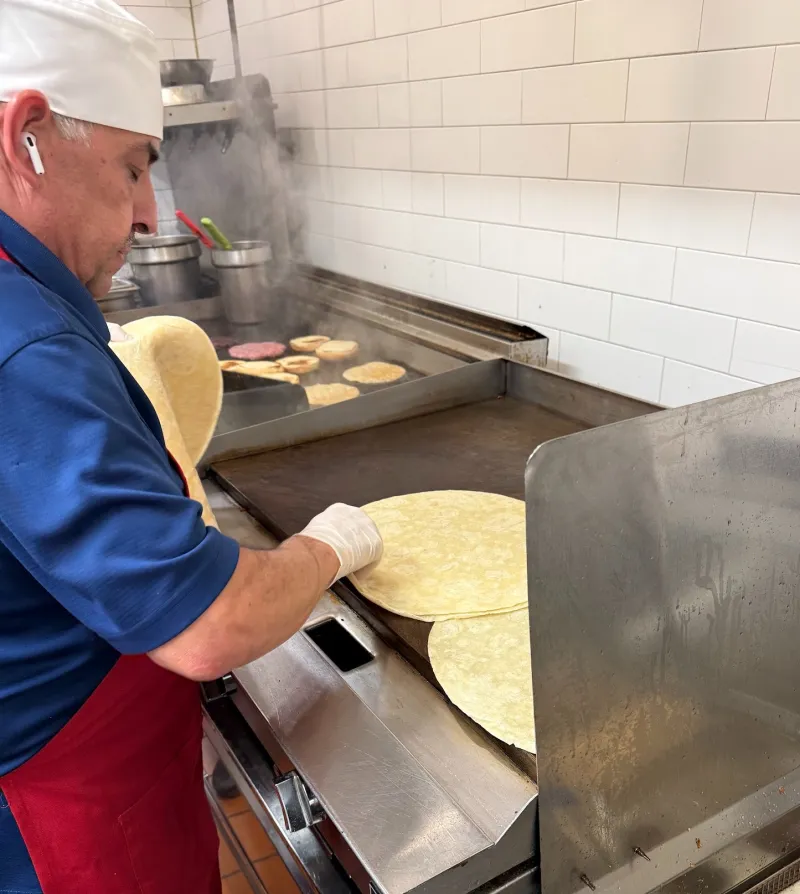
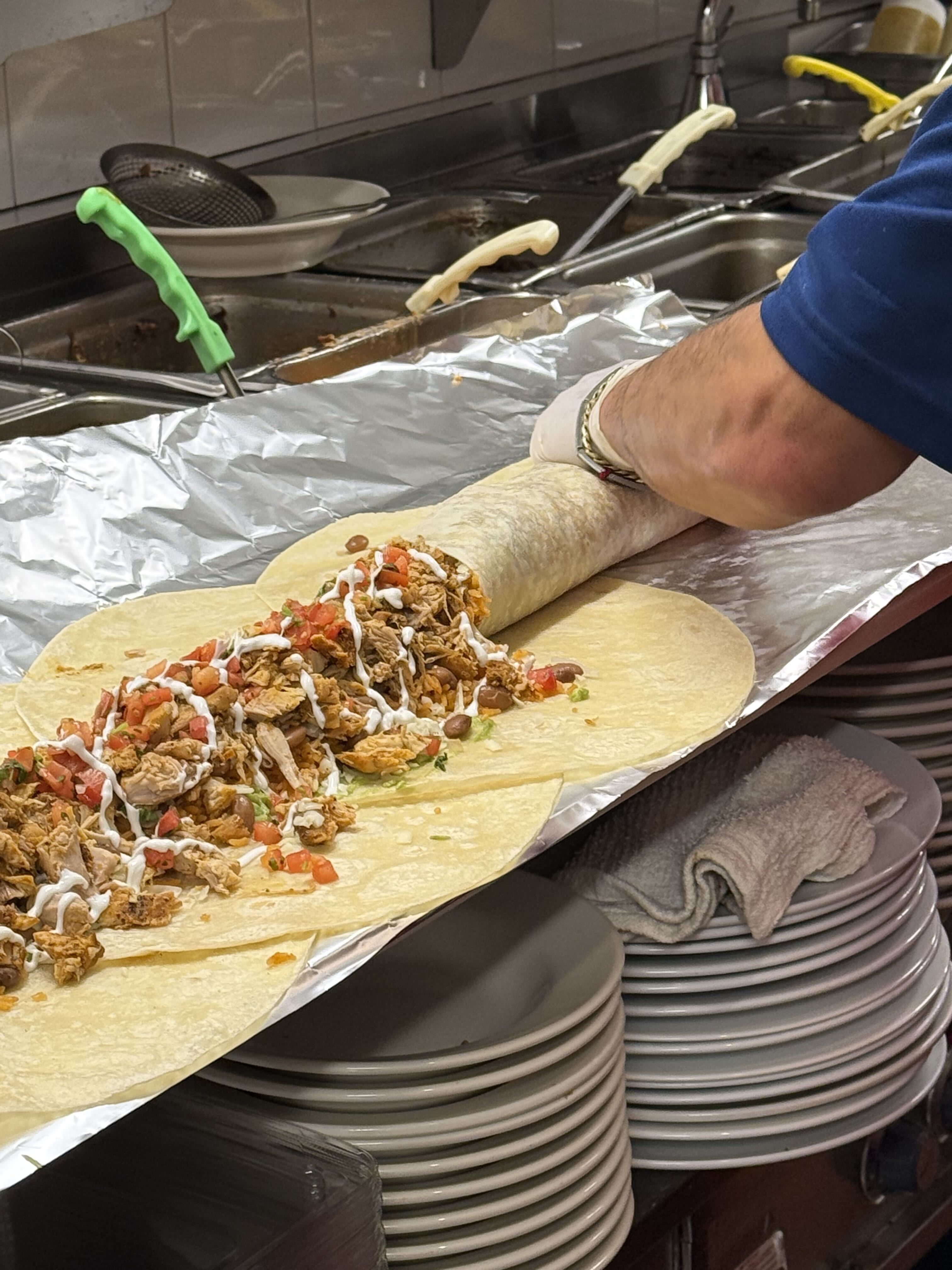
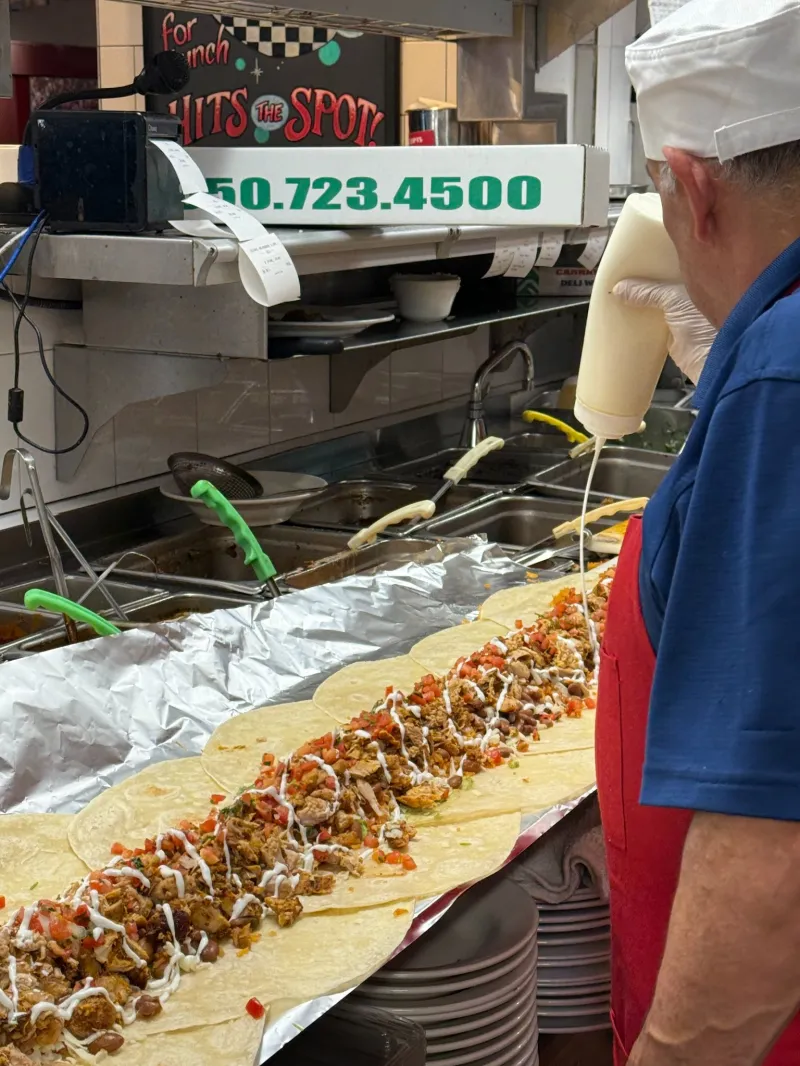
Here’s the process. Every burrito starts with seven overlapping grilled tortillas laid out in a line atop a 4’ piece of aluminum foil. They’re then piled with guac, rice, beans, protein, cheese, pico and sour cream, in that exact order.
Finally, the crux of my whole investigation, the wrapping: They just roll it up. That’s it. Each tortilla gets wrapped on at a time atop the mound of fillings with either side tucked in, much like your traditional burrito. “The easiest part,” as Chipres put it.
No pausing the kitchen, no special rolling machine, no concatenation of several burritos. One person. They then cut the burrito into 12 pieces, wrap it up with the foil, box it and send it on its merry way.
On the particular day I came in, Treehouse had received seven four-foot burrito orders, but that figure is never consistent.
“Some days we’ll have 26 to 30 orders. Some days I’ll have zero. It’s always different,” Chipres said.
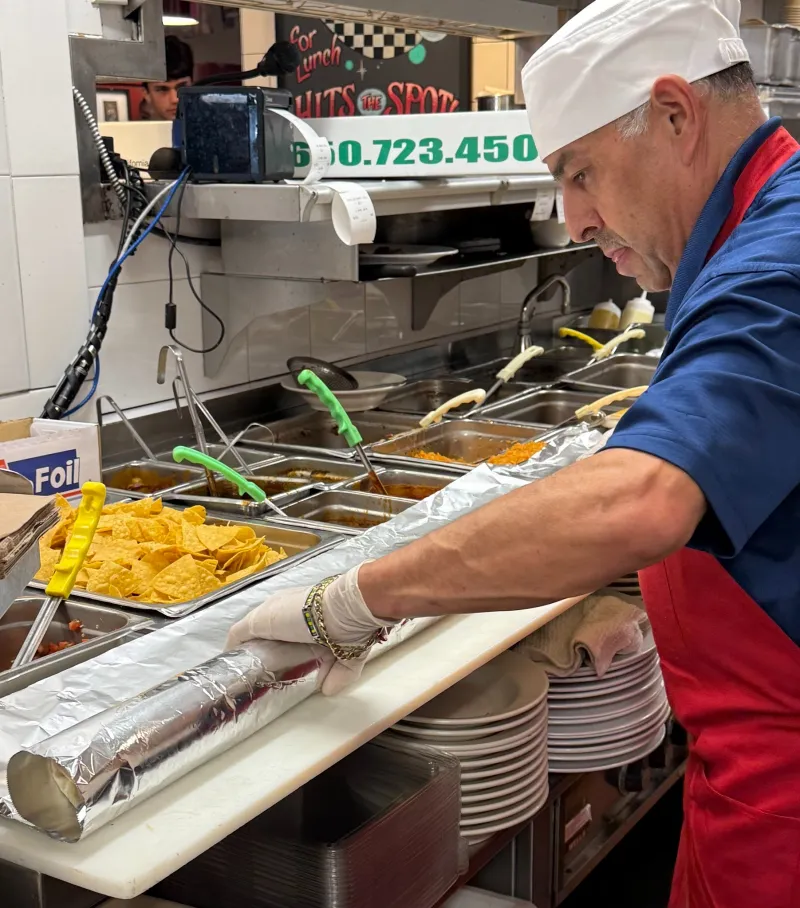
I wish I could say all my questions were answered. Unfortunately, they were not. Chipres tucked the two end pieces in (as shown in the photo), but why do some burritos have the two ends cut off? Why four feet and not five? What is Chipres listening to while he grills?
So did I uncover the great mystery of the four-foot burrito? I’ll let you be the judge.
More importantly, I learned about the people that craft this Stanford staple. Even while making the burrito, Chipres was still looking out for his kitchen staff, whether by grabbing fries or handing someone a bowl. They were laughing about not being able to find a hand towel or joking that “Ishmael was trying to hire a student.” Chipres and his team put their love for cooking into everything they prepare, and the next time I’m faced with one of those large green-and-white boxes during a group meeting, I’ll think of them.
Although, now that I think about it, I don’t think I’ve ever actually measured a four-foot burrito. Perhaps another investigation is on the horizon. The four-foot burrito: Is it embellishing its length?