
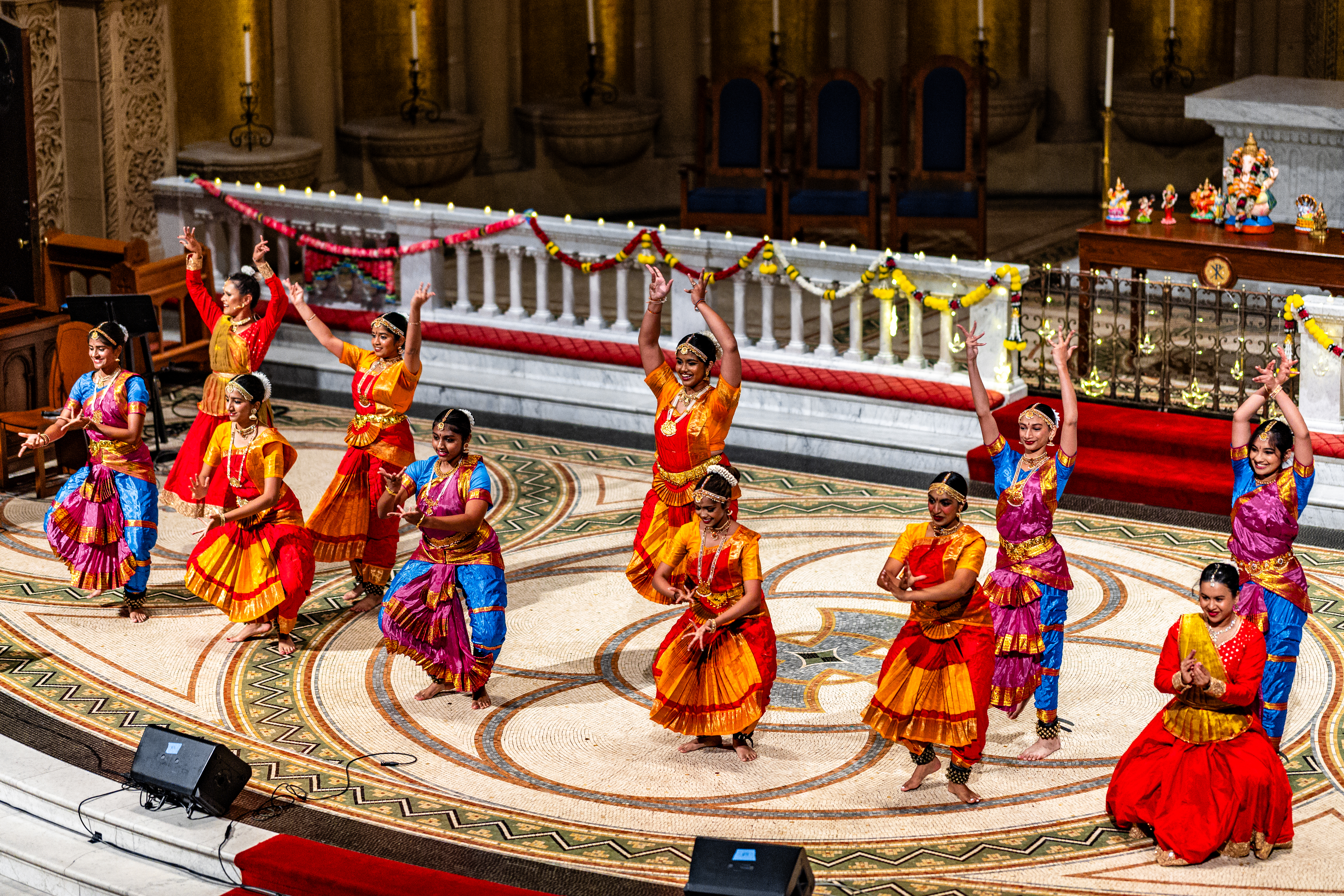
On Saturday evening, over 1,000 people from Stanford and the broader community poured into Memorial Church to celebrate DiwaliFest 2026.
Often referred to as the Festival of Lights, Diwali is a five-day celebration that owes its name to the Sanskrit word Deepavali, or “row of lamps.” It is not set on a particular day in the calendar year — rather, celebrations begin on the darkest night of the month, and observers of the holiday respond to the darkness by lighting lamps.
The evening event, hosted by the Stanford Hindu Students Association (HSA) with the support of the Office of Religious and Spiritual Life (ORSL), opened with HSA leading a Sharada puja, a ritual seeking blessings from Maa Saraswati, the goddess of knowledge. It was followed by opening remarks from HSA leadership and ORSL staff.
Kula Pradipa, Chaplain Associate and Advisor to Hindu Life at ORSL, expressed optimism for the growing Hindu community at Stanford. “Hindu Life at Stanford is growing and we are excited to see it blossom!” he said.
The program featured a number of student groups and alternated between music and dance performances.
Spicmacay set the tone with an instrumental performance of a Carnatic composition, a genre of Indian Classical music typically featuring the mridangam, veena and violin.
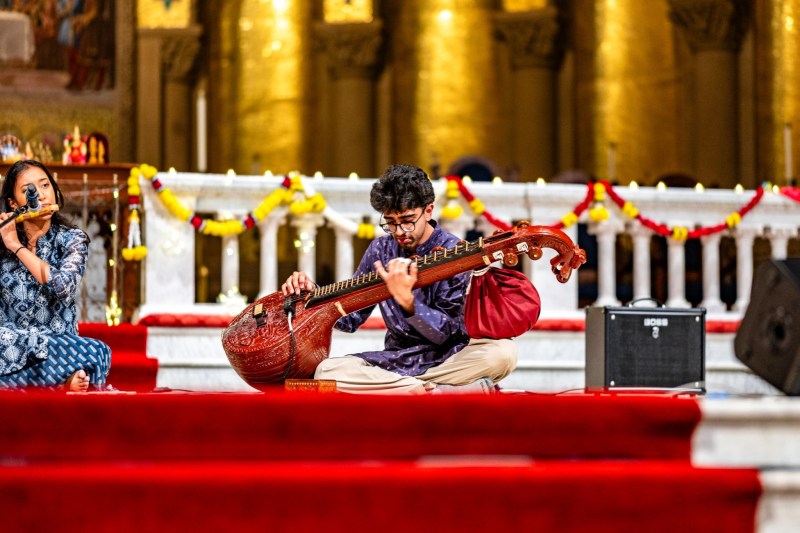
Raagapella, Stanford’s all-gender South Asian a capella group, added fusion to the mix with a number borrowing from both “Silsila Ye Chahat Ka” by Shreya Ghoshal and “Ae Dil Hai Mushkil” by Arijit Singh.
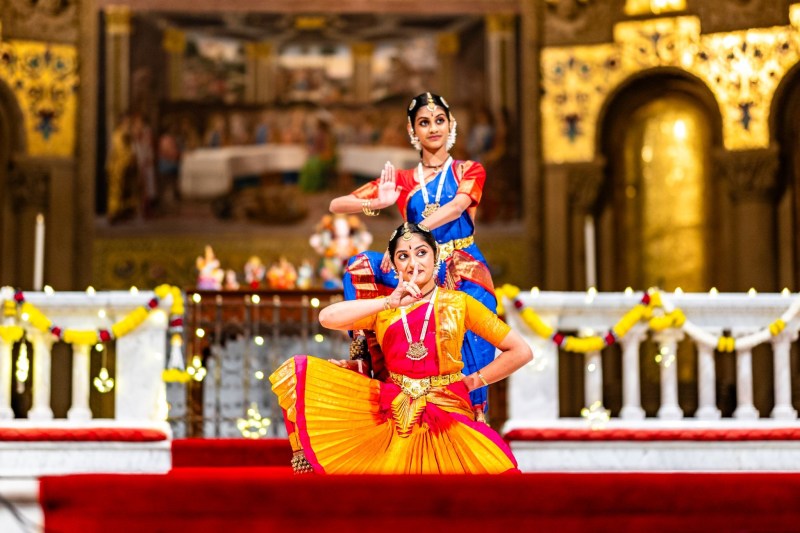
As for the night’s dance elements, Stanford Noopur and San José State University Prakriti performed Bharatanatyam, an Indian classical dance form known for its emphasis on facial expression and storytelling.
Stanford Basmaati Raas added a whirlwind of energy typical of Garba, a folk dance originating from the Indian state of Gujarat.
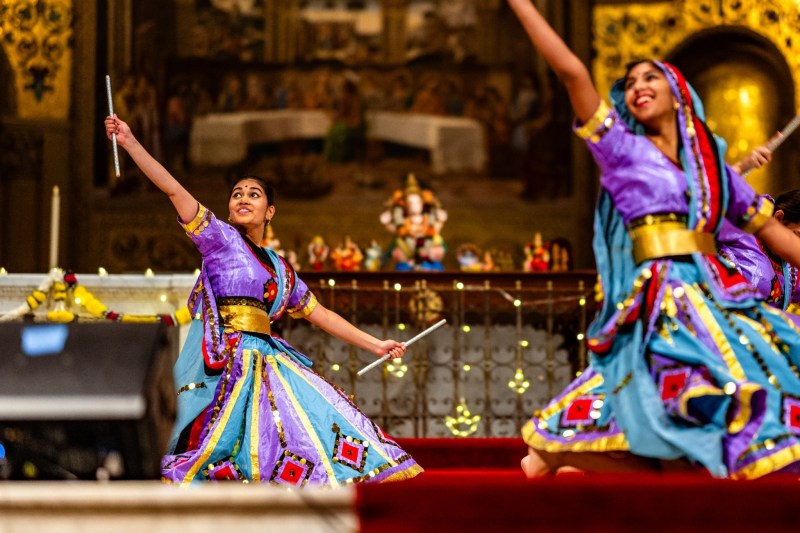
“Having my Raas team perform brought so much joy and energy to the celebrations,” said Raas captain Prisha Shroff ’29. “It genuinely felt like HSA had brought a little piece of home to Stanford.”
The performances concluded with a grand finale by the Aditya Prakash ensemble, an L.A.-based eclectic music group blending jazz and Carnatic traditions.
At intermission, former HSA president Akash Shah ’26 took the stage and elaborated on the significance of light. “When you say Namaste, it implies that the light in me bows to the light in you,” he said. “The idea of Diwali is to appreciate the light that exists within all of us. It is the light that symbolizes wisdom, the light that symbolizes truth, the light that symbolizes our nature.”
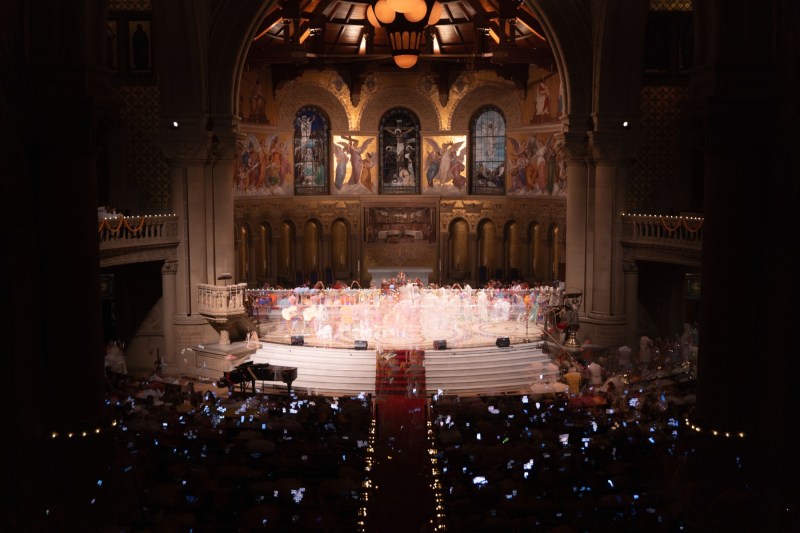
Shah then invited members from the audience to share their unique Diwali experiences on stage.
One attendee recalled how in her hometown of Punjab, many cultures celebrate Diwali together. She shared how she and her siblings would decorate their house so it was the brightest on the street, perform Lakshmi Poojan (a key ritual inviting wealth and prosperity) and make sweets.
According to Sid Bellam ’29, HSA co-president, there was a common thread throughout the attendees’ stories.
“Though the stories differ, they all share a common message: the triumph of light over darkness, knowledge over ignorance and good over evil,” he said.