
The Stanford Civics Initiative (SCI) is planning a large cluster hire in the humanities in coordination with the political science, classics and philosophy departments. SCI hopes to hire 10 new senior tenure-track faculty, with four current searches ongoing for two funded positions in History of Political Thought, Classics and Civics and Political Theory.
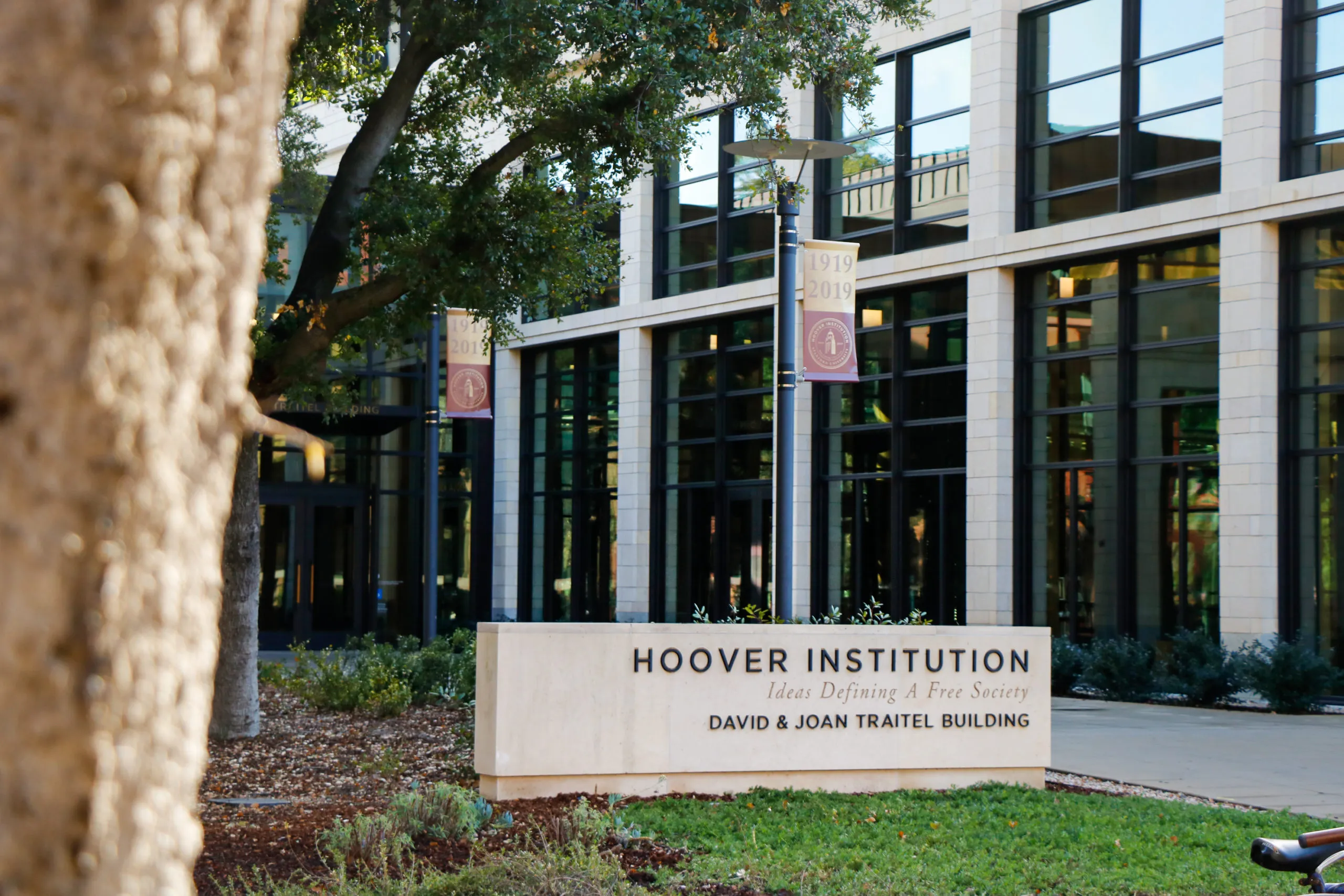
Some members of the history faculty, several of whom spoke to The Daily, have criticized the decision. The concerns they have expressed within the department focus on whether the Civics Initiative could interfere with departmental hiring practices and whether the hire will be influenced by the Hoover Institution.
According to the hiring ads, the departments seek applicants “whose approach to pedagogy is aligned with the Statement of Principles of the Alliances for Civics” and includes links to the Alliance for Civics in the Academy (ACA), a Stanford-and Hoover-sponsored “network of instructors in higher education.” While fellows at Hoover occasionally teach courses, the Hoover Institution does not offer credit-bearing courses.
A cluster hire is university parlance for a joint hire where faculty search committees from each department involved put together a list of candidates, and a central or “super” committee picks which candidates go forward. The super committee for SCI is composed of representatives from each department, chaired by French professor and Faculty Director of the COLLEGE program Dan Edelstein.
Edelstein, who is also one of SCI’s two directors, said that Provost Jenny Martinez approved the search amid a nationwide wave of interest in civics, high student demand and a desire among the university administration to encourage research in the area.
“Our job as a super committee is simply to rank the finalists, and then the dean makes a decision,” Edelstein said.
The new hires will split teaching duties between the SCI and their home departments, according to Edelstein.
History professor Jessica Riskin voiced skepticism regarding the initiative, pointing to the ACA principles.
“I think the Hoover Institution is an openly ideological entity,” said Riskin, who serves as co-chair of the University’s American Association of University Professors (AAUP) chapter. “The mission statement says that the institution is ‘dedicated to combating the evils of Karl Marx.’ I think it’s fine for a think tank to have an open ideology. But I don’t think it’s fine for such an entity to be defining faculty positions or curricular content in accordance with that ideology,”
Riskin told The Daily that she was not speaking on the AAUP’s behalf.
Edelstein and Josiah Ober, a political science and classics professor and Edelstein’s co-director of SCI, pushed back against the characterization of SCI and the ACA as being Hoover-led.
“I think it’s a little bit of a misqualifier to say ACA’s line is Hoover’s line,” Edelstein said. “The Alliance was created by Josh [Ober]. Hoover didn’t ask us to do this. This is something that we believe is important in civic education.”
Ober jointly drafted the principles included in the job ad alongside leaders of civics initiatives from across the country at a meeting in the spring of 2024 hosted by SCI and Hoover’s Center for Revitalizing American Institutions (RAI). “The group was ideologically diverse. The conversations were very productive,” Ober said.
The principles included in the job ad mention that “faculty must intentionally engage with historically significant competing arguments on contested questions of civic life, oppose indoctrination, and model the democratic values of open inquiry and freedom of expression.”
Riskin criticized the inclusion of the principles not because she objected to their content, but because of the “pragmatics of the issue.” She said that it should be up to the faculty to determine pedagogical principles.
On a campus that Riskin already considers to be intellectually diverse, the push for “viewpoint diversity” that she sees underlying the ACA’s principles strikes her as a call to “bring in right-wing views.”
Classics professor Christopher Krebs, director of undergraduate studies in the department, said he was “proud” that Classics contributed so strongly to SCI’s work. He said he would “find it a little troubling if we had reached a point where we reject a notion that we principally hold to be solid because it is also embraced by someone we otherwise disagree with,” referring to the ACA’s principles.
Civics initiatives have flourished across the U.S. in recent years. Stanford’s was one of the first, launching in 2018. The University of Texas (UT) Austin’s Civitas Institute and the University of Florida’s (UF) Hamilton School both launched in 2022, followed by similar programs at the University of North Carolina (UNC) Chapel Hill and in Ohio.
History professor Priya Satia said that civics initiatives are “funded in part from quite dark and dubious sources,” and that she would like to see them emerge more organically.
“I object to the far-right claim that we don’t already teach civics already, the idea that it needs to be forced upon the university,” Satia said.
Ober drew a distinction between Stanford’s program and those at large state schools like UF which state law mandated without faculty consultation. In his view, it was important that private universities like Stanford offer an alternative to state-mandated civics curricula. Regarding Florida, Ober said that he hoped “faculty there will be saying, ‘we can do this for ourselves.’”
Still, Ober and Edelstein both saw crossover between civics schools in Republican-led states and SCI. Edelstein said that SCI works with academics from state-mandated civics academies and ”what we’re actually trying to do is sometimes quite similar. But I think we got there in different ways.” Ober said such academics recognize that “we must avoid indoctrination at all costs.”
The workshop that framed the Civics Alliance’s statement of principles drew a wide range of humanities faculty, including those from state-mandated Civics Initiatives, such as Ben and Jenna Storey of the Civitas Institute and Nathan Pinkoski, then at Florida’s Hamilton School.
Satia also criticized SCI for diverting attention away from necessary hires. She said that while any hiring in the humanities was welcome, the deans had not approved searches in fields that history faculty and students identified as vital. “We, as a department, should be able to assess on our own what the best direction to evolve towards is, and the right to do so is essential to academic freedom.”
History professor Matthew Sommer is heading the department’s search in the cluster hire. He wrote that “adding one new colleague is unlikely to have much effect on the department’s overall shape or trajectory.” According to Sommer, the history department would only advance a candidate in the search if they identified someone who would serve the needs of both the department and SCI. “Otherwise, we will not seek to hire anyone,” he wrote.
Sommer added that the history department’s search committee had felt no outside pressure. “We are running our search according to Stanford and History Department policies and standards,” he wrote. Sommer acknowledged the statement of principles of the Alliance for Civics in the Academy but wrote that he had not heard of any objections, adding that the principles seemed “pretty straightforward” to him.
Students and recent alumni spoke fondly about their experience in SCI classes. Fiona Clunan ’24 J.D. ’28 said that one of the reasons she decided to stay at Stanford for law school is that she believes the university has taken steps to encourage pluralism and civic education.
“Class instructors generally try to present many sides of a debate.” Isamar Marte Nunez ’26 M.A. ’27 said.
The first class Edelstein taught through the Civics Initiative was “Classical Leadership” with Barry Strauss, a senior fellow at Hoover. “We were reading Plutarch’s Lives the way you’re supposed to read it, which is not ‘what happened?’ but instead ‘what can we learn from this example of leadership?’ People would just be talking the whole time, and we’d carry on discussing after class.” Edelstein said.
“Outside of the controversy, there is a different angle to this,” he added. “It might be an opportunity to return to when the humanities weren’t just deconstructing power, but were also teaching leadership.”