
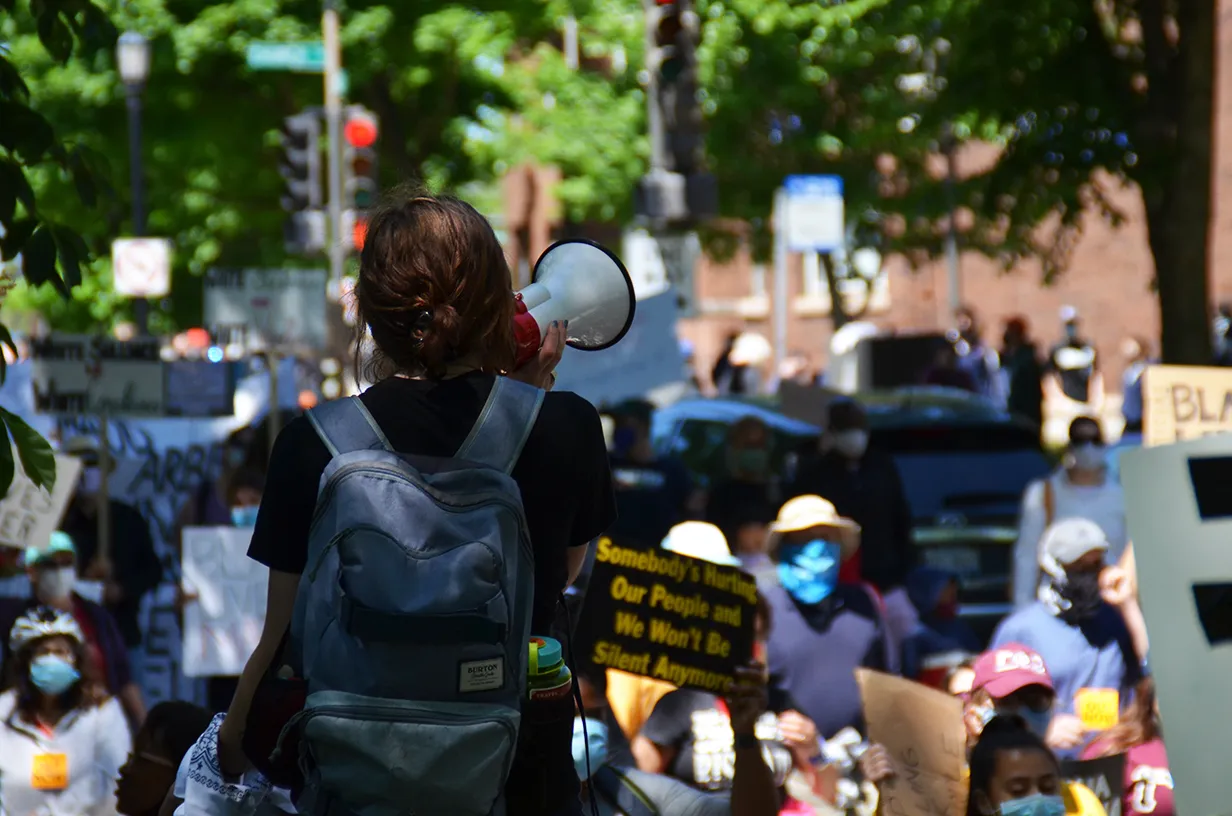
The college free speech movement originated at the University of California (UC) Berkeley in the 1960s, and that same decade, students at Stanford organized to resist the draft for the Vietnam War. Now, both schools have their own policies that reckon with their respective modes of campus expression.
Students at both schools have engaged in political action in light of recent events, including the Israel-Gaza conflict and ICE raids. According to political science professor David Laitin, part of the motivation is individual legacy. “Students may want to, in a sense, create histories for themselves that they can tell to their own children,” he said. “And I think that’s important for students who will move on to respectable careers in the coming years, [to say] that they were there. Their voices were heard when policies were so objectionable.”
Student action differs between UC Berkeley and Stanford, according to Laitin. He pointed out that the location of the two universities influences their protests’ potential for impact. While Berkeley is directly situated in a city, Stanford’s campus is separate from the neighboring Palo Alto.
“Over the years, Berkeley has been able to garner more attention than the protests at Stanford in part because of the fact that Berkeley borders on a highly populated city and the boundary between the campus and Oakland is porous,” Laitin said.
The geographic makeup of the two campuses differs, and Stanford’s sprawling campus can physically make marches more difficult.
According to Dan Mogulof, UC Berkeley’s assistant vice chancellor for communications and public affairs, Berkeley has student activism policies to protect the academic goals of the university.
“These long-standing rules are designed to ensure that free expression in support of any cause or purpose can safely take place without, among other things, disrupting university programs and operations, or blocking access to buildings or safety-vehicle throughways,” Mogulof wrote in an email to The Daily.
According to Laitin, student activism policies at Stanford similarly ensure education can proceed amidst civil uprising.
“The University has a mission to educate and it should be able to while students are actively engaged in protest, and therefore there have to be some regulations about the limits to political action on campus,” Laitin said. However, he noted that politically active students aren’t necessarily looking to disrupt education at Stanford.
UC Berkeley follows “Time, Place and Manner” (TPM) rules which regulate the locations and activities students can engage in during their demonstrations. For example, their administration prohibits students from sleeping outside at night or attaching anything to campus buildings. According to Laitin, these policies have now become the standard for private and public universities across the country.
Stanford follows similar TPM rules, while also restricting protests from impeding the events being protested. Stanford also bans the use of University resources for political activity.
Policies don’t always strike the perfect balance. Stanford comparative literature professor David Palumbo-Liu said Stanford’s policies, and potentially those at Berkeley, have the ability to limit student expression.
“While they are meant to protect the educational experience, some (not all) policies have the effect of closing off important opportunities for education on topics Stanford shies away from,” he wrote.
Mogulof said UC Berkeley actively encourages free speech and political expression today.
Palumbo-Liu explained how student action has always been important throughout history. Laitin echoed this sentiment, noting that student protestors are especially well positioned to attract attention both because of the time they have to devote to the cause and attention from the press.
At Stanford, students have responded to causes including the Civil Rights Movement and the Vietnam war. They have also protested issues within the university, like advocating for a more diverse faculty in the 1960s or when Native American students successfully fought for the removal of an American Indian mascot in 1970.
“There is no better example than the student activists in Serbia, who democratically toppled an authoritarian and corrupt president,” Palumbo-Liu wrote. “They galvanized the public and changed history.”