
Editor’s Note: This opinionated piece is part of a series in which Daily writers argue opposite sides of the same debate. Read the op-ed in favor of Trump’s federal freezes here.
On Nov. 9, 2026, former US Homeland Security Advisor and hardline conservative Stephen Miller assumed the position of White House Chief of Staff, signaling to the world that President Donald Trump does not intend to back down on policies directly rejected by voters in the 2026 midterm elections.
Miller is arguably most famous for his role as an architect and top advisor in the Trump administration’s crackdown on immigration, serving as the author of executive orders designed to limit Muslim immigration into the country and proposing that the National Guard be called in to assist with mass deportation.
Miller is also the founder of America First Legal, a right-wing legal firm that challenges gender identity and diversity, equity and inclusion (DEI) policies in K-12 and higher education. America First Legal has targeted institutions like New York University (NYU) and Northwestern for discrimination against white men, alongside Johns Hopkins University for DEI practices in curricula, scholarships and faculty hiring.
While many have focused on what Miller’s new role means for immigration, it is also important to consider implications for the education sector and what it indicates about the president’s education agenda as a whole.
To promote an anti-immigration hardliner like Miller signals that the Trump administration will continue to attack and investigate institutions such as Stanford and Harvard for their use of J-1 Visas in promoting international scholars, under the guise of protecting domestic workers. DEI policies in higher education will likely face the same fate under the similar guise of promoting “color-blind” institutions.
We can’t let the Trump administration pull the wool over our eyes: freezing federal funds for education to promote “color-blind” institutions, support domestic workers or save the taxpayer money are mere pretenses to justify increased executive control over higher education.
In a podcast appearance on Jack Murphy Live, JD Vance succinctly spelled out this rationale for attacking higher education: “We should seize the institutions of the Left and turn them against the Left, right? We need, like, a de-Ba’athification program, like a de-wokeification program … Basically, my strategy is like, deinstitutionalize the Left, re-institutionalize the Right.”
When Stephen Miller inevitably makes a claim similar to the one he made on May 1, 2025 that, under the Trump administration, “children will be taught to love America. Children will be taught to be patriots,” it is important for Americans to realize that these attacks on higher education are not actually intended to make students more “patriotic.” Rather, they are a federal encroachment designed to shape universities to the Trump administration’s liking by “re-institutionalizing the Right.”
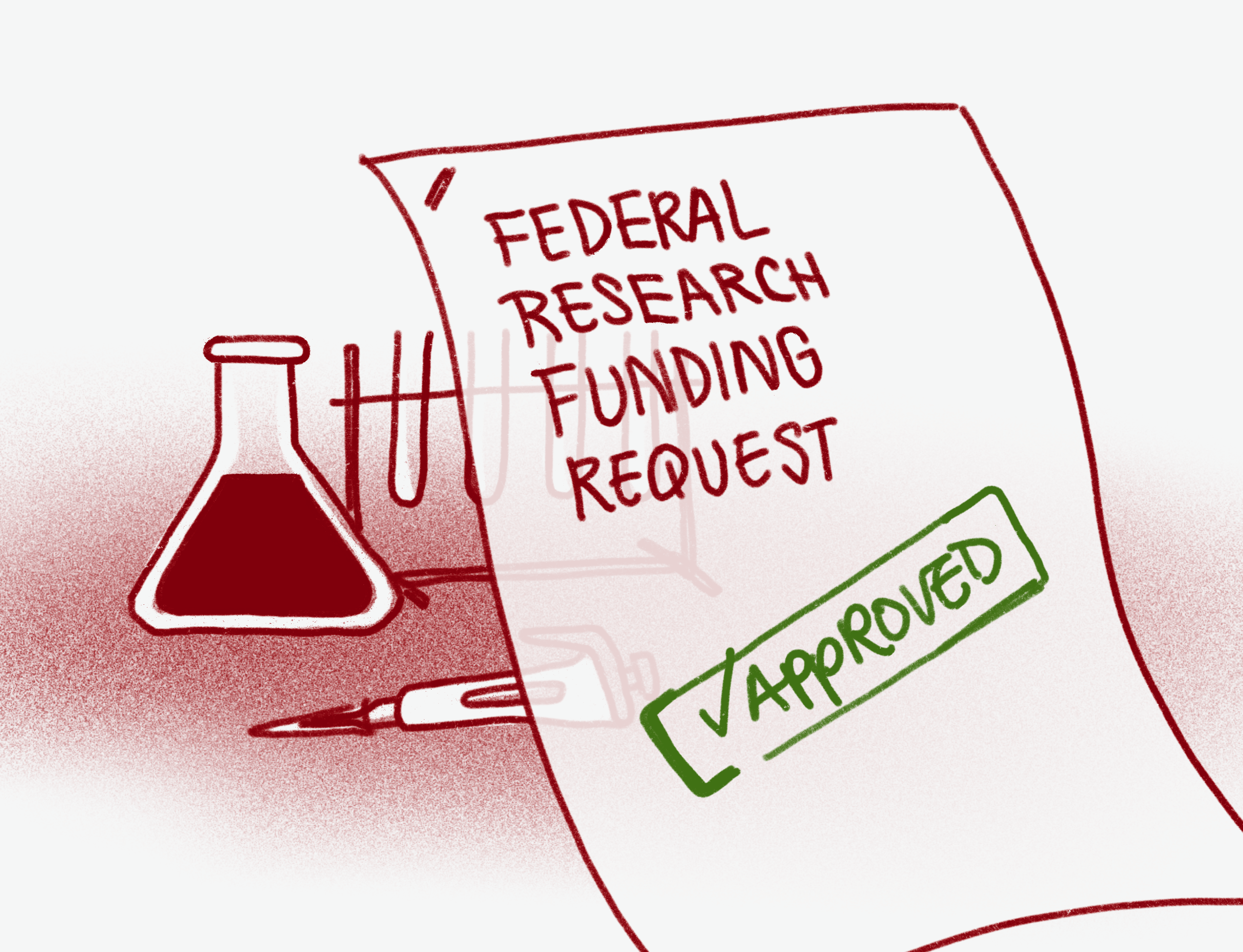
We must also consider what Miller’s promotion could mean for federal funding to universities. Miller famously defended the president’s initial freezes to federal funding toward universities like Columbia in the wake of on-campus protests. Yet, the detrimental effects of these freezes cannot be overstated.
When the Trump administration froze $2.2 billion in federal grants at Harvard University in 2025, a study researching near-fatal food allergies in infants was put at risk alongside countless other clinical trials that concern the health and safety of American citizens.
Universities are crucial in conducting fundamental discovery research that private companies would be unwilling to fund due to its high-risk and non-commercial nature. In an interview with NPR, NYU finance professor Sabrina Howell provided a powerful real-world example of this idea in action: “We would not have iPhones if universities like MIT that are federally funded hadn’t worked on lasers…with the interest of just creating new knowledge.” Freezing federal funding to universities puts discovery research that benefits the whole of American society in jeopardy.
When the health and technological advancement of American society is at stake, our politics must be able to transcend divisions between Left and Right and see universities as the net positive they are for the whole of society, not just the people that attend them.
In the wake of the 2026 midterms, it is easy to assume the Trump Administration is relatively incapacitated by their loss of the House and Senate; yet, the president still holds on to a valuable asset: executive orders.
With veto power hamstringing any legislation that might protect higher education, the Trump administration can continue to issue executive orders that attack institutions and bog down the Supreme Court’s judicial review process.
Until 2028, it is up to university administrators and students to defend their institutions from the federal government’s overreach by filing lawsuits against the Trump administration, seeking injunctions to slow the enforcement of executive orders and lobbying representatives to push for congressional oversight into the issue.
In the words of President Lyndon B. Johnson, “If we turn away from knowledge and truth, we will not succeed. If we believe the worst and suspect the best, we alone will suffer. If we deny our progress, if we are against all of it, if we tear down our accomplishments, we will fill the world with sorrow, and we will blemish our own name with shame.”