
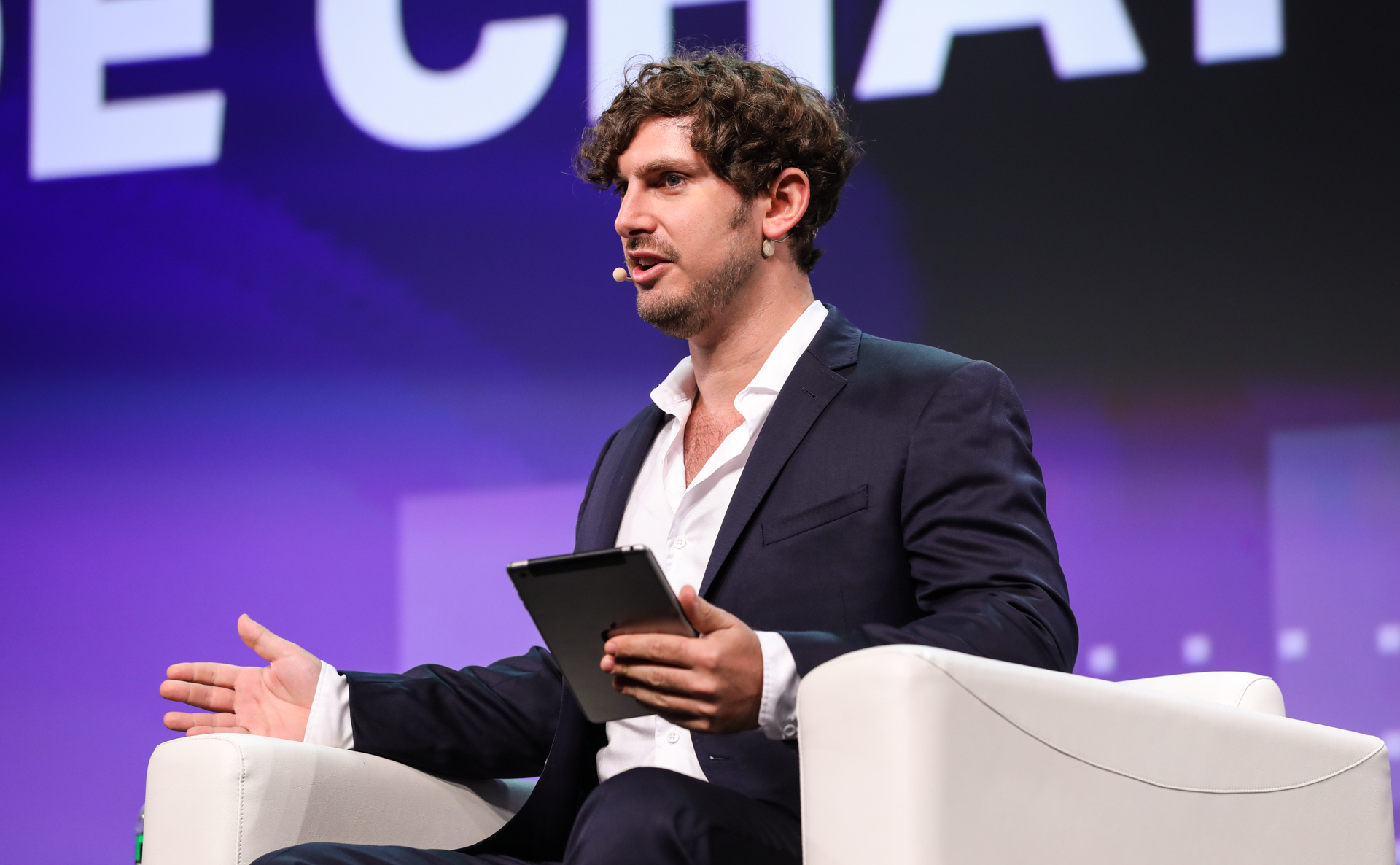
SignalFire venture partner and former TechCrunch Editor-At-Large Josh Constine ’07 M.A. ’09 sat down with The Daily on Wednesday to explore how technology is reshaping the media world, shifting power from editors to writers and enabling new connections between reporters and readers.
At TechCrunch, Constine wrote over 3,500 blog posts, covering social tech giants like Facebook and Snapchat as the #1 most cited tech journalist from 2016 to 2020. At SignalFire, Constine invests in consumer social and leads SignalFire’s PR and fundraising advisory program for portfolio companies.
Constine stressed the importance of building a personal brand for journalists, speculated on how AI could reshape journalism and identified a curious link between Stanford parties and leading alumni in tech.
This interview has been lightly edited and condensed for clarity.
The Stanford Daily (TSD): You started out your career in tech journalism and are now an investor. Could you walk us through your motivation for the transition?
Josh Constine (JC): I asked myself where the steepest learning curve was. After 4,000 articles, I wanted to see the other side of companies. As a journalist, you learn about the team, the product, the market but not the finances and real struggles that differentiate success and failure at startups. Going to SignalFire would teach me investing, and I could teach them about storytelling.
TSD: How has your experience in tech journalism informed your approach in venture capital? You mentioned storytelling earlier as something you contribute, but is there anything else that transferred?
JC: As AI makes engineering and operations leaner for startups, the true differentiator is storytelling and distribution. I love being able to help thousands of companies share their message for the first time. There’s something so special about seeing a technical founder have that ‘eureka’ moment on finding their story that gets people to lean in instead of falling asleep when they talk.
A lot of it is moving from feature-focused messaging to solutions-based messaging. As a journalist, you learn it’s not about what the company does but what the reader cares about from that company. Founders can become so close to their product that they think of it as a stack of features they spend all their time building, but the story that people want to read is a new concept or a massive problem that’s getting solved. That’s what will help you go viral and earn you that opportunity to tell the business story.
Another thing is both investigative journalism and deep due diligence on a potential investment require calling tons of sources, pushing past politeness and finding out what the real problems are. We’ve seen companies we considered investing in that revealed issues after investigative work done by me and my teammates and scuttled those deals.
TSD: Your newsletter on Substack, Moving Product, seems to be on hiatus. How much of your time currently do you still spend writing?
JC: Certainly, I would love to spend more time writing. The biggest change is that now I have two kids, and so any Saturday morning I might have spent writing a newsletter is spent building Legos or playing guitar with them or taking them to a dance party. That, to me, is the most fulfilling thing in the world.
While the time for personal writing does get squeezed, I love getting to help our portfolio founders at SignalFire or our fellow investors share insights on things that they are much deeper experts on than I.
One of the biggest issues with writing is that the authorship can get lost. Once you roll past the byline, who’s to say who wrote those words? People don’t just remember a great idea, they remember who shared it with them. So, when they see their next great company, they know who to send it to.
When you watch one of my LinkedIn videos or Reels, you can’t get rid of me. I am embedded directly into the content. I think every journalist should be thinking on how they can build more of their identity into their work, which allows them to build a community, which is a funnel to getting amazing stories.
TSD: What can you share about the changes in the field of journalism and technology in journalism?
JC: Power is shifting from publishers to individuals and from editors to writers. Historically, limited access to journalism made us reliant on editors to curate news, but the web has created an explosion of independent journalism, making us the editors of our own information diet. We build relationships directly with the reporters rather than the editors in the masthead of a publisher. Along with that, there is also audience portability which enables the community to move with reporters to their next publication, whereas previously, nobody would know where to find you if you left your newspaper.
Meanwhile, people also want relatable figures they can trust. Organizations are less trusted than individuals when you can’t put a face on it. Similar to how we’ve seen the rise of the creator economy, independent journalism allows you to connect with niche influencers that speak to the subcultures that you care about and can make inside jokes that only you understand, which is more fun and creates a deeper and longer-lasting relationship than “one size fits none” celebrities.
Whether you want to become a journalist or you’re using it as receipts for job applications, there’s immense power in writing in public to prove that you’ve been analyzing the space and making bets.
TSD: How do you think AI will impact journalism?
JC: AI will be extremely powerful for finding who to talk to and not necessarily what to write about. We see the same thing in venture capital. SignalFire builds AI in-house to assist with sourcing investments. It doesn’t tell us who to invest in, and we shouldn’t trust it to tell us who to invest in, but it can tell us who we should talk to, because they’re hiring amazing talent, or they have great founder market fit or their team’s GitHub rank is skyrocketing. Similarly, I think the ability to find incredible sources, new stories and topics to write about will be a powerful way to assist journalists.
AI could make the kinds of journalism where you have to be so fast and precise, such as covering earnings releases, much more efficient. A tiny mistake can move the market, cause financial havoc and hurt your reputation, so I think there’s some of that work [AI can complete] of just filling numbers that’s going to make journalism more efficient and accurate, while allowing the human element of the opinion to shine.
TSD: You designed your own master’s degree [at Stanford] in cybersociology to study meme popularity cycles, social networks and anonymous trolling. What was the process like to assemble this custom degree, and what did you come out learning?
JC: Facebook launched my freshman year, which is really dating me, but it swept across campus and immediately was uprooting sociological theory. I majored in sociology in my undergrad and I knew I wanted to study social networks, but there were no courses specifically about them. I went to the sociology department and said, “Social networks are either uprooting or proving true all of the classical sociological theory. Let me cobble together courses across psychology, science, technology and society, communication [and] sociology into this cybersociology degree because I want to study social networks.”
At that time, they asked whether social networks were even really a thing and if I could study something moving so fast. I said, “Trust me, it’s going to be a big thing, and we’ve got to start studying them now.”
I think these are principles of sociology that we needed to explore. I was really impressed that Stanford had the flexibility to say, “We don’t know every major that should exist, but we are going to look to our students who are so close to that edge of the future to see what should be a new discipline from study.”
TSD: Were there any particularly memorable stories at Stanford that you wanted to share?
JC: When I was at Stanford, social life was much less regulated, and houses could throw massive all campus parties with thousands of people, and what that did was it gave essentially Series B stage management experience to 22-year-olds. If you were the social manager or president of a row house or a fraternity, you were organizing mechanical engineers to build stages and design majors to make flyers and MS&E majors to do all the operations and logistics to put together these massive events.
I don’t think it’s a coincidence that the founders of Snapchat, Instagram and Robinhood were social managers of houses and threw massive parties on campus that Stanford no longer allows to happen. I hope the University recognizes that empowering students to create culture and social life for their peers not only makes Stanford a place students want to go, but it also mints future leaders.
It’s funny that when I was in college, the most prestigious job was investment banking, but now it’s increasingly becoming being a product manager at a big tech company, working at a VC or founding your own startup, and I think education on campus needs to adapt to what soft skills are necessary to succeed – how to fundraise, choose investors and recruit. That is the difference between a killer individual contributor and a world-changing founder.