
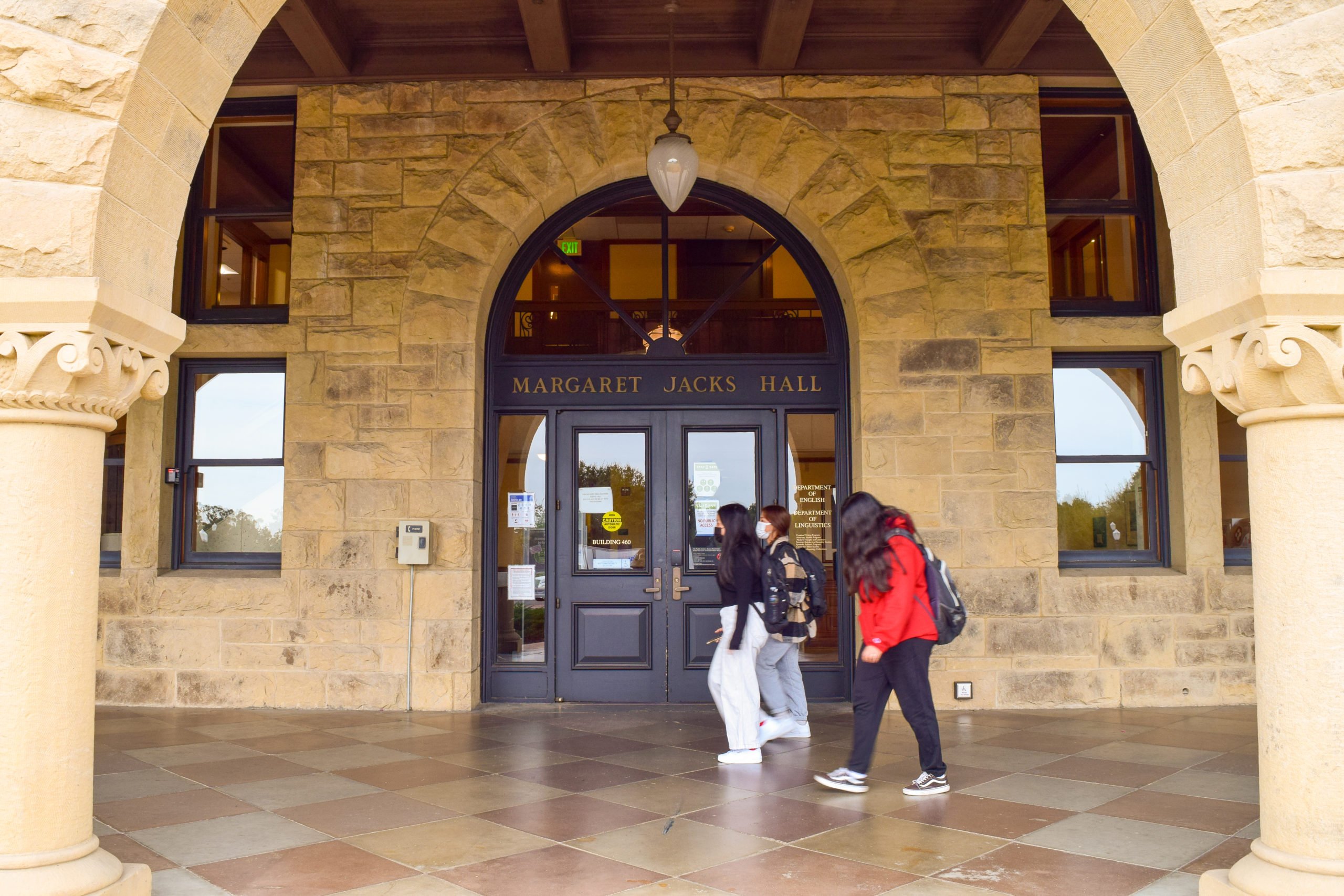
Nearly a year after the University announced it was phasing out all 23 of the creative writing lecturers over the course of the next two years, the first set of lecturers have said their goodbyes to their students and mentees.
The decision to phase out the lecturers was recommended by the Working Group, a group of creative writing faculty tasked with restructuring the program. According to an online announcement, they recommended “restoring the original intent of the Jones Lectureships: one-year appointments with the possibility of renewal for a limited term, up to a total of five years.”
After the University’s decision was announced, a few lecturers filed appeals with the University challenging the decision and the subsequent hiring process for lecturers in the department of English. The University denied the appeal challenging the decision but granted the appeal that challenged the hiring process on procedural grounds. They also found that there was no retaliation or discrimination against the lecturers.
Lecturer Tom Kealey further appealed the ruling on the appeals in what is called a provost review, making it possible for Provost Jenny Martinez to overturn the decision.
Many students and lecturers have expressed their disappointment in the decision in the last year. According to lecturer Sarah Frisch, last year was the first time she was able to receive a livable wage due to the lecturers’ previous year of advocating for a pay raise. This was her last year.
In a University statement to The Daily, a School of Humanities and Sciences spokesperson wrote that while “many current Jones Lecturers are expected to continue teaching for several years, all lecturers will eventually cycle out.” The department of English will also create ten new term-limited positions and these positions will be filled by Jones Lecturers who were hired before 2019.
The University claimed that the restructuring will allow the program to offer more courses, “starting in the 2025-26 academic year.” However, Kealey said he is skeptical about this.
According to Kealey, though the program hired four former Stegner Fellows as lecturers, it is losing valuable experience in the creative writing program. For instance, Kealey has offered the “NaNoWriMo” class, a course designed for students to write their own novel in a month, for 15 years, but he will not be at Stanford this upcoming year to offer it again.
Students claim they have already begun to feel the impact of the decision.
“[The decision] did affect the way that I planned my courses because I knew that I wanted to prioritize both of my passions as opposed to just the career I want to take on in the future,” Lydia Wang ’27 said.
In other areas, like independent studies, some were turned down by lecturers who had already filled their two student limit on independent studies. This prevented students like Annabelle Wang ’27 — who want to do independent studies with lecturers they’ve built good relationships with — from taking those classes.
“It’s definitely very frustrating for me and my friends, because all of the difficulties of navigating college has upped even further. I feel like I’m going to be a freshman again, not knowing who these [lecturers] are,” Wang said.
The eight lecturers who were part of the first group to be let go were told they could apply for six three-year positions. Frisch said she thought the six positions were reserved for the first “cohort of oldest lecturers being sent away first, in part to dampen the cruelty of firing those of us a couple of years away from their retirement benefits a year before everybody else.”
However, while all eight lecturers all applied for the six positions, only three were hired.
Frisch and Kealey were not part of the three.
As a result, some of the lecturers, including Frisch and Kealey, individually filed appeals against the firing decisions.
Frisch wrote to The Daily that her appeal claimed that there was “no justifiable reason for firing all the lecturers or sending away the most experienced, oldest, and longest-serving from the program a full year ahead of everybody else.” She also wrote that creative writing classes had almost 1,000 students on waitlists across the courses.
The handbook states that the “the dean should seek to decide the case within 60 days from receipt of the appeal (or, in the case of an appeal of a reappointment or promotion decision within 60 days of receipt of the relevant documentation).” Kealey said it took them 244 days to issue their decision.
The University did not comment on how long the decision took.
Kealey had filed two appeals. His first appeal was filed in October, 2024, and he asked for the decision to be overturned. His second appeal was filed in February,, 2025, and he asked that a new working group should be formed with input from lecturers and students. To the lecturers’ dismay, the appeals were combined into one.
The appeal was reviewed by Linda Boxer, the Vice Dean of the School of Medicine. Debra Satz, the Dean of the School of Humanities and Sciences recused herself because she was the “cognizant dean of the program.”
While the investigation into the situation was ongoing, Stanford continued to hire new lecturers to replace the outgoing ones.
The first appeal, which challenged “the limit placed on the maximum duration of appointments” was denied, according to the School of Humanities spokesperson. “The second appeals, challenging the hiring process for lecturers in the English department, were granted on procedural grounds; there were no findings of retaliation or discrimination.”
After the ruling on the second appeals, Frisch was offered a one-year contract in the English department, but did not accept because she believed it “was offered in bad faith and as damage control.”