
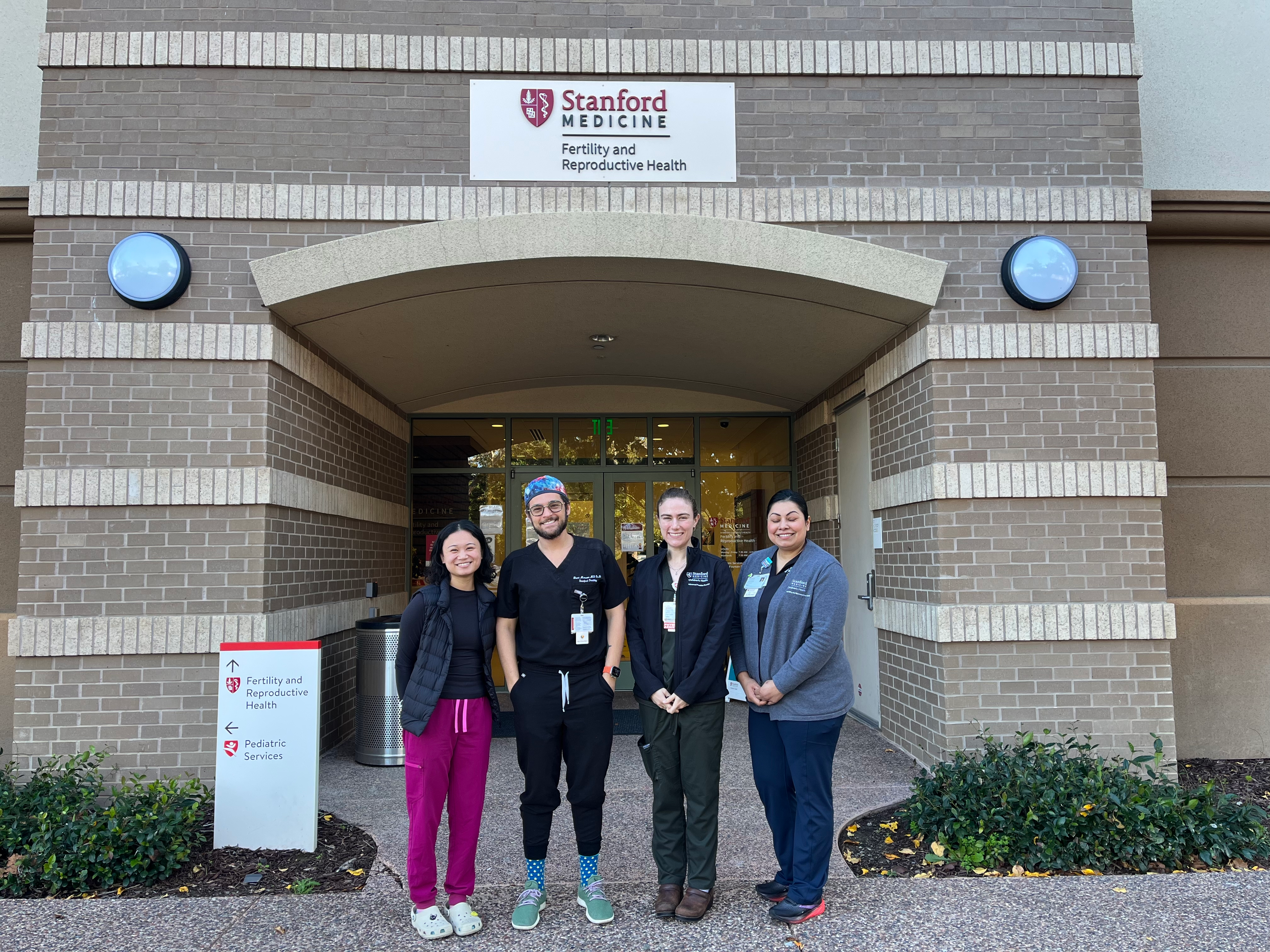
From early on, the notion that queer people can’t have children has bothered Brent Monseur, Stanford obstetrician/gynecologist (OB/GYN) and founding director for the LGBTQ+ Family Building Clinic.
“One of the common things when someone comes out as gay is that people’s reaction will often be one of… ‘Oh, but you can’t have kids,’” Monseur said.
Monseur’s work as a reproductive endocrinologist, a sub-speciality of OB/GYN addressing reproductive medicine and hormonal functioning, aims to combat that perception.
They are the founding director for the LGBTQ+ Family Building Clinic, which helps patients build families, regardless of their biological or social circumstances. Whether a patient has sperm, eggs, a uterus, is a single parent or has any number of other situations, the clinic helps them figure out how to build their desired family.
Monseur also works with youth and young adults, helping them through gender referral therapy, including by preserving their eggs or sperm prior to initiating the process of transition.
Outside of their clinical work, Monseur also conducts research with the LGBTQ+ community. For example, medically assisted reproduction across sexual orientation groups and sexual and gender minority adults’ family building methods.
Or — they did, until recently.
“That all got derailed by the current political administration,” Monseur said, noting the administration’s shifting priorities away from diversity, equity and inclusion (DEI).
In June, Stanford — amid federal investigations and funding crackdowns against other major research universities for pursuing what the White House called “dangerous ideologies” — electively paused gender-related surgeries for patients under 19.
“We took this step to protect both our providers and patients,” Lisa Kim, senior manager of media relations for Stanford Medicine and Stanford Health Care, wrote in an email to The Daily, citing a statement from Stanford Medicine. “This was not a decision we made lightly, especially knowing how deeply this impacts the individuals and families who depend on our essential care and support.”
Since this decision, Monseur’s pediatric colleagues’ “clinical care has been affected,” and Stanford “lost several grants in the OB/GYN department specifically related to LGBTQ work,” they said.
Monseur’s research grant for the Women’s Reproductive Health Research (WRHR) program at Stanford was canceled by the government after nine months from the initial five years, they said. Their student loan repayment — a financial incentive to stay in academia for many researchers — also faced the threat of cancellation if they didn’t remove language related to DEI.
This was “something I was not willing to do,” Monseur said.
Monseur felt that Stanford Medicine asked them to “put [their] career in the closet” and pivot away from their research, they said.
They also asked Stanford Medicine whether pediatric patients could still freeze their eggs. They received no clear answer, they said. “But the reality is, children can have cancer and need these surgeries,” they said in reference to fertility preservation for cancer patients prior to treatment, which may damage ovaries.
Monseur made the decision to leave Stanford Medicine come September. “It’s not good for my wellbeing to be in a place where I feel like I can’t do the mission and the work that I’m passionate about,” Monseur said.
Monseur described how they sought their career as a mission: “I wanted to not only do this for the patients in front of me, but also to make this an academic specialty to learn about LGBTQ+ family building… I wanted everyone to know more about this field and how to better take care of these patients.”
The work they are doing now is the culmination of observations — starting in the earliest days of their career — that infertility research too frequently focused on cisgendered heterosexual patients at the exclusion of LGBTQ+ individuals. Even among studies on infertility within the LGBTQ+ community, studies tended toward lesbian couples; the research for different relationship structures was far less.
“There were queer people who went into private practice and now see queer patients in their practice as doctors, Monseur said. “But I think I was the first person to make this an academic mission to build a program at an academic center and grow it from there.”
Despite obstacles, Monseur said their work in the clinic has been deeply gratifying. For example, there are the moments when patients return for their second baby. “It really feels special that they had one child through working with me, and now they’re coming back and we’re doing it again,” they said. “It’s very special to have that relationship with a patient.”
Another meaningful part of their practice has been providing a “safe, affirming space” for pediatric patients — who often feel pressured by their doctor, friends, society or family to freeze their eggs or sperm — to make an informed decision, according to Monseur.
“I’ve had a lot of patients thank me for providing that space,” Monseur said.
Those moments make Stanford’s decision to halt gender-affirming care at Stanford, and Monseur’s feeling that they had no choice but to leave, all the more excruciating.
“This is a time when universities like Stanford with large endowments need to stand up to the administration,” Monseur said.
“I know we rely a lot on federal money to do research, but we shouldn’t be letting the administration take over science,” Monseur said. “We’re going to see negative consequences of this for years, if not decades after.”
During the next year, Monseur said they will join a new practice in San Francisco to continue seeing patients.
In the meantime, Monseur wants to ensure that patients now forced to look for new clinics seek out doctors they trust: “It’s okay if you don’t connect with the doctor — you’re not committed,” they said. “Find another connection and get the best care that you can.”
On July 31, California Attorney General Rob Bonta, with 15 other states and the District of Columbia, sued the Trump Administration for its unlawful attacks on gender-affirming care.
The administration’s “relentless attacks on gender-affirming care endanger already vulnerable adolescents whose health and well-being are at risk,” Bonta said in a press release accompanying the lawsuit. “Their demands that our healthcare providers discriminate against transgender individuals and deny them access to medically necessary healthcare is cruel and irresponsible.”