
If you had asked me at 13 what curiosity meant, I would have told you it was about noticing small joys. I would have pointed to my first book, “Curiosity is the Way to Go,” a locally published collection of childhood anecdotes. The pages were filled with moments of stargazing, moving houses and playing badminton in Delhi’s humid evenings. Back then, curiosity meant paying attention to what made me happy and finding a way to put it into words.
Over time, I learned that curiosity can be less comfortable. It can take you into unfamiliar conversations and force you to see things you once overlooked.
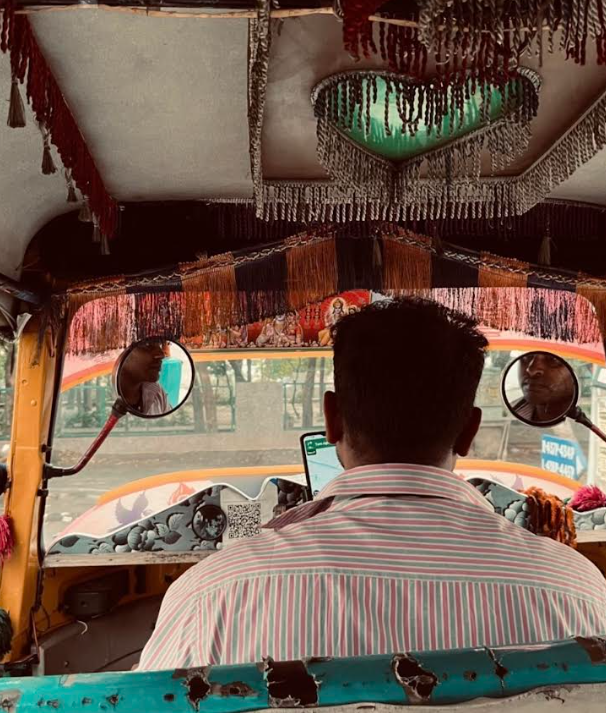
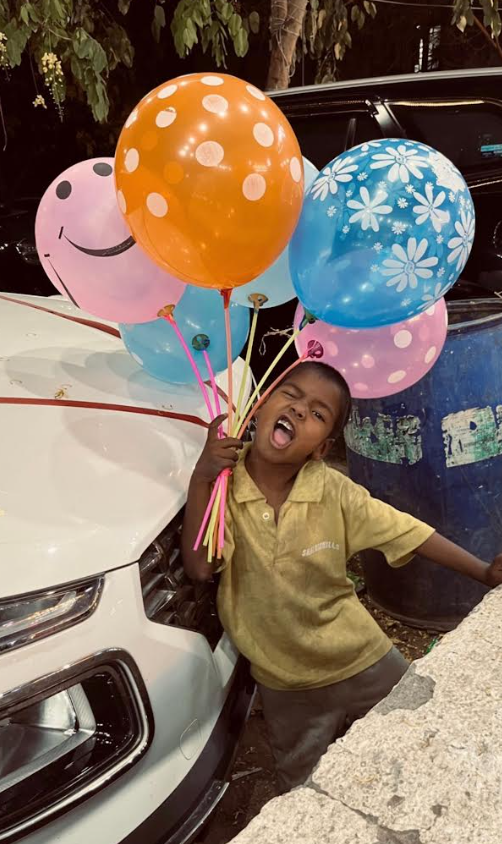
I grew up in Delhi, India, where high-rises stood beside clusters of tarpaulin-covered shanties. As a child, I noticed them without wondering who lived there or why they couldn’t move somewhere else. My eyes moved over shapes and colors like background scenery in a film I saw too often to watch closely, never stopping to question my reality. As I grew older, the details became more vivid: women carrying water up unsteady staircases, children running barefoot between lanes of traffic, families cooking over open flames while luxury cars idled nearby. That awareness grew when I moved to Canada at 14. My writing began to follow my awareness. I no longer wanted to collect only the light and pleasant details; I wanted to make sense of what I saw and write about the realities beneath it.
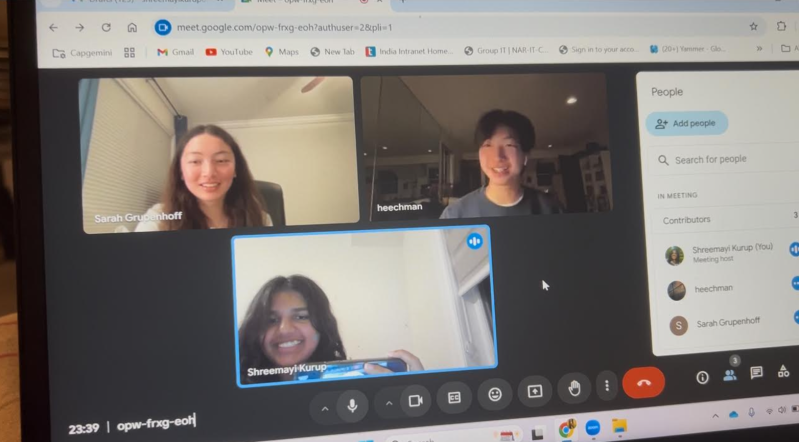
When I joined The Stanford Daily’s High School Journalism Workshop in the summer of 2024, I wanted to become a better writer. The program brought together students from around the world in a virtual newsroom, and over the course of the summer, we pitched stories, contacted sources, wrote drafts and revised them with guidance from desk and managing editors.
After returning for the Winter 2024 and Summer 2025 cycles, I learned that the experience is exactly what you make of it. The more effort I put into researching, interviewing and rewriting, the more the program gave back to me.
My first few articles were rough. I sent in drafts with uneven structure and gaps in reporting, unsure if they could be saved. My editors took the time to walk me through each revision. They showed me how to ask better questions, how to shape a piece so it read clearly and how to pace it so the reader stayed engaged. I also learned that journalism involves more waiting, chasing and rejection than I expected. Sometimes sources agree to speak and then vanish. Sometimes a story that looks promising never moves beyond the pitch. I learned to keep going anyway.
Over time, interviews became my favorite part of the process. Each one felt like stepping into another person’s world for a short while and opening a window into the way they saw their life and work. Follow-up questions allowed me to chase my curiosity down unexpected paths. The best moments in an interview often came after pauses, when someone trusted me enough to share a story they had not planned to tell. Guest journalists who spoke at the workshops reminded us that good reporting grows from curiosity paired with care. I learned that it meant being present long enough to hear what is unsaid and being interested enough to ask questions that might help someone put it into words.
Not everything I wrote was published. During the winter session, none of my articles made it to the end of the production process. I felt like a failure. But those drafts taught me as much as the ones that did. I learned to spot a weak pitch before investing too much time into it. I learned to follow up when sources went silent. I learned how to rebuild a piece from the ground up when it was failing. Those experiences made me more adaptable, more persistent and less hesitant to try again.
This summer, I set out to do my best work yet. I pitched earlier, prepared more thoroughly for interviews and pushed myself to ask deeper, more revealing questions. I treated every article as an opportunity to learn more about people and their stories.
I profiled Jeannette Wang ’26, a student leader whose passion for civic dialogue and democracy on campus genuinely inspired me. In a political climate that could benefit from more voices like hers, I felt it was important to spotlight her work and the recognition she received as a Newman Civic Fellow.
I covered “Woven Narratives,” a textile exhibition curated by students, that fascinated me — it suggested that something as everyday as fabric could carry entire histories. I wanted to understand the thought process behind each curatorial choice and how pieces came together to tell a collective story.
I also covered Stanford freshman Nora Ezike ’28’s participation in the Fédération Internationale de Basketball (FIBA) Under-19 Women’s Basketball World Cup. Given her life as an internationally recognized student athlete, I was curious about how she balances her identity, her academics and the intensity of competing on the world stage.
Some stories came together easily, while others took longer and tested my patience. I learned that growth rarely happens when everything goes smoothly. My growth was not linear, but it becomes inevitable when I keep showing up and doing the work.
When I was 13, I thought curiosity was about noticing what was beautiful. Now I know it is also about asking harder questions, sitting with complicated answers and looking past the surface. It is about noticing not just what is appealing but what is true.
Now that the program has come to a close, I am taking those lessons with me back to my school paper, “The Forecast,” and into the stories I write next. I am still the kid who likes to look at the stars, but I now understand that some of the most important stories are found right here on the ground.