
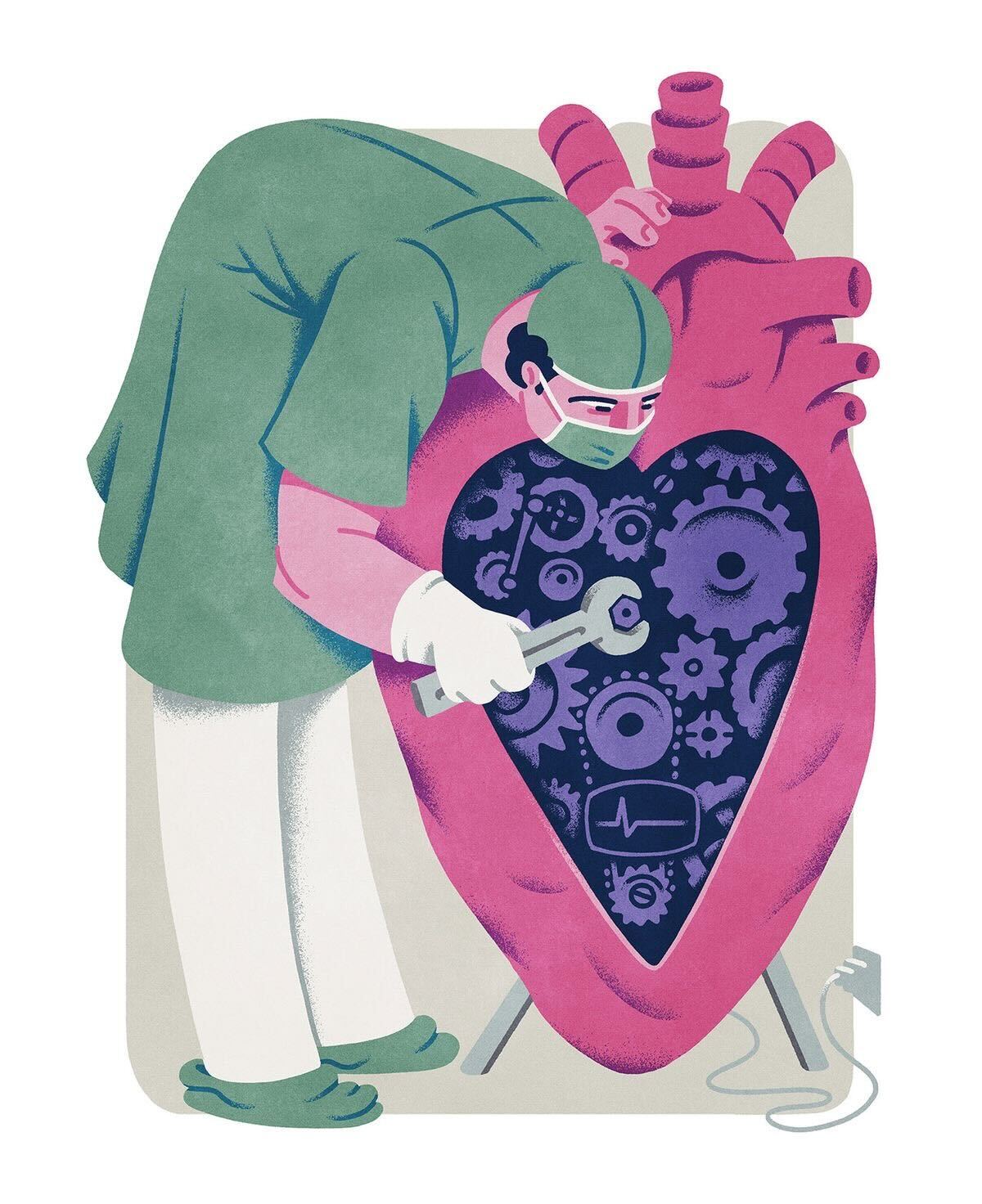
In “The Anatomy of Healing,” Ruby Honjol ’29 reflects on how the true art of medicine lies not in curing the body but in tending to the human spirit, sustaining meaning and helping patients live fully even as their bodies fail.
A body is a house, and aging is the slow crumbling of its rooms. Doctors are masons, electricians and plumbers. They can patch cracked bones, replace clogged arteries and repair failing organs. They can repaint rooms with new treatments and medications.
But when the house walls grow narrower, when rooms feel strange or empty and when the front door no longer leads to the life we know, is it truly a home? Medicine can keep the house standing, and even make it stronger than it was before, but no pill, procedure or surgery can restore the sense of home. We often imagine doctors as experts in preventing death. But what if medicine isn’t just about saving lives?
In the 2014 nonfiction book, “Being Mortal,” surgeon Atul Gawande shares stories of patients, families and his own father to illustrate that medicine’s most important work isn’t always in prolonging life but in preserving autonomy, dignity and the ability to live meaningfully.
“Our ultimate goal, after all, is not a good death, but a good life to the very end,” he writes, highlighting a tension that doctors rarely confront: science can extend life, but it cannot mend the unseen fractures of identity, choice and the human spirit.
The book opens with two portraits of aging: Gawande’s grandmother-in-law, Alice, who lives alone after decades of independence, and his 110-year-old grandfather, Sitaram, who remains active on his farm in India. Alice’s freedom reflects the promise of modern medicine and social progress, but it also exposes a cruel paradox: independence does not guarantee happiness, and the structures that support the elderly often leave them adrift.
Sitaram, in contrast with Alice, maintains a sense of purpose and agency, underscoring Gawande’s central point that the architecture of care must respect the soul — not just the body.
From CRISPR therapies for sickle cell anemia to CAR T-cell treatments for brain cancer, advances in surgery, chemotherapy and gene editing are all intended to help patients survive illnesses that once proved fatal.
However, the medical system often treats aging as a failure to be corrected rather than a natural stage of life. As Gawande writes, elderly patients in hospitals or nursing homes are “kept alive” but frequently stripped of autonomy and reduced to a collection of symptoms.
Assisted living facilities, Gawande notes, initially promised to restore independence while providing support. Keren Brown Wilson, one of the pioneers of assisted living, sought to give his residents safety and choice. Over time, however, many of these facilities have devolved into transitional spaces en route to nursing homes, prioritizing efficiency over individuality.
In “Being Mortal,” Lou Sanders, an elderly man who moves from his home to assisted living to a nursing facility, recounts experiencing this tension firsthand. Lou notes how residents are shuffled from one identical room to another, served meals at fixed times regardless of appetite and told when to wake, sleep or bathe.
By contrasting such institutions with thoughtfully designed communities like the Leonard Florence Center, where residents retain autonomy and live full lives even in so-called “decline,” Gawande reminds us that medicine alone cannot supplant warmth, empathy and human connection.
Perhaps the most profound lessons come from Gawande’s reflections on terminal illness. The story of Sara Monopoli, a young woman with stage IV lung cancer, illuminates a painful truth: the relentless pursuit of treatment can sometimes harm more than it helps.
Despite four rounds of chemotherapy, Sara’s tumors remain. And as her immune system collapses, she develops pneumonia, ultimately dying in the hospital with her voice lost in a cascade of interventions aimed at prolonging life at all costs. Gawande contrasts this with hospice care, which prioritizes quality of life. To truly care well, we must attend not only to the body but to the priorities, values and fragile human experiences that make life meaningful.
Reading “Being Mortal” both unsettled and inspired me. It made me question and challenge the assumption that medicine’s highest calling is survival. It reframes the role of the physician from fixer to companion, from savior of organs to steward of life. It pushed me to confront mortality not as a failure but as an essential part of living. As Gawande notes, “A good life requires attention to what matters to the patient — not just what medicine can do.”
With every page I turned, I kept imagining the patients I hope to care for as a future physician. I pictured myself practicing the art of transforming a house into a home: infusing color into empty walls, spreading warmth into cold spaces and shining light into dark corners. Gawande shows that the work of medicine is not only in extending life but in creating homes within our bodies, our hospitals and our communities. We can patch the cracks, repair the pipes and repaint the rooms of a house, but the real challenge of medicine is in helping patients inhabit life meaningfully.