
Students came together for “Whose University? Third World Liberation Front Anniversary Community Arts Celebration” at Harmony House on Nov. 6. The event honored the 1968 student strikes that sparked the creation of ethnic studies programs across California universities and inspired generations of student activism.
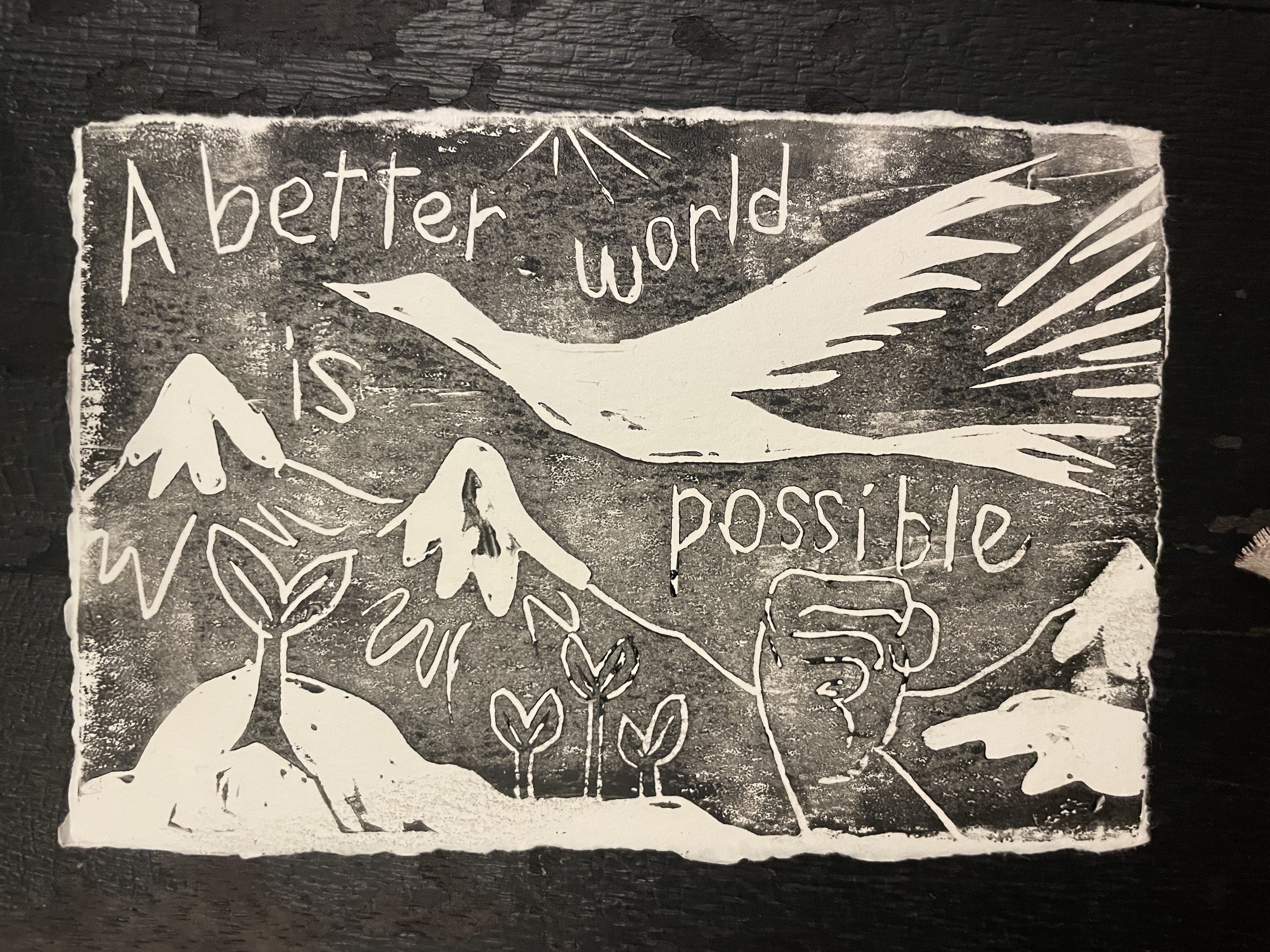
Hosted by the Stanford Asian American Activism Committee (SAAAC), the celebration featured linocut printing, collaborative banner painting and shared food.
“The Third World Liberation Front strikes started out of a student movement demanding a people’s education,” said Sandi Khine ’25 M.A. ’26. “Students were inspired by anti-war protests in Vietnam, liberation movements in the Third World and the Civil Rights and Black Power movement and were looking for anti-imperialist, anti-capitalist liberatory education that reflected their politics.”
The strikes, which began on Nov. 6, 1968, at San Francisco State University and University of California Berkeley, brought together Black, Chicano, Asian American and Native student groups demanding ethnic studies departments and representation in higher education.
Khine said organizers chose to commemorate the anniversary through a community arts event because “a lot of the iconic imagery of the ’60s and ’70s student movement is produced by revolutionary artists.” Khine added, “We wanted folks to think about art-making that serves a broader movement for liberation and justice, and how anyone can participate in this art-making.”
Comparative literature professor David Palumbo-Liu spoke about the importance and legacy of student activism at the opening of the event.
According to Palumbo-Liu, student activism in the late 1980s forced Stanford to act. “They produced this big report … and the University sat on it,” he said. “But the students just got more and more angry that nothing was being done. That’s what created the takeover of the president’s office in 1989 and then the hunger strike.” The demonstrations caused the University to create the Department of Comparative Studies of Race and Ethnicity (CSRE).
Palumbo-Liu said that CSRE’s roots are in activism. “CSRE really is such an important part of Stanford, and I hope Stanford lets it do its thing,” he said. “Otherwise it becomes sucked back into conventional academics. Right now, autonomy — relative autonomy — is great.”
While the event celebrated Stanford’s history of student activism, it also brought to light that activism on campus still comes with risks. Last June, a group of pro-Palestinian activists occupied the University president’s office, and now face felony charges of vandalism and trespassing.
“Seeing the contradiction between people getting charged — my friends, your peers — and the history of student activism being celebrated by Stanford here is really upsetting, and compels me to urge others to take up the call to drop the charges,” Khine said.
Throughout the evening, students gathered at tables to eat and chat, printed linocuts on fabric and paper in one room and collaborated on painting a banner reading “DARE TO STRUGGLE, DARE TO WIN” in another.
“There’s a lot of love and beauty in this space,” Marissa Mengheang ’26 said. “Doing art together is so beautiful … people are painting a collective banner, listening to revolutionary music. It feels like a really healing space right now.”
Kaden Nguyen ’27 said joining SAAAC helped him find a sense of belonging.
“I think, for a long time during my time here at Stanford, I felt very dissatisfied with the extent that I could participate in politics,” Nguyen said. “Since joining SAAAC, I’ve found a strong political home. It’s been a meaningful way for me to develop my own political compass while navigating my work outside of school.”
Khine hoped attendees would “see the connections between histories of student movements and organizing and the repression that is happening against student movements today.”