
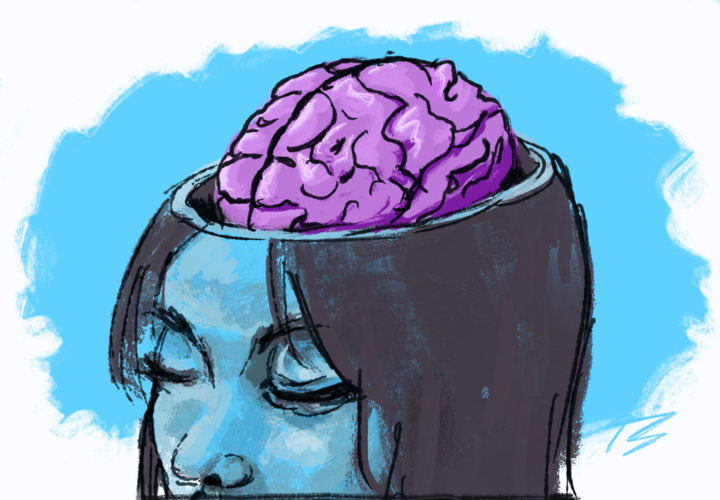
“Your father had a stroke.”
My mother’s words came out clipped, with a foreign quality that was equal parts fear and disbelief. I had just gotten off from the hospital after a long call day on my internal medicine rotation. It was a sticky California afternoon, and I was parked outside my apartment, impatiently waiting for my exhaustion to wear off. My mother’s voice seemed even further away than the nearly 3,000 miles that separated us.
I turned the word stroke over and over in my mind, a word that had once felt hypothetical, for which I drew up lists of potential etiologies and crammed treatment plans the night before exams. I saw it up close with beloved patients who unexpectedly lost the ability to move their arms or form fluent sentences overnight. Even then, I never could have seen it coming. As I boarded the plane home, uncertain whether the man I had known my entire life was the same one waiting for me, I went over memories with my father with the same religiosity that comes with reciting a prayer you haven’t turned to in years.
My father was taken to the nearest stroke center in our hometown: a for-profit hospital in the suburbs of Longwood, FL. As a medical student, I stared at the penumbra on his CT scan — the area of brain tissue that was reversibly injured, around the unsalvageable ischemic core — and I wondered how much viable tissue was lost because we didn’t know his “last known normal,” making him ineligible for a clot-busting agent. As his daughter, I looked at his brain and, tracing the folds on the screen with my fingers, I wondered how many memories of our family — growing up and old, through birthdays and graduations — had now vanished.
What struck me most during my father’s hospitalization was the fact that when his neurologist saw him, it was over telehealth. My father was never seen once in-person by a neurologist during his stay. I knew from my training that certain neurological exams, such as testing cranial nerves, assessing muscular strength and evaluating reflexes, could not be performed through a screen effectively. The neurologist declared a diagnosis of global aphasia and proposed speech therapy as the only path forward. As my mother held my father’s hand — her husband for the last thirty-three years — she wondered if he would ever be able to say her name again.
The day my father was discharged marked the beginning of a grueling recovery period. My father, a boisterous Pakistani man and former psychiatrist, was now struggling to name household objects and rehearsing American idioms, many of which he was learning for the first time. Previously, his livelihood revolved around language. It was how he climbed into the window of his patients’ minds to understand the context around their disease and their personhood beyond a set of symptoms.
The first week was the toughest. “Useless,” he’d say, half anger, half pity. He didn’t open the language exercise book for another week.
After a stroke, follow-up neurologic care is critical to prevent secondary complications. My father was given a referral for a local neurologist when he was discharged. The neurologist’s earliest availability was in six months. We were located in what I later learned to be a “neurologist desert.” It wasn’t just a consequence of where we lived, either. There’s a nationwide shortage of neurologists. A study by the 2024 Association of American Medical Colleges estimated that by 2036, there will be a deficit of approximately 37,000 full-time neurologists.
Without timely access to specialists, stroke patients like my father face delays that can lead to devastating outcomes. A week after discharge, he was re-hospitalized for a five millimeter midline shift, a sign that his brain was swelling to a dangerous level. He spent another week in the hospital to manage his symptoms. On discharge, he had an appointment scheduled for the upcoming week — again, via telehealth.
My father’s story is not unique. As America’s population ages, the prevalence of chronic neurological conditions including stroke, dementia and Parkinson’s disease is surging. Stroke incidence alone is expected to reach 20% by 2030. However, many communities lack even a single neurologist. Consequently, patients must wait months for follow-up and are often re-hospitalized in the interim, hospitals rely heavily on teleconsultations and families are largely left to manage rehabilitation plans on their own.
Watching my father’s gaps in care as he struggled to regain speech after his stroke changed the way I saw the healthcare system. It made me realize that we need early and sustained investment in training neurologists to address our national shortage. As a medical student myself, I have seen firsthand how early exposure to a specialty can shape a student’s career trajectory. If medical schools introduce neurology earlier in curriculums and support students with incentives such as loan forgiveness, more trainees may enter neurology over more lucrative specialties. Most importantly, increasing the number of residency positions from a meager 1,160 spots and strengthening community-based programs would ensure families like mine are not left waiting months for in-person care.
My father’s recovery is ongoing, oscillating between frustration and progress, with every language deficit regained like a feat that once seemed cruelly unattainable. His story teaches me that policy must take shape from abstract conversations into tangible reform that recognizes neurologic care as more than an afterthought. That way, when our loved ones inevitably become neurology patients, they will receive equitable, high quality healthcare — in person rather than behind a screen.