
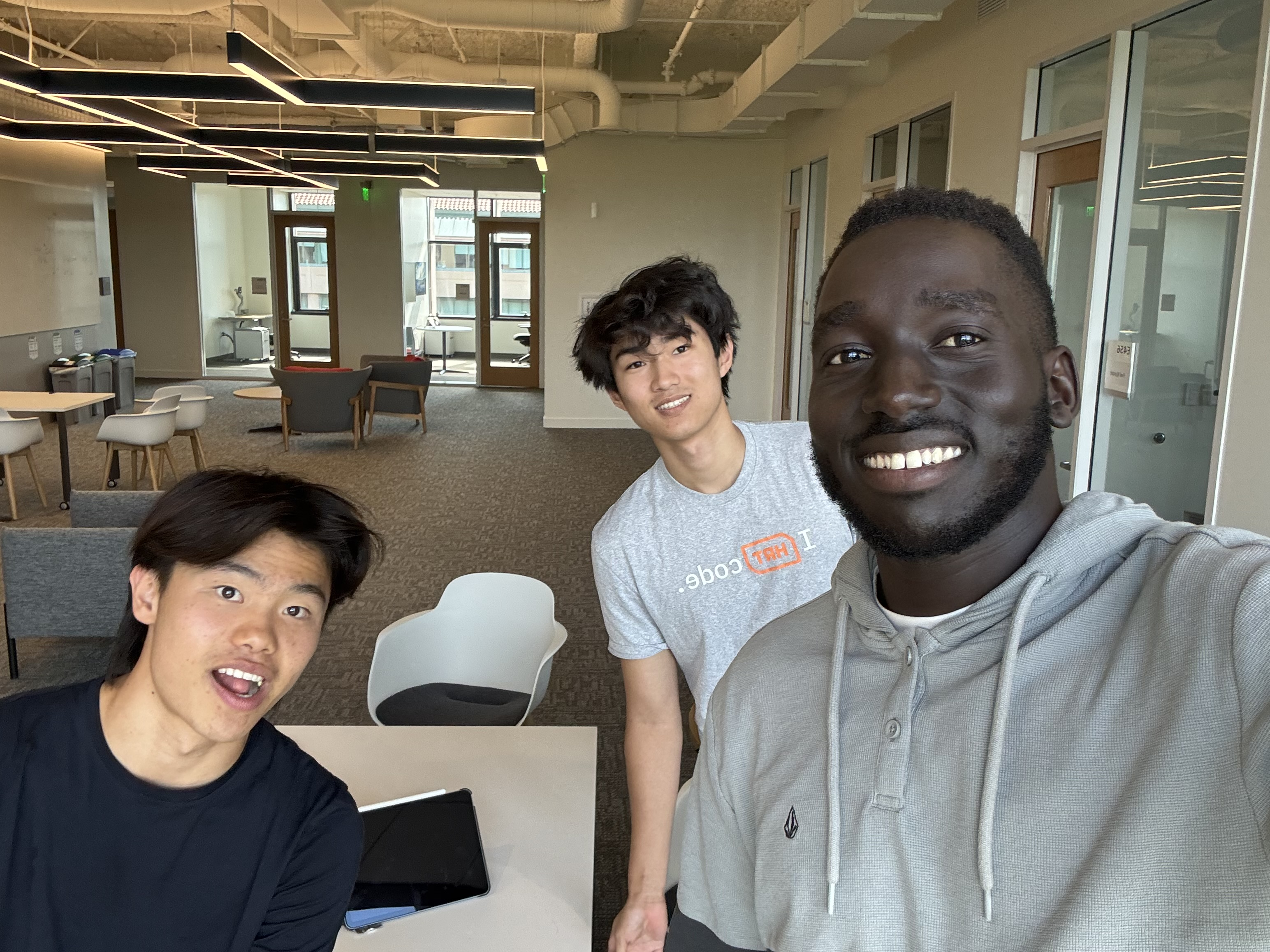
On a normal weeknight, the sounds from students are familiar: frantic typing on problem sets, music playing in the background and debates over late-night food orders. For Kuot Kiir ’27, an international student from South Sudan, sophomore year sounded different.
With two friends Thomas Deng ’27 and George Hasnah ’27, Kiir created the Akeer Foundation, a development-focused nonprofit working to build a school in his hometown village of Akeer Adoor, South Sudan.
“I always wanted to live a life with purpose,” Kiir said. “What other possible way could you live normally as a person if you’re not serving other people?”
The Akeer Foundation is a nonprofit dedicated to advancing education and community development in South Sudan, with the focus being on building a school in the village of Akeer Adoor.
Kiir is firm on why a school in the village matters. “There’s a difference between me and my other cousins in the village,” Kiir said, comparing his path to relatives who couldn’t leave. “I had a good education… they didn’t have a good education… that’s the big difference.”
Growing up in Akeer Adoor, the nearest school was a two-hour walk each way, and most children never made the journey.
“All we knew was agriculture and cattle rearing,” Kiir said. This changed when tribal violence broke out in Akeer Adoor. “Members of a neighboring community attacked us, and they burned down the houses. They burned everything,” Kiir said. “Everybody was running for their lives.”
Kiir’s aunt stepped in to help in the aftermath by taking Kiir and other children to attend school in Uganda. After living there for six years, it reshaped how he understood education.
For the first time, school was structured and consistent, with classrooms and teachers, which Kiir notes gave him an educational footing and the opportunity to become confident and fluent in English.
When he eventually returned to South Sudan, the contrast was immediate and hard to accept. “I go to Uganda, I see this beautiful place with good buildings, good roads. There’s the internet, there’s everything,” Kiir said. “I came back to Akeer Adoor… there’s no internet.”
Kiir had his eyes set on attending university in the U.S. After placing third in the country on his exams, taking gap years and applying, he eventually got into Stanford. Today, that same ambition is channeled into building something for the place that raised him.
“After coming to Stanford, I could just focus on myself… but I can’t,” Kiir said. “I don’t want the kids to go through the same things I went through, not because I don’t want them to grind and succeed, but so they can at least have a place to start.”
After hearing Kiir’s story, Deng and Hasnah sat down with him to find a solution, starting with smaller ideas like buying bicycles so kids could travel further to school. The more they talked, the more they felt compelled to aim higher.
“We’re Stanford students. We have access to so much here,” Hasnah said.
They decided they wanted to build a school.
“If we’re going to do this, let’s build something that really lasts.” Deng said, “What we build must be a beacon of hope, proof that people from all around the world can create change to help those in need.”
Soon after the idea was formed, the foundation worked to connect with Akeer Adoor directly. In June of 2025, Aluetmiir Kiir, Kuot Kiir’s brother, who lives in South Sudan’s capital, Juba, traveled to the village to meet with families and the village chief to listen and learn what people wanted and needed.
That same month, the village chief granted a plot of cattle land, called Tong-Tol, as the future site of the school, a major step that made the project real.
For Kiir, partnership is everything. “It’s working together and working for a common goal… it doesn’t matter where we come from,” he said. “It’s about what we’re doing as people.”
In October, the Akeer Foundation added eight new members from Stanford’s Social Entrepreneurial Students Association (SENSA). The group supports the foundation through fundraising, outreach, public relations and social media campaigns.
Kiir says one of the most surprising parts of building the foundation has been noticing who shows up in support. “It’s a bunch of… kids working with me, building a school. And there’s no South Sudanese there. I’m the only South Sudanese,” Kiir said. “They’re working with me… not because I’m one of them… but because they care.”
He connected this to something he learned after coming to the U.S. “You don’t help someone because you know them. You help them because they deserve it,” Kiir said.
Building a school from across the world is not simple. Kiir said there are real barriers, including travel limits. “We can’t even go back and oversee the school progress or see my family,” he said, describing how visa issues and political decisions affect movement.
Kiir’s goals for the Akeer Foundation are big, but he talks about them in a simple way. He wants kids to have chances he didn’t have.
“I’m hoping 15 years from now there will be at least one… of them at Stanford,” Kiir said.