
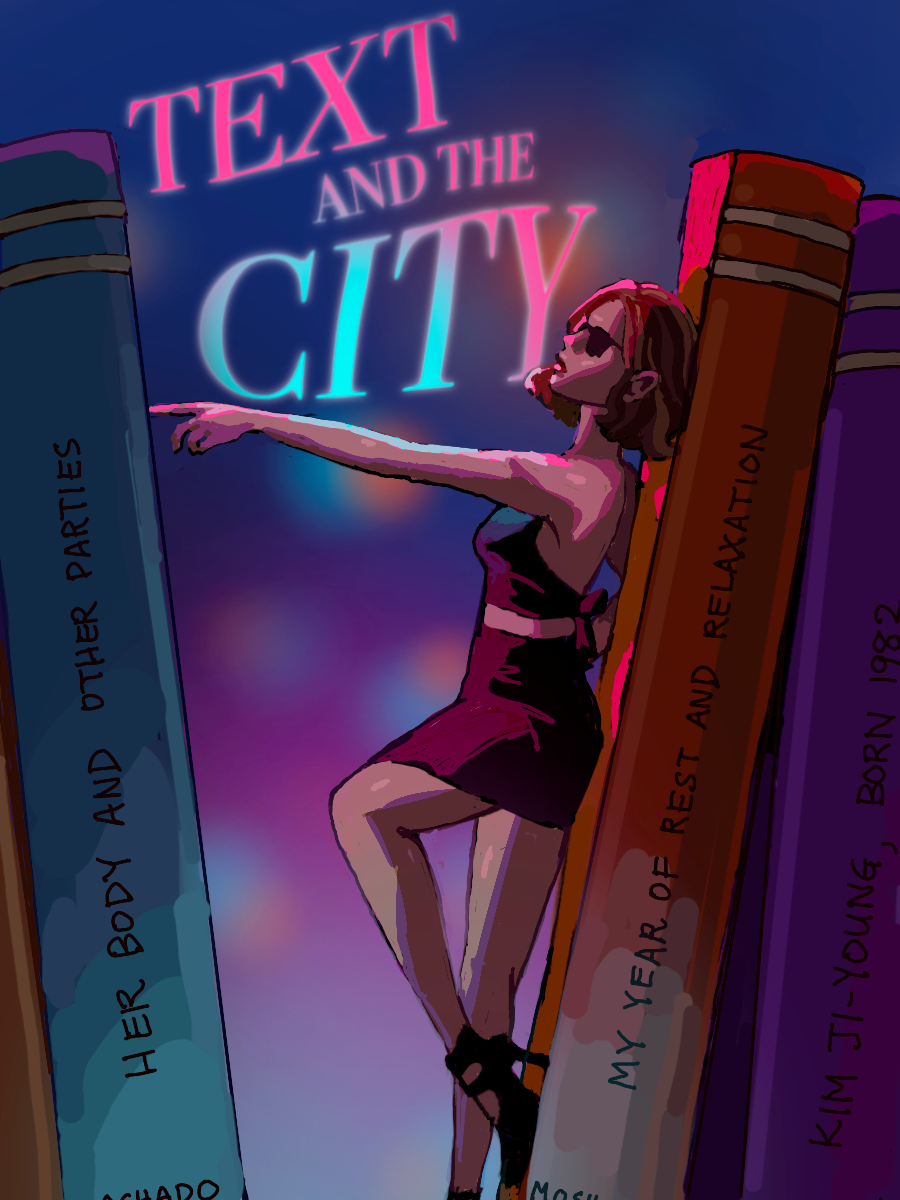
In “Text and the City,” Melisa Guleryuz ’27 reviews books through a lens of modern femininity.
Editor’s Note: This article is a review and includes subjective thoughts, opinions and critiques.
Often characterized as a psychological thriller, “My Husband’s Wife” by Jane Corry is certainly full of secrets, gaslighting and mysteries. Corry investigates what happens when a past better forgotten knocks on your front door, knife in hand — though at its emotional core, it’s a story about the invisible labor of womanhood and the heavy weight of internal expectations (sound familiar, Stanford students?).
“My Husband’s Wife” finds a compelling protagonist in Lily Macdonald, a lawyer marked by ambition, restraint and a lifetime of chronic anxiety about disappointing others. The novel begins with Lily stepping into the life she deserves: a storybook marriage to Ed, an artist whose charm is as abundant as his instability. But as early as during their honeymoon, tensions rise over Lily being the breadwinner of the pair. It’s a dynamic Stanford readers might find particularly relevant: This is a campus where women may very well one day out-earn or out-accomplish our partners. Are we (and any relationships we form) prepared for the emotional backlash that could accompany our success?
In Lily’s case, the answer is clear: her marriage is fragile as her expectations for it. To make things worse, enter Carla, a girl from their neighborhood whose mother is inattentive and whose intelligence is sharp yet untamed. Far from a plot ornament, Carla becomes the axis around which the narrative’s deeper secrets spin. Slowly and eerily, Corry positions Carla as someone who observes before acting. Carla’s early exposure to emotional neglect turns into a profound capacity for manipulation. Essentially, she connives her way into becoming Lily’s husband’s wife, both to seek revenge on Lily and provide her mother with a better life.
Much of the novel’s tension comes from the way timelines and secrets eventually intertwine. At work, Lily defends a convicted murderer accused of murdering his girlfriend in a boiling bathtub. It splashes her name across headlines, but as her professional life gains traction, her personal life suffers in sharp contrast. Ed’s artistic distractions, financial instability and mood swings become the couple’s main source of stress. Meanwhile, following a timeskip, Carla reenters Lily’s life years later — grown up, composed and knowing too much about our protagonist. The story here turns from “Will Lily and Ed be okay?” to “How will Lily deal with Carla and Ed’s new relationship?”
Everyone in Lily’s proximity has secrets — her husband, her client, that young girl next door. The real mystery isn’t who did it, but why none of them ever felt safe enough to tell the truth in the first place.
Corry loves a good narrative loop. Events revisit themselves with slightly different meanings, character motivations reveal new shadows and the reader begins to see that truth in the book behaves just as Lily says it does: “The truth is fluid; there is always another way to spin the story.” Corry invites readers to witness how characters rationalize everything from self-deception to betrayal.
Lily in particular habitually downplays her own needs in service of others — Ed, her clients, society’s expectations of what a “good woman” should be. Initially, her marriage and career are not choices so much as responses to insecurity.
Corry offers searing commentary on why women are taught to lie to themselves in the first place, and doesn’t shy from the dark consequences. Though Lily is the victim of other people’s lies, she too keeps things close to her chest, concealing the secret of what happened to her brother, who she sees so much of in her new client.
“That’s the problem with lies,” Corry writes. “They start small. And then they multiply. So that the white lies become as black as the real thing.” These white lies are emotional realities: the small compromises women make — “I’m fine,” “I don’t mind,” “You go ahead” — that compound into self-erasure. By the time the lies emerge, the cumulative effect is indistinguishable from genuine harm.
The question of “My Husband’s Wife” is whether Lily will finally admit what she really wants (her client), who she really is (traumatized by her guilt-ridden past) and what she can allow herself to feel. And for some strange reason, her client, her past and Carla’s sudden appearance years later all have something to do with this.
“My Husband’s Wife” examines how women navigate identity under pressure: juggling past and present, public success and privacy insecurity, compassion and self-preservation. There are plot twists and enough red herrings to make a crime novelist smirk. Corry reminds us that the most enduring mysteries are the unraveling of selves we never felt permitted to embody in the first place. For Stanford students — particularly women who are taught to build outwardly impressive lives before we’ve even figured out who we are — Lily’s story is a cautionary tale. Setting aside the presence of schemes and violence, Corry reminds us that success without self-protection is an insidious danger all its own.