
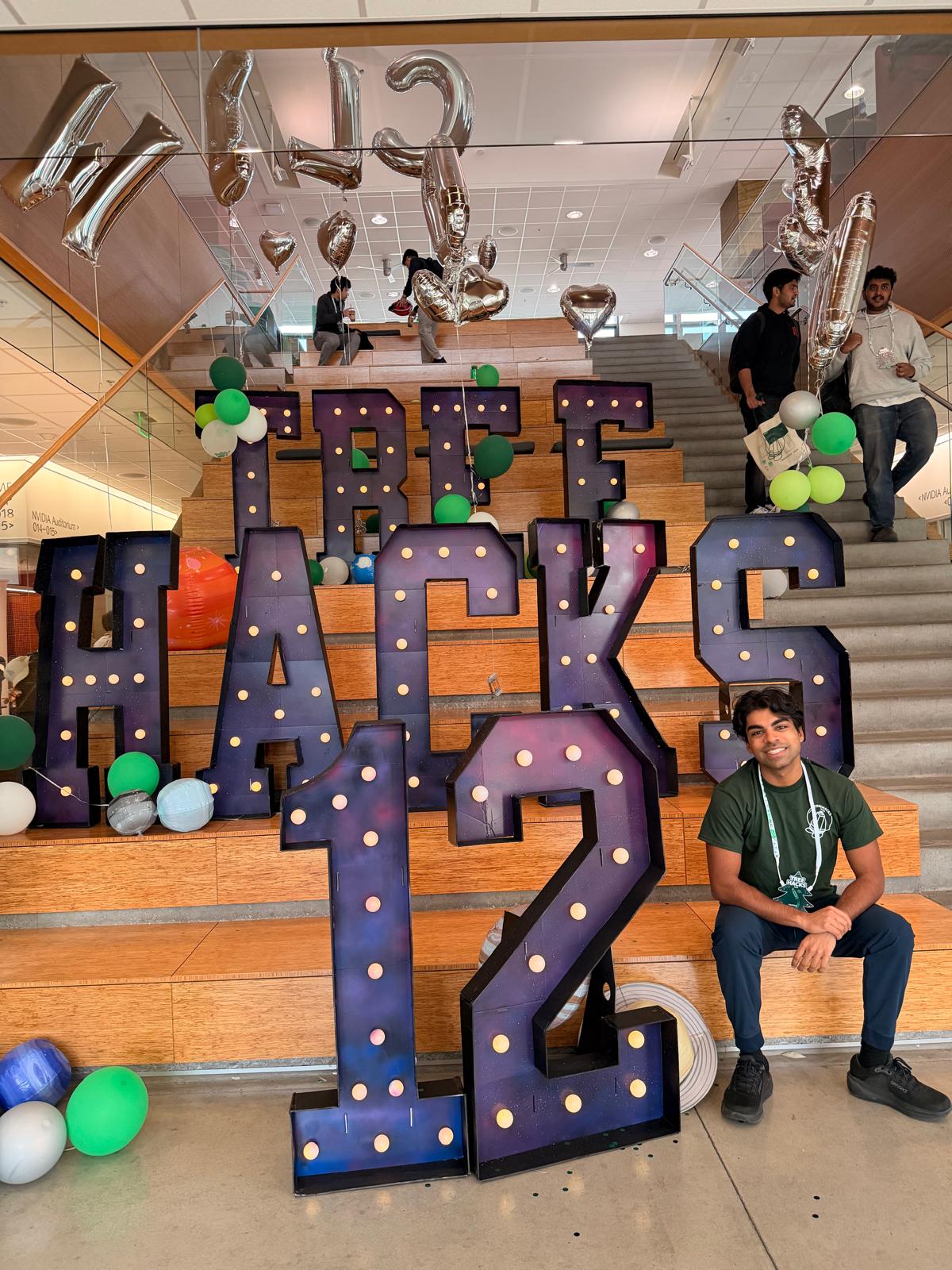
Stanford already has an extraordinary density of brilliance. TreeHacks compresses that density even further — out of the sprawling campus and into the Jensen Huang Engineering Center for a single, electric weekend. Walking in, I realized immediately that this was a choose-your-own-adventure kind of experience, and that the adventure you picked said a lot about who you were.
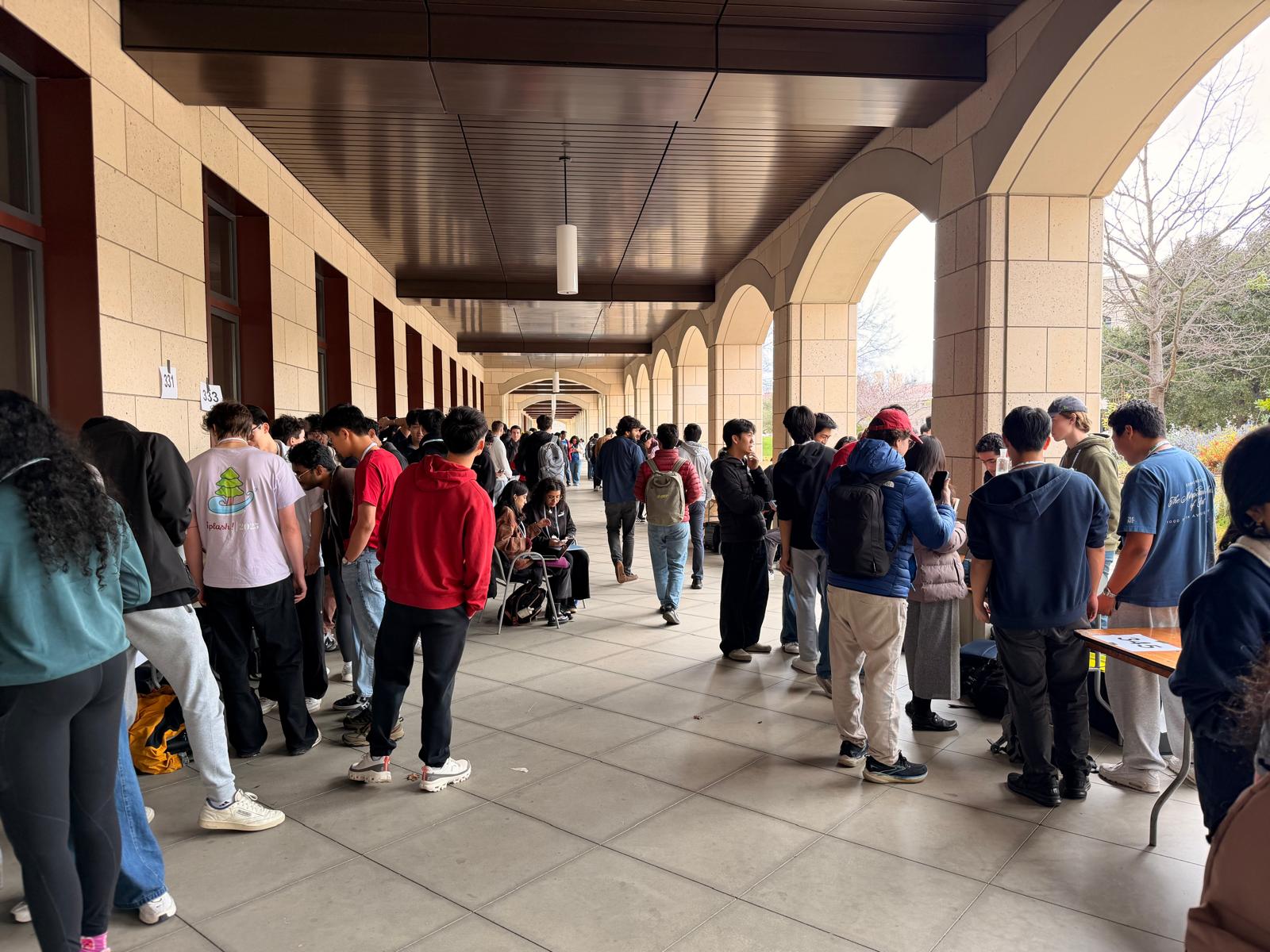
Some teams arrived early with pre-formed squads and polished ideas, locking down conference rooms and setting up their own little empires. They were in it to win it — veterans of the hackathon circuit who knew exactly how to allocate 36 hours. Others wandered in loose and curious, teaming up on the fly, building for the sheer fun of building. That’s the beauty of a hackathon: the structure is just loose enough for everyone to find their lane.
What struck me most, though, was the culture. So many of these engineers were just… nice. Non-transactional. Non-strategic. They wanted to build things, full stop. There was something pure about a room full of mostly 21-year-olds hunched over laptops at two in the morning, fueled by nothing more than energy drinks and the thrill of making something work. The acceptance rate for external applicants sat around one in 15. As far as I could tell, I was one of the only MBA students, if not the only one, in the building.
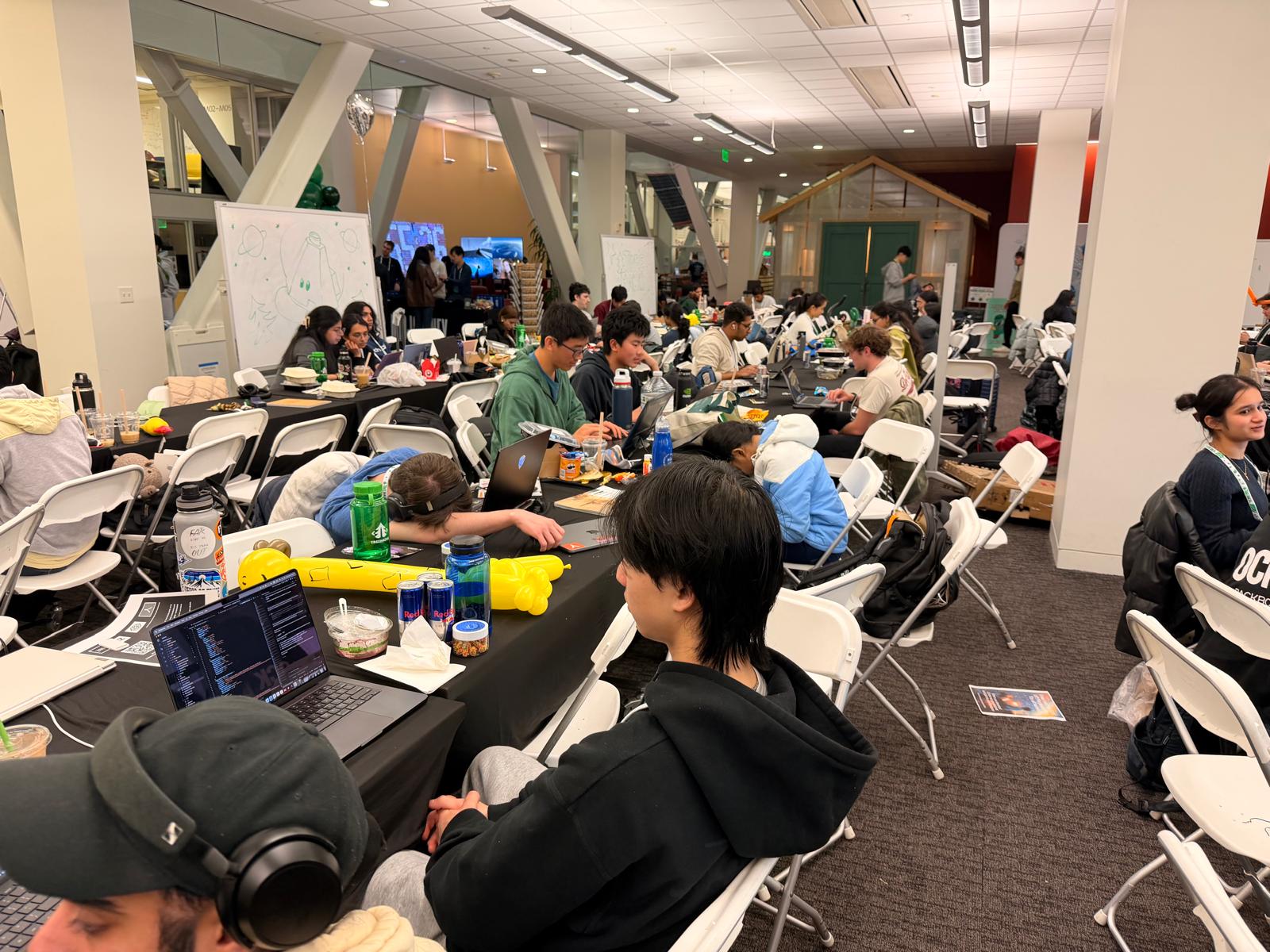
What I kept noticing was the sheer range of what people were building. A robot attempting to detect and remove debris from a person. A cybersecurity tool for automated bug detection. Meta Ray-Bans spatially detecting the clothes around somebody. A creatively jailbroken iPhone letting an LLM bot book an Uber entirely on its own. A model to audibly revive endangered languages. A CPR detection robot. None of these things had a business plan behind them. They were born from the question: what if?
That “what if” is the part that got me. There was no rhyme or reason to most of it — just genuine curiosity, a desire to tinker and play. Maybe some of these projects would turn into companies. Maybe they would turn into nothing. But for 36 hours, a thousand people were pursuing whatever made them curious, feeding off each other’s energy, and loving every minute of it. It was like watching people embrace the inner child that most of us have learned to put away.
I’ve been thinking a lot about what happens when you spend too long in a world that values optimization above all else. Business school trains you to be ruthlessly efficient: time, resources, outcomes. You learn to identify the fastest path from problem to solution. This isn’t inherently bad. But it comes at a cost. There’s a side of the brain — the side that wonders, that plays, that sits with the unknown — that can atrophy from disuse. At TreeHacks, I could feel that part of my mind waking back up. The people around me weren’t optimizing. They were building for the sake of building, creating things that served no purpose other than the thrill of creation itself. Just being in that room unlocked a whole separate side of my mind.
Part of me understands why I was alone from the business school. TreeHacks is a place where you have to actually build. Vibe-coding your way through Claude prompts was not going to cut it — not at this level — unless you genuinely understood the underlying codebase and system architecture. I learned this the humbling way. Chatting with my teammates, I could feel the gap. They were problem-solving through code in a language I didn’t fully speak. It wasn’t that I was lost at a high level, but the real-time engineering fluency — the instinct for how to decompose a problem into modules, the shorthand around frameworks and dependencies — that was beyond me.
That realization hit harder than I expected. I’ve studied mechanical engineering and computational biology. I’ve spent years around technical people. But the engineers I’ve usually interfaced with are the ones sophisticated enough to do the translation themselves — people who code-switch between the engineering world and the rest of the world. I’d been mistaking their bilingualism for my own. The truth is, I don’t yet have the ability to translate back into the language of engineers. That dual fluency — being able to move in both directions, not just receive the translation but produce it — feels like a genuinely important skill for someone stepping into a leadership role at the intersection of technology and business.
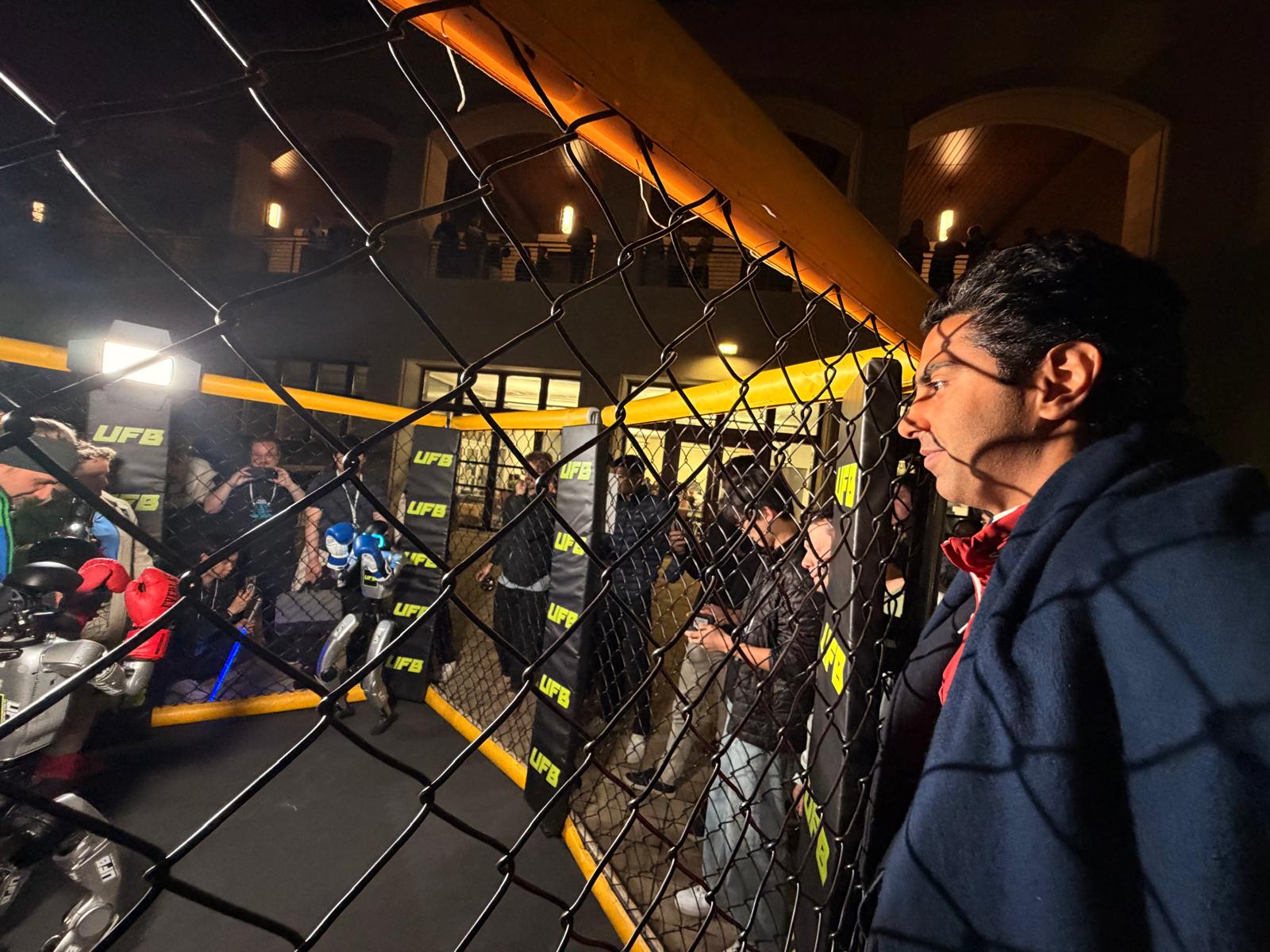
Still, I’m glad I showed up, even if I spent a fair amount of time enjoying robot fights and lightsaber battles. If you’re a business school student who only exists in the business school world, you’re missing the people who are actually building the future. Sam Altman and Garry Tan came through and delivered the kind of message you’d hope to hear in a room like that: Go for it. Be different. Be goofy. Change things.
At the end of the day, yes, there are prizes and awards. But the undercurrent of TreeHacks was something more fundamental — a spirit of youth, of exploration, of wonder. The kind of wonder that business school and professional life can slowly squeeze out of you if you’re not careful. TreeHacks was a reminder that making things is inherently beautiful, and that a room full of diverse, interesting people choosing to come together — not for a deal or a grade, but out of sheer curiosity — is something worth protecting.
I walked out feeling something I hadn’t felt in a while: that the most interesting things happen when you stop optimizing and start playing. That’s the adventure. You just have to choose to walk in.