
Arush Chandna is the co-founder of Inspira Advantage, a leading medical school admissions consulting firm.
In 2024, medical students in the U.S. graduated with an average debt of $212,341, with 56% owing at least $200,000 by the time they finished medical school. At institutions like the Stanford University School of Medicine, the brunt of this financial pressure is heightened as the cost of attendance for medical school approaches six figures annually.
At the same time, the government’s newest federal loan policy limits annual borrowing to $50,000 per year for programs like medical school, which only exacerbates the situation. Hence, for many aspiring healthcare professionals, the question is no longer how much to borrow but if they can even afford to become a doctor at all.
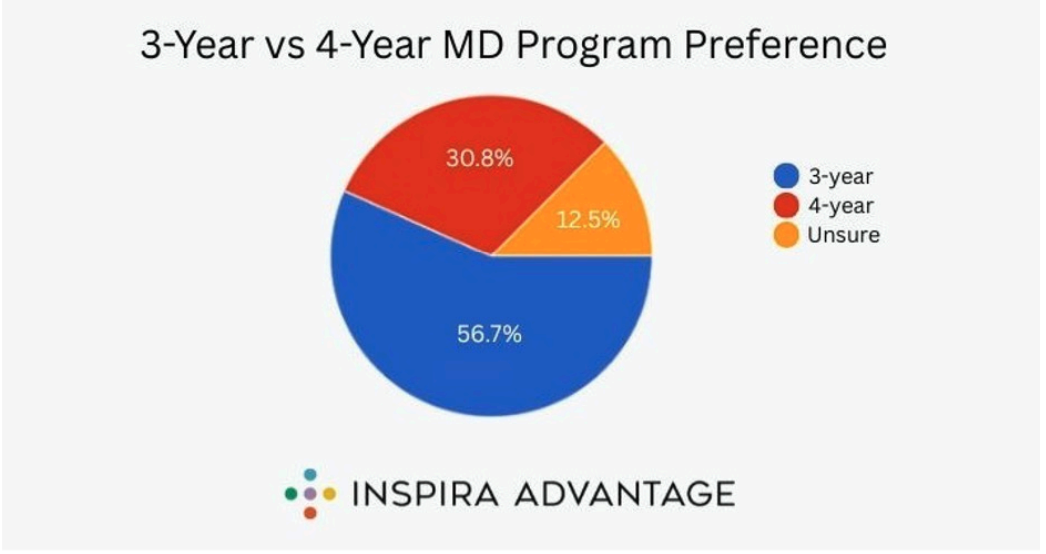
A recent national survey conducted by Inspira Advantage, a leading medical school admissions advising firm, found that nearly 57% of aspiring and current medical students would choose a three-year medical school pathway over the traditional four-year M.D. degree, if given the option. For more than 80%, the reason was student debt.
Stanford, hence, faces a critical question: can a pioneering institution such as itself take the lead on a three-year M.D. pathway as a viable alternative to traditional medical school? Here are reasons that show it must try.
First, California is in the midst of a critical physician shortage, especially in primary care and rural health. The state faces a shortage of 4,700 physicians and is expected to have an additional deficit of 4,100 by 2030. Even with graduates from prestigious institutions like Stanford who specialize in research and innovative healthcare, California must grapple with a dearth of physicians.
With an accelerated three-year program, Stanford’s School of Medicine can help address workforce gaps in healthcare by graduating physicians sooner, while allowing them to focus on core specialities and possibly decrease the shortage in rural areas. According to the survey, more than 62% of respondents said they would be more likely to accept a rural placement if tuition for medical school were reduced.
Second, Stanford’s medical school curriculum strongly emphasizes discovery, leadership and societal impact. An innovative three-year medical education track that helps contribute to more inclusive healthcare would only elevate the impact of this mission. 40% of the survey respondents said that a shorter M.D. track would allow them to set aside more time towards research or dual-degree programs. This can be particularly helpful for Stanford students who want to combine highly niche specialty goals with research. In the current curriculum that stretches over four years, students are limited by having to finish intense course requirements during a four-year period. With the extra time, they can combine multiple interests and contribute to the advancement of healthcare through research. Moreover, Stanford’s proximity to biotechnology and health-tech innovation systems makes it an opportune location for students looking to pursue patient care, research and health innovation.
Third, a three-year M.D. track can significantly contribute to better well-being for medical students and graduates. In addition to citing debt reduction, more than 55% of survey respondents said a shorter medical pathway would also help reduce burnout from a longer training timeline, and 52% said it would offer them more time to pursue personal or family goals. An institution like Stanford, which has invested heavily in wellness initiatives, should certainly consider how a shorter medical training program can aid in the improvement of its students’ well-being.
It’s only natural that a major change to a historically established pathway like the four-year M.D. raises concerns. Survey respondents expressed the following reservations about a three-year M.D.: 60.6% worry about training quality, 57.1% about residency competitiveness and 50.8% about clinical preparedness.
These concerns must be considered when designing a three-year M.D. pathway. However, the good news is that its viability can be tested by studying the over 30 such accredited programs that already exist in the country, among them NYU Grossman and Penn State University College of Medicine. These programs can serve as the blueprint for how to mitigate these concerns through selective admissions, a sharply tailored curriculum and an option that integrates residency training into the program.
We must also remember that a three-year M.D. program would not replace Stanford’s traditional four-year pathway. Instead, it offers an alternative for those students with critical financial needs, clear specialty goals and a passion for service-oriented specialties.
Stanford is known for its commitment to innovation and challenging the status quo, be it biotechnology breakthroughs or interdisciplinary education pathways. By exploring a strategically structured three-year M.D. option, Stanford would only be extending that spirit to its medical education. If it is indeed possible to train future physicians while attuning medical education to their financial needs, well-being and the workforce requirements of the nation, Stanford is the institution equipped to lead that change.