
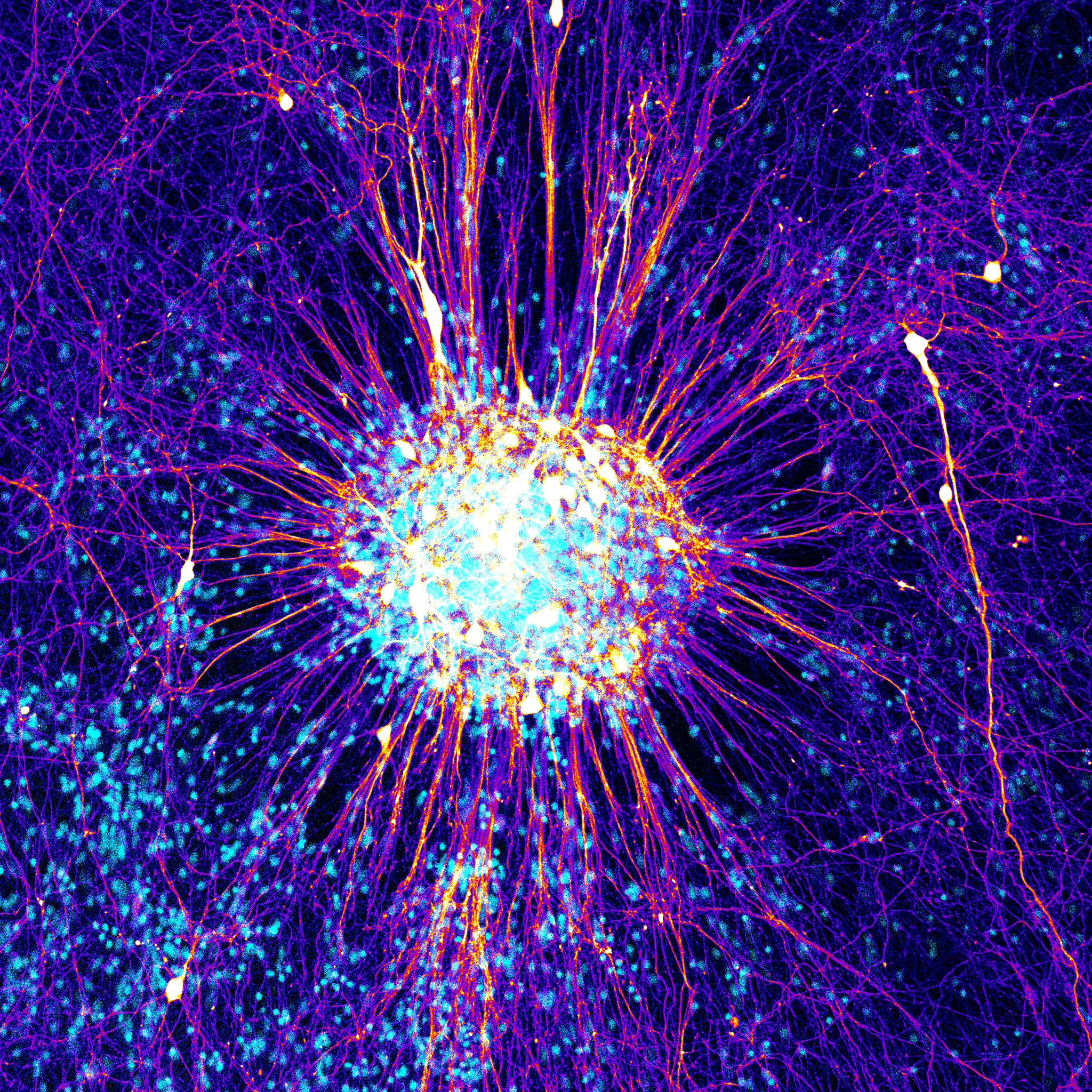
Stanford researchers collaborated on a Nature study published in January, which revealed that many autism-linked mutations ultimately converge on shared biological pathways despite genetic complexity.
Autism has long been linked to mutations in more than 100 genes, but the researchers’ findings suggest that many of those mutations may consistently affect certain underlying biological pathways that guide brain development.
The study is among the largest of its kind to model autism mutations, using more than 90 patient-derived stem cell lines to grow synthetic brain “organoids.” By comparing dozens of genetic variants over the first 100 days of development, the researchers tracked how distinct mutations influence early brain development and when their effects begin to overlap.
“Rather than examining single genes in isolation, we systematically compared multiple high-confidence risk genes across defined developmental windows in a human stem cell-derived model of the cortex,” wrote co-senior author and psychiatry and behavioral sciences professor Sergiu Pasca in a statement to the Daily.
This project was a product of collaboration across multiple institutions including Pasca Lab, the Broad Institute and the Geschwind Lab at the University of California, Los Angeles (UCLA).
Pasca Lab specializes in growing three-dimensional organoid models from reprogrammed stem cells, which capture molecular changes during fetal brain-like development. Because the human brain cannot be studied directly during development, organoids provide a novel way to observe how genetic mutations shape neural function in a controlled setting.
“We recognized very early on that to carry [out] something like this takes a multi-disciplinary team,” co-senior author and UCLA human genetics professor Daniel Geschwind said.
By performing genomic profiling of postmortem brains, Geschwind’s lab has shown that individuals with autism exhibit some shared molecular pathways.
According to Geschwind, by “studying one [mutation], you can’t really be sure that what you’re looking at isn’t specific to that particular mutation. So we’re trying to identify commonalities that could be involved.”
Pasca further emphasized that what surprised them the most “was the degree to which early developmental stages showed strong mutation-specific signatures, followed by emerging convergence.”
The findings may have further implications for the timing of clinical interventions.
“A lot of work needs to be done to understand optimal timing [of intervention] for each different form of autism,” Geschwind said. “But now that we have these models, we can actually test [the question]: Can we intervene early?”
Jon Bernstein, a Stanford clinical geneticist involved in the study, stated that “many patients with autism have differences in learning and behavior very early in life,” which is consistent with the early development differences found in the study.
Still, he cautioned that translating organoid findings into therapies will take time. “The results highlight that autism can have complex and varying origins and manifestations, so there is still more to learn.”
While autism remains genetically complex and highly variable, the study suggests its underlying biology may be less fragmented than once thought.
Looking to the future, Pasca sees organoid technologies “not only as platforms for discovery, but as engines for therapeutic development.”
His lab has already used similar stem cell-derived models to study Timothy syndrome, another rare neurodevelopmental disorder, and identify potential treatments for future clinical testing.
Geschwind, on the other hand, hopes to integrate computation and biology to develop high-throughput tools capable of analyzing thousands of mutations in parallel.
“We need datasets across many different mutations,” Geschwind said. “If done properly, those data can be used to train models for drug discovery.”