
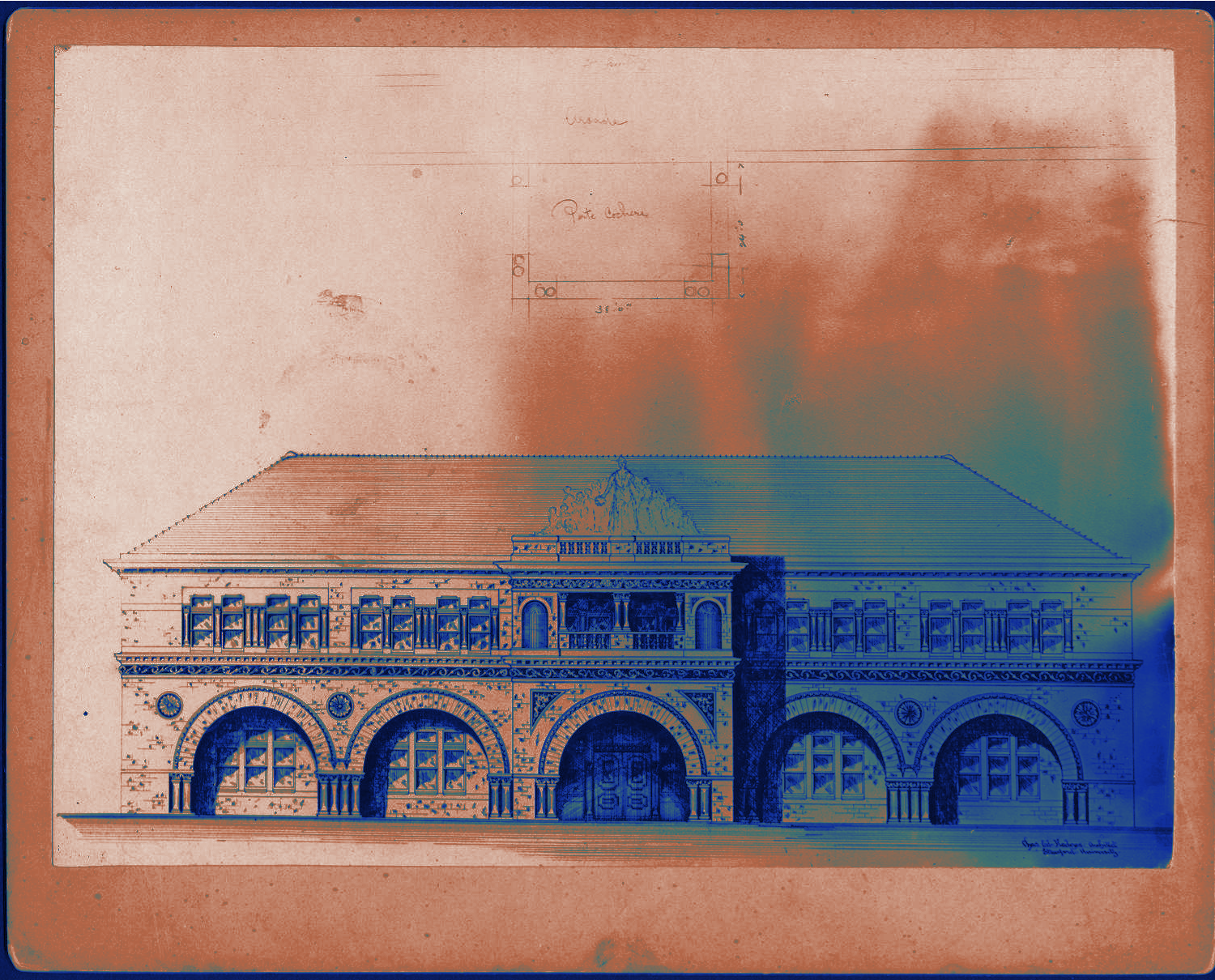
When freshmen filed into Frost Amphitheater for convocation on Sept. 16, 2025, they heard speeches, performances and welcomes to Stanford. What they didn’t hear — though many wouldn’t have known to notice — was the land acknowledgement honoring the Muwekma Ohlone Tribe on whose ancestral lands the University sits.
For Puali’i Zidek ’27, co-chair of the Stanford American Indian Organization (SIAO), the absence was immediately apparent. “When we didn’t know anybody that was reading the land acknowledgement — because they always ask a Native student to read it — we knew that it wasn’t getting read because we literally know every single person,” Zidek said.
Just hours before convocation, administrators sent a memo to department heads and provost offices announcing that they had decided to discontinue land acknowledgements for “university-wide ceremonies,” according to Adriana Young ’27, another co-chair at SIAO. The decision has sparked fierce debate about the University’s commitment to its Indigenous community and raised broader questions about institutional support for Native students navigating life at one of America’s most elite universities.
A decision made in silence
Land acknowledgements originated in Australia during the 1970s, were popularized in Canada during the Truth and Reconciliation Commission of the late 2000s and subsequently reached the U.S. through the Standing Rock protests of 2016 to 2017. Stanford University published its first official land acknowledgement in October 2021 and in the years following, have adopted the land acknowledgement into every convocation ceremony.
When administrators sent the memo out prior to the 2025 convocation, they explicitly instructed recipients not to “mass disseminate” the information to students, according to Young.
The memo, reviewed by The Daily, wasn’t signed by University president Jonathan Levin ’94, Provost Jenny Martinez or any identifiable administrator. The same lack of attribution is noted on the SIAO land acknowledgement reinstatement petition, which lists identical information. Native American Cultural Center (NACC) staff learned about the change approximately two hours before convocation. The Muwekma Ohlone Tribe wasn’t consulted.
Chairwoman Charlene Nijmeh of the Muwekma Ohlone Tribe learned of Stanford’s decision months later.
“It felt like a quiet erasure of our presence,” Nijmeh wrote in a statement to The Daily. “We’ve built meaningful partnerships with Stanford, from repatriating our ancestors’ remains to co-creating native plant gardens that honor our traditional knowledge. This step backward, announced without consulting us or other Native voices, seems thoughtless and cold.”
Professor Teresa LaFromboise, who directs the Native American Studies program, did not respond to multiple requests for comments.
Performative or essential?
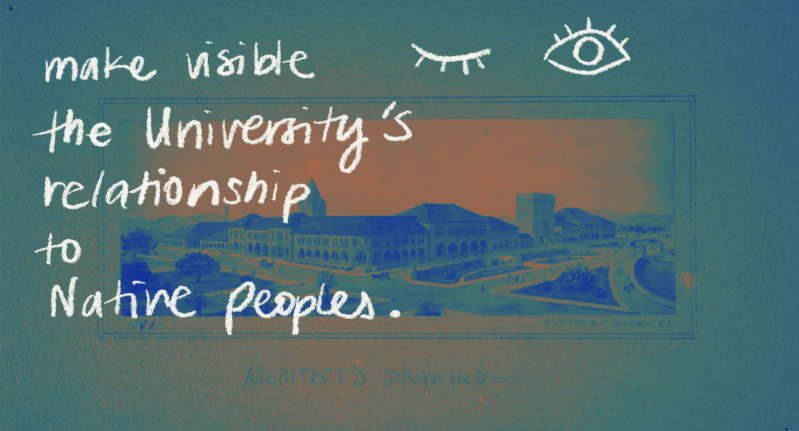
In a statement emailed to The Daily, University spokesperson Angie Davis explained that the administration discontinued land acknowledgments based on two core principles: the belief that the University should engage with “complex historical issues” through research and education rather than “symbolic university statements” and that University-wide ceremonies are intended to mark student milestones.
President Donald Trump issued a number of executive orders and federal directive seeking to curb diversity, equity and inclusion (DEI) initiatives at universities and other institutions, particularly those involving race-conscious programming. They heightened scrutiny of DEI-related practices nationwide and led some universities to scale back related initiatives. Stanford dissolved its Office for Inclusion, Belonging and Intergroup Communication (IBIC) on Jul. 11.
Because the Trump administration never specifically targeted land acknowledgements, according to Zidek, it signals a pattern of preemptive compliance under the current political climate. For example, Ohio State University banned most land acknowledgements in September of 2025 as discussions of diversity, equity and inclusion policies heightened.
Davis emphasized that “members and departments of the university community remain free to express their views in the form of a land acknowledgment in times and places they find meaningful.” For example, the land acknowledgement was said at the New Student Orientation’s Faces of Community event which, unlike convocation, is student-run.
In an interview with The Daily, Professor C. Matthew Snipp, the Burnet C. and Mildred Finley Wohlford Professor of Sociology and Vice Provost for Faculty Development, Diversity and Engagement, recognized being “of two minds” about land acknowledgements.
“On some days, I find them really obnoxious and annoying,” Snipp said. “They’re gratuitous. Too many times I’ve sat in these events and somebody just sort of rambles through the words, sort of like kids saying Pledge of Allegiance at school. It’s meaningless.”
He also raised a concern that resonates with some critics: that land acknowledgements “tend to airbrush history” rather than confront it. He explained that the purpose of land acknowledgements in the Land Back movement was to encourage the government to apologize and for the people to return parts of land to indigenous groups, which had success to varying degrees.
Yet Snipp also recognized the acknowledgement’s importance to the Muwekma Ohlone Tribe, which has fought for federal recognition since it was stripped away without tribal consent in 1927. He said that he believes that the tribe wants to gain leverage from Stanford’s institutional recognition.
Demetrius Brown ’27 thinks this debate misses the larger point. “When it comes to supporting Indigenous communities anywhere, simply recognizing the harms done by colonization and how we all benefit from this injustice in some way is a basis of knowledge that can potentially spark action,” he said.
As evidence of Stanford’s commitment to Native communities, the University statement listed numerous initiatives: the Native American Studies Program, the Native American Cultural Center, Stanford Powwow, Muwekma-Tah-Ruk house, the Native Plants Garden and the recently established ’Amham Šumi-mak Muwekma Endowment funded by Eric and Wendy Schmidt.
Some students feel this is disingenuous on the University’s part because many of those initiatives are primarily student-led or born from student activism efforts from decades ago. According to the Stanford Native American Cultural Center, the Muwekma-Tah-Ruk house itself came from student activism decades ago. The Stanford American Indian Organization, which just celebrated its 55th anniversary in Oct. 21, 2025, was founded in the aftermath of the 1960s student movements. The Native American Cultural Center was created when students took over an abandoned building, inspired by the 1961 Alcatraz Occupation by 78 Native Americans.
“The purpose was to show, ‘Look what we do for you,’ but they were linking to things students created,” Young said of the list.
The Indigenous students who are drawn to Stanford often come specifically for its Native community. Aurora Yazzie ’29 described that growing up in the Bay Area, she was aware of the substantial student-run Native community on campus.
“I grew up coming to the Stanford Powwow every year,” Yazzie said. “I’ve never really had that type of community going to public school in California. Even in New Mexico, there was maybe, like, one other Native in my class.”
Zidek was similarly drawn to Stanford because of the strength of the Indigenous community. “I had seen how large the Native community was here and how inclusive it was to many different indigenous cultures, and that was something that I did not see at other schools,” Zidek said.
The Native Plant Garden, a source of community pride according to Young, depends on student engagement. Michael Wilcox, a lecturer in Native American Studies who created and helps coordinate the garden, emphasized its importance as an “alternative teaching space where students can do physical activity projects that are relevant to their interest.”
“It’s not just sitting in a classroom listening to someone kind of spit information at you,” said Yazzie, who is enrolled in Wilcox’s course for the second quarter in the row. “You’re learning from the land, and you’re learning from each other, like, those within the community, and I think that’s really cool.”
In a written statement to The Daily, Wilcox said that the Native Plan Garden hosts teaching modules where local school children can learn about nature, climate change and the history of the tribe. Last fall, the garden hosted a dance for the Muwekma Ohlone Tribe “where little kids were able to perform a winter ritual for the first time in San Mateo County in about 200 years,” Wilcox wrote.
His courses emphasize the importance of relationship-building, proper methodology and the unlearning of “untrue and false narratives of indigenous histories, peoples and communities.”
“Indigenous peoples are not victims of the modern world,” Wilcox continued. “This is a framing that many historians and people have used to attract attention to the plight of native peoples. The downside is that in emphasizing problems and social pathology, we have created a deficit-based vision of native communities that doesn’t at all map onto the healthy, thriving places I’m most familiar with.”
Living in the in-between
However, the daily experience of being Indigenous at Stanford involves what Young calls “living in the in-between,” or navigating between a supportive Native community and a broader University environment that often feels hostile or indifferent.
“I wasn’t prepared to come in, sit in a classroom and hear my teachers use derogatory slurs, put really harmful pictures up on the screen,” Young said. “I wasn’t prepared for me to have to justify my thought processes in my papers and how oral tradition is a valid form of research. There’s the beauty of the Native community and then there’s stepping outside. It’s gotten to a point where you often, as a Native person in classrooms, have to decide: am I gonna pick this battle today?”
According to Zidek, SIAO was created “in opposition to the University.” SIAO is comprised of approximately 25 subgroups who organize everything from dance troupes to academic support networks. Last year, SIAO organized its first off-campus formal, an elegant event that drew more than 100 Native students.
“The Native students on campus didn’t have an event that was catered to them,” Young explained. “The Native community deserves an event that is honoring their hard work, honoring their presence.”
Zidek expressed frustration about this, given that students already have to pay over $90,000 of tuition every year. “There’s no coordination from other offices within Stanford to help us,” Zidek said. “Nothing is free. Everything we have to pay for.”
The Stanford Powwow reflects both the accomplishments of the Native community and the ongoing challenges the community faces within institutional settings. As the largest student-run powwow in the world, it draws up to 30,000 attendees annually. Yet the Stanford Powwow Committee pays the University between $30,000 and $40,000 to use the land.
Neither Zidek or Young could recall seeing top administrators at the massive event. “When’s the last time you saw [Provost] Jenny [Martinez] at Powwow?” Young asked.
A partnership in progress
The relationship between Stanford and the Muwekma Ohlone Tribe represents both possibility and frustration. Recent years have seen meaningful collaboration: joint archaeological digs, repatriation of ancestral remains, and the Native Plant Garden.
Wilcox, who helped found the Muwekma Ohlone Preservation Foundation, a 501(c)(3) land trust, described these partnerships as crucial bridges between academic and Indigenous knowledge.
“In recent years, the Muwekma Ohlone Tribe has been more and more involved in the Stanford academic and student community,” Wilcox wrote. “This is a very important shift. I think much of this had to do with the land acknowledgment process and the renaming, which connected students… back to the tribe.”
A prominent example of this partnership occurred in 2024 when biology professor Tadashi Fukami, Faculty Director of the Jasper Ridge Biological Preserve, worked to introduce a translated name of the preserve to ‘Ootchamin ‘Ooyakma (red ridge or mountain) to honor the Muwekma Ohlone tribe. Currently, Wilcox is working to update the Wrigley Program, a Stanford field-based ecological and food systems restoration program in Hawaii, to be incorporated to the newly formed Stanford Center for Just Environmental Futures, directed by Associate Dean for Integrative Initiatives in Environmental Justice Rodolfo Dirzo and professor of Climate, Environment, and Society Maxine Burkett.
Of the project, Wilcox wrote that this is the “most exciting and innovative new direction for Native studies.”
He added: “If there’s one thing that indigenous people have figured out, it is how to live for long periods of time in a landscape without transforming it radically through monocrops, industrial agriculture, and other extractive economic projects.”
Nijmeh has a more expansive vision for this partnership. In her comment to The Daily, she outlined concrete steps that Stanford could take to move from acknowledgement to meaningful partnership, including creating an ex-officio seat for the Muwekma Ohlone Tribal Chairperson on the Board of Trustees, the establishment of a permanent Director of Tribal Relations position and facilitation of indigenous-led research and archeological projects.
“These steps aren’t grand gestures but reasonable commitments to equity, turning acknowledgment into reparative action,” Nijmeh wrote. “With Stanford’s vision, we could model what decolonial partnership looks like for the world.”
The tribe’s ongoing fight for federal recognition adds urgency to these partnerships. While Stanford faculty, including Wilcox and University archaeologist Laura Jones, help document the tribe’s history and presence to support recognition efforts, broader institutional backing remains inconsistent.
“Support varies,” Nijmeh wrote. “While some departments embed our narrative in their work, broader institutional backing, such as public endorsements during key legislative moments, could be stronger.”
The Native studies paradox
Perhaps nowhere is the gap between rhetoric and support more apparent than in Stanford’s Native American Studies program, according to Young and Zidek. Despite the University’s public commitments to Indigenous education, the program remains understaffed, underfunded in practice and struggles to serve students, they said.
The numbers tell a stark story. Only a few students are able to major in it due to the lack of course offerings. Just two faculty members are officially part of the program: Snipp, who focuses on his vice provost role, and LaFromboise, who teaches one Native Studies course per year during spring quarter. A total of five lecturers rotate through teaching special language courses and seminars.
“I don’t have concerns about minoring in it,” Yazzie said. “But I do think there may not be enough classes to choose from if you would like to major in it.”
The lack of faculty means limited course offerings and little departmental advocacy for expansion. “I don’t see anybody pushing for more Native studies classes to exist,” Zidek said. Stanford’s faculty demographics support this reality: every demographic group has a percentage listed except Native people, who are marked “less than five.”
In recent years, Native American Studies secured the ‘Amham Šumi-mak Muwekma grant, which is overseen by LaFromboise.
“She didn’t ask us what we wanted. Nothing,” Zidek said. “We don’t even know what events are coming up, who’s coming. But we know that money is being spent somehow.”
LaFromboise did not respond to multiple requests for comments about department course offerings, faculty representation, budgeting and programming.
What comes next
In November, during Native American Heritage Month, SIAO released a statement condemning Stanford’s decision to repeal the land acknowledgement and launched a petition to reinstate and expand land acknowledgements. The statement listed concerns about the lack of consultation and ample communication from the administration.
Working with ASSU, they sent the petition to all undergraduates. The Undergraduate Senate (UGS) and Graduate Student Council (GSC) later issued a joint resolution supporting the petition, stating that they “jointly call on Stanford University to reinstate the land acknowledgment at all campus-wide ceremonies.” This passed the GSC on Nov. 6 and UGS on Nov. 12.
“Students have every right to press their opinion on issues around the University,” Snipp said. “I guess we’ll wait and see what impact the petition has. Every student, every student group, every organization at the University has an opportunity to express their voice and opinion about these kinds of things.”
Nijmeh expressed gratitude for the support and mobilization from the Stanford community. At the same time, she said that she values dialogue and understanding regarding the issue. “I have personally met Stanford’s new president and my belief is that we are partners with the Stanford community,” she wrote. “I want to sit down with our partners and find out their thoughts regarding the rationale of these actions before making any judgments.”
Wilcox echoed this importance of understanding in regards to indigenous visibility on campus.
“There’s so much hope and life and aspiration and visioning that happens in indigenous communities that most people have no idea about,” Wilcox communicated. “If I can help communicate some of that beauty to the Stanford community, then I will have made a contribution.”
A previous version of this article stated that Jasper Ridge Biological Preserve was renamed to ‘Ootchamin ‘Ooyakma but in actuality, ‘Ootchamin ‘Ooyakma is a translation of Jasper Ride. A previous version of this article incorrectly spelled Adriana Young’s first name as well as “Muwekma” in a graphic. A previous version of this article incorrectly spelled “Muwekma-Tah-Ruk.” The Daily regrets these errors.