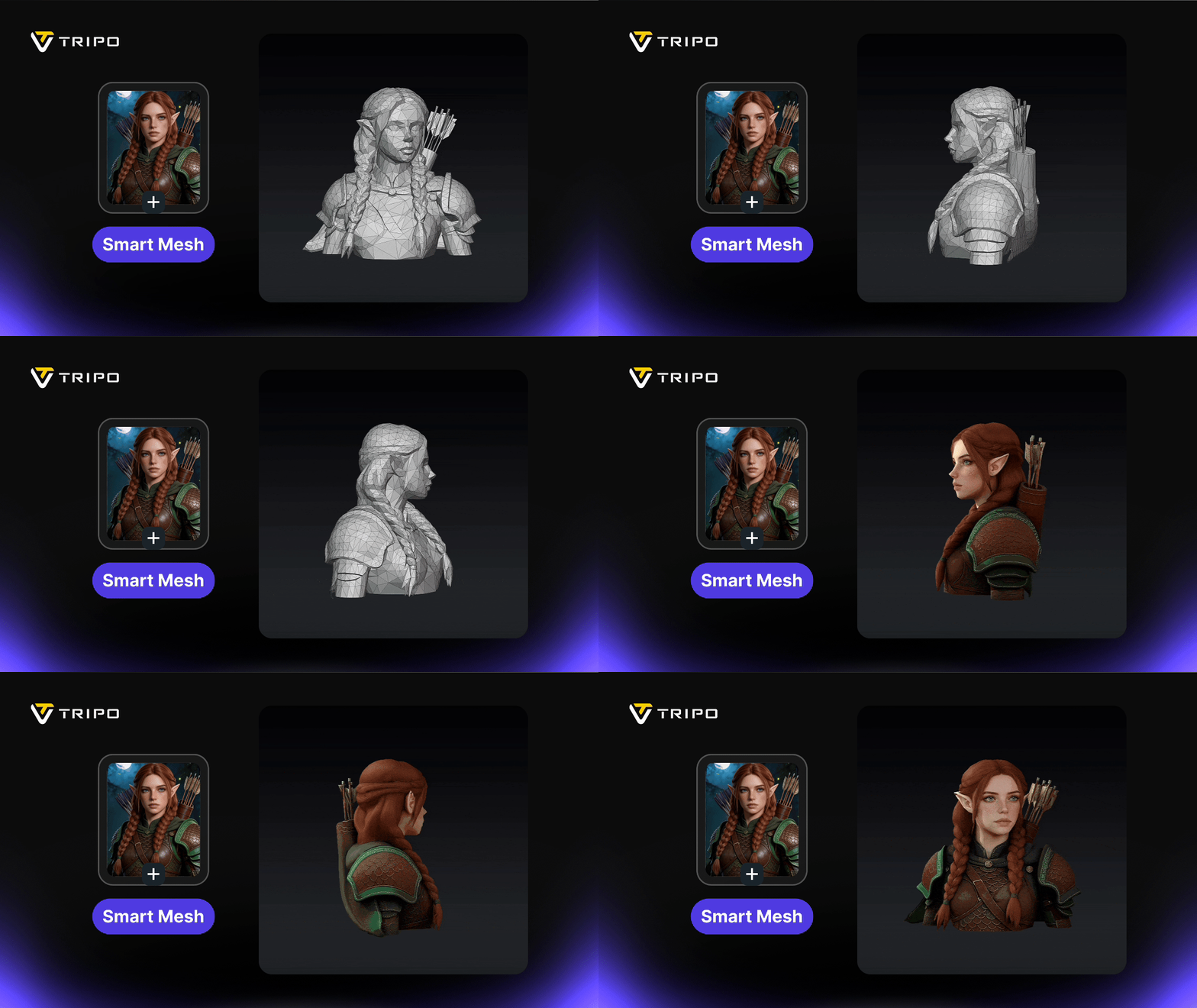
For years, most AI systems creating 3D content have relied on techniques adapted from large language models or image generation. These approaches typically convert geometric data into sequences before reconstructing three-dimensional shapes.
But Tripo AI, a leading AI company building some of the world’s most capable 3D generation models, is taking a different approach: modeling geometry directly in three-dimensional space.
“Much of today’s generative AI is built around sequences,” said Simon Song, Founder and CEO of Tripo AI. “But three-dimensional space is inherently holistic and symmetric. When geometry is forced into a sequence, artificial structure is introduced. Our approach models shapes directly in native spatial space, allowing structure to emerge coherently.”
Tripo AI’s suite of image-to-3D and text-to-3D models, including Tripo H3.1 and Tripo P1.0, provides measurable gains in geometric precision, generation speed, and production-ready quality.
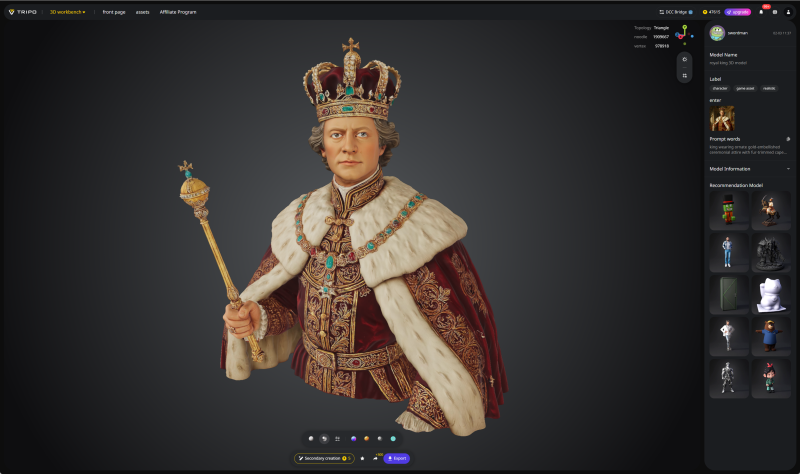
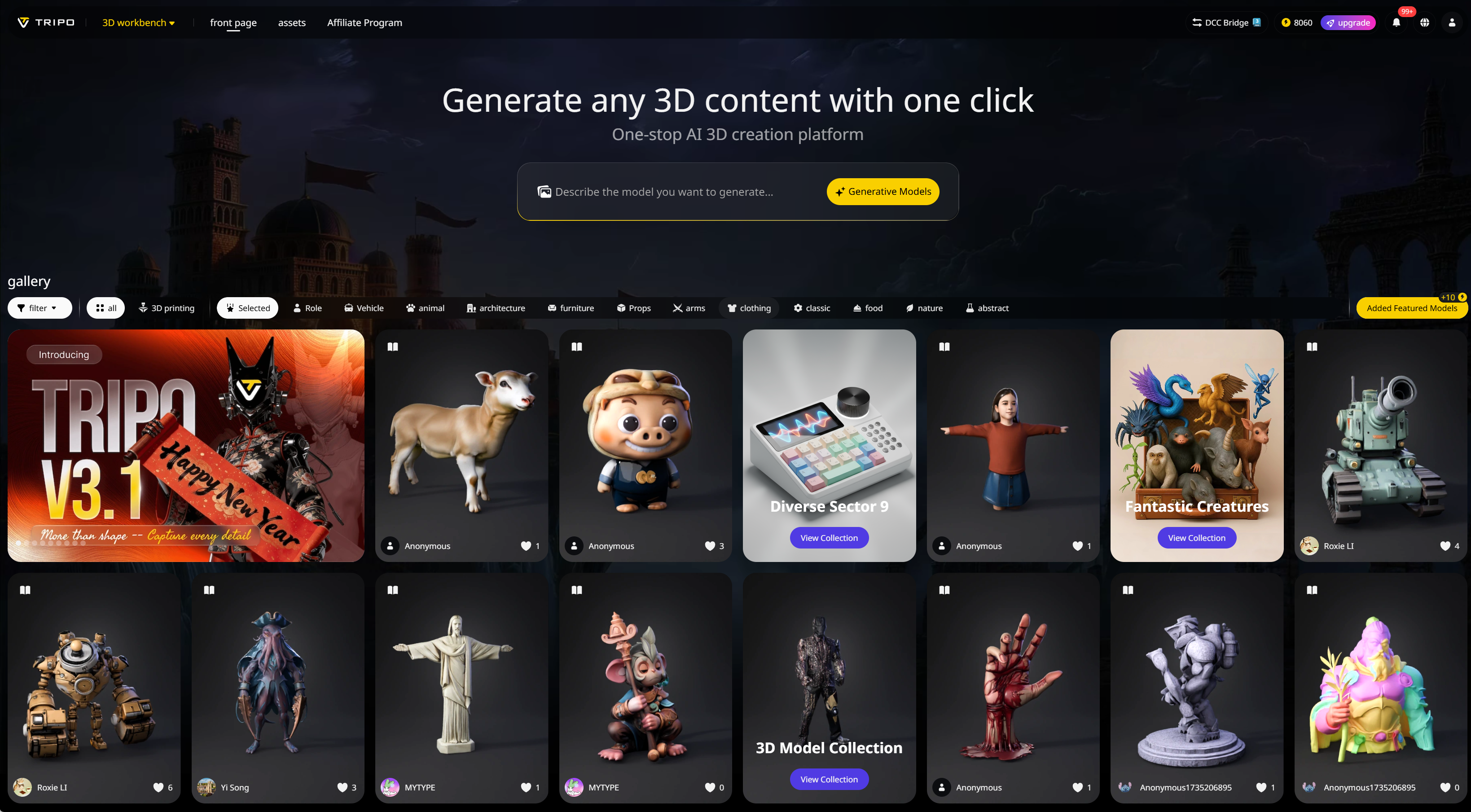
But foundation models are just the tip of the iceberg for Tripo AI. Song’s vision is for Tripo AI to become the foundational infrastructure for 3D model creation, making AI 3D accessible to everyday creators.
The company has formed partnerships across industries including gaming, content creation, manufacturing, and robotics, working with companies such as Replit, Sony’s Spatial Reality Division and NetEase.
The company’s end-to-end platform combines proprietary AI models with ecosystem plugins and an integrated workspace to support scalable, accessible 3D asset generation for production environments. The platform serves more than 6.5 million creators and 90,000 developers, with more than 100 million 3D models generated to date. Through a suite of subscription tools, creator applications and developer APIs, Tripo AI enables studios, platforms, and independent developers to directly integrate AI-generated 3D content into production pipelines.
From an educational perspective, Tripo AI is reshaping how students develop 3D skills by allowing them to generate production-ready models from text prompts or images, without requiring extensive traditional training. Rather than spending time on manual setup, students can focus on design thinking, iteration, and creative problem-solving — skills that translate across industries. The platform also fosters peer learning through a global creator community, exposing students to AI-native workflows that closely mirror real-world production environments they will encounter after graduation.
“Three-dimensional representation is a fundamental structure of the physical world,” Song said. “As AI moves beyond text and images, spatial reasoning will become essential to how machines understand and operate within reality.”