
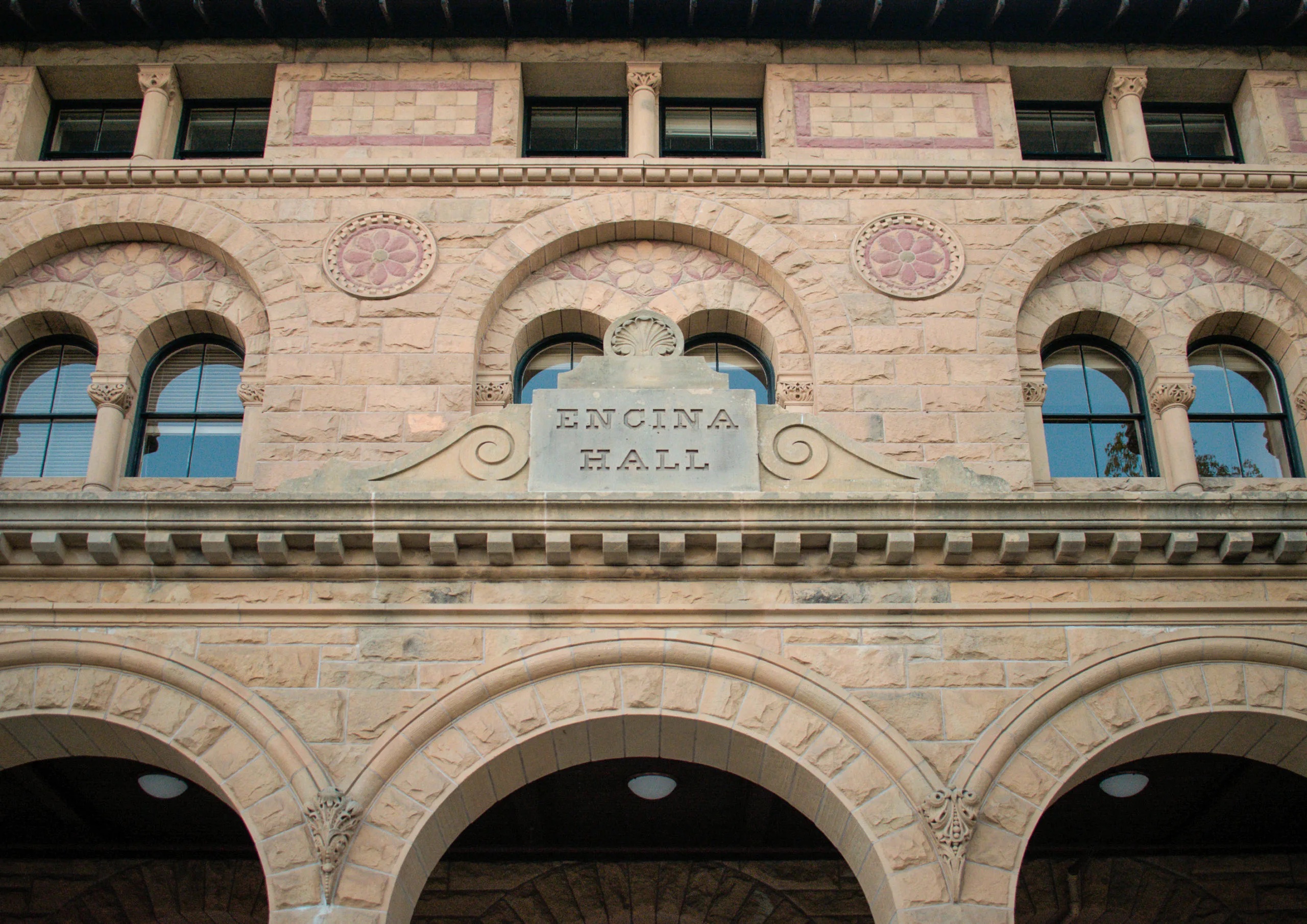
Stanford joined the ranks of Yale and UC Berkeley as an official American academic target of the Kremlin, after Russia labeled the University an “undesirable” organization last Friday. The label means anyone with a connection to the institution could face criminal charges in Russia.
The Russian Justice Ministry and the Prosecutor General’s Office did not elaborate on what specifically triggered the designation. However, Stanford scholars say the move is a retaliatory response to criticism of the Russian state by academics and former U.S. government officials affiliated with the University.
The designation places Stanford among more than 200 foreign organizations banned from operating in the country. Under Russian law, individuals who cooperate with “undesirable” organizations can face fines or criminal prosecution — a policy that tightens restrictions on international academic exchange.
The decision reflects a broader effort by the Russian government, according to Amir Weiner, Director of Stanford’s Center for Russian, East European and Eurasian Studies (CREEES).
“We, at CREEES, were disappointed but not surprised,” wrote Weiner in an email to The Daily. “This is yet another senseless and inexplicable step by the Russian government in an attempt to cut off the Russian population, and academia in particular, from the West.”
Weiner added that the designation aims to deter Russian students and scholars from applying to or collaborating with Stanford out of fear of legal repercussions. “This measure seeks to force them to choose between the threat of criminal prosecution and immigration,” he wrote.
Since Russia’s full-scale invasion of Ukraine in 2022, the Russian government has intensified its restrictions on external influence and limited the flow of information across its borders.
Michael McFaul ’86, a political science professor and the former U.S. ambassador to Russia, emphasized that academic institutions should remain separate from geopolitical conflict.
“There are all kinds of different ways to punish each other, but academic institutions should not be a part of that,” McFaul said.
He added that the designation was not entirely unexpected given Stanford’s prominence and the number of its scholars “who have said very critical things about [President Vladimir] Putin and his belligerent ways abroad and his autocratic ways at home,” McFaul said. “So it’s not surprising, but I still think it’s regrettable.”
Concrete effects of the designation could be limited. Many academic exchanges and research opportunities in Russia have already been severely restricted since 2022.
Alina Bykova, a sixth year Ph.D. student in Russian and Eastern European History, said that the new label was “another instance of bad news in a long string,” but that the most significant disruption to her work came with the Russian invasion of Ukraine, which made travel to Russia increasingly unsafe and access to archives more difficult.
“It became very dangerous to go to Russia,” Bykova said. “People from the West could try to go, but they’re in for trouble.”
Many scholars have subsequently shifted their research strategies, relying on archives outside of Russia or working with research assistants within the country. Bykova said she intentionally chose a dissertation topic that would allow her to access materials in countries such as Norway, the United Kingdom and Germany.
Despite the continued narrowing of intellectual exchange between Russia and Western institutions, Weiner said Stanford will continue its work in Russian, Eastern European and Eurasian studies.
In Bykova’s view, the new designation primarily affects Russian nationals.
“The greatest threat is to actual Russians who want to come and work at Stanford,” she said. “That’s a detriment to the Stanford community.”