
“Give them wisdom in every decision, endurance for the trial ahead, unbreakable unity, and overwhelming violence of action against those who deserve no mercy.”
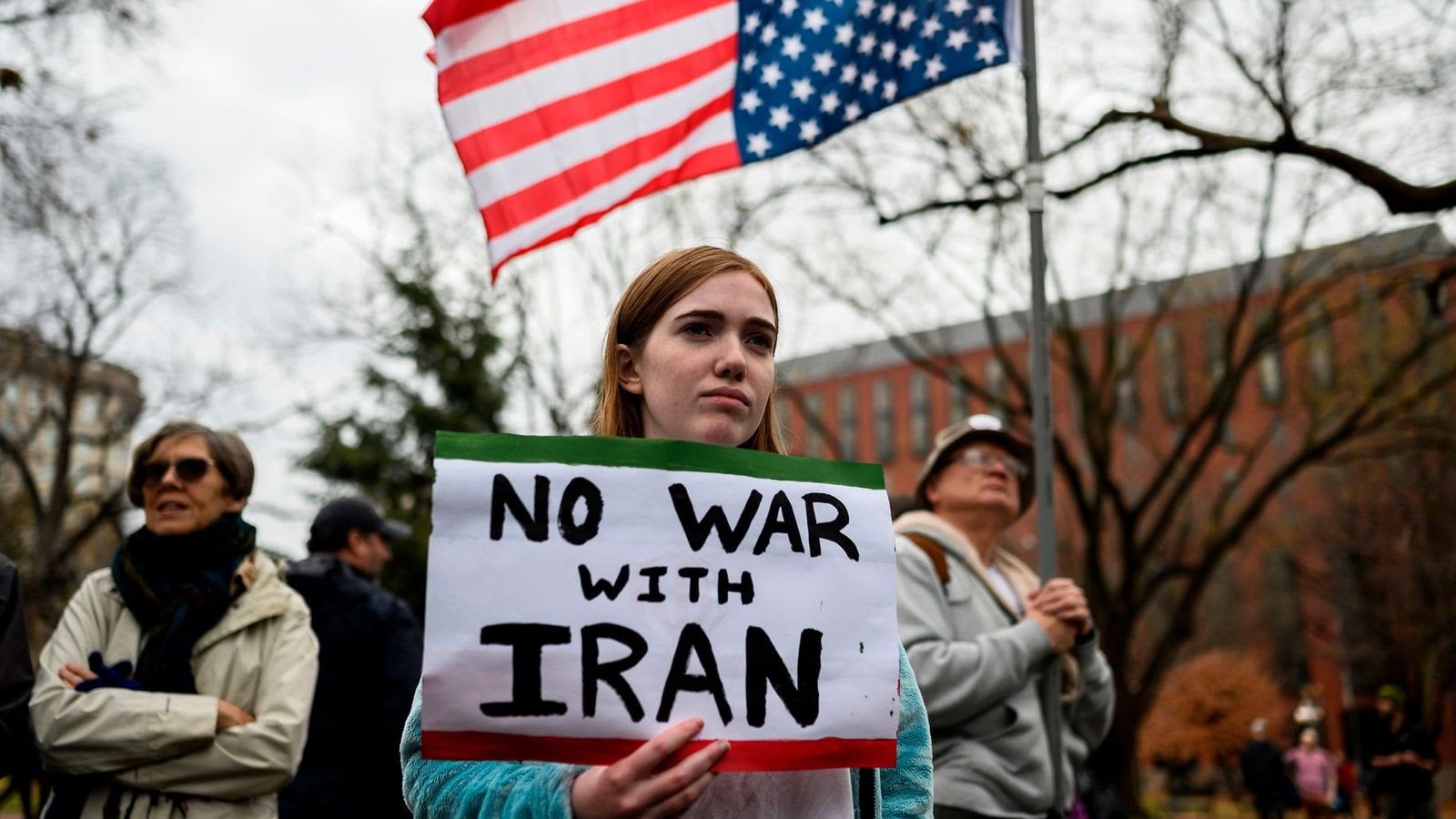
This is a line from a prayer that Defense Secretary Pete Hegseth read during a Christian worship service at the Pentagon on March 26. As we approach seven weeks of war in Iran with no clear end in sight, Hegseth has consistently framed the invasion in religious terms. In a recent interview with 60 Minutes he stated, “The providence of our almighty God is there protecting those troops.”
Hegseth’s invocations of divine justice raining down on the enemies of the United States have received sharp criticisms from Christian leaders, namely Pope Leo XIV. In his Palm Sunday homily, the Pope declared that God “does not listen to the prayers of those who wage war.” He reiterated this sentiment during Holy Thursday mass, affirming that the Christian mission has often been “distorted by a desire for domination, entirely foreign to the way of Jesus Christ.”
There are numerous political issues on which sincere Christians can reasonably disagree. Questions like taxes, immigration and healthcare do not have clear or definitive answers grounded in Christian teaching. This war, however, is different. It is one thing for a secular government to wage an unjust or immoral war; it is another to invoke Christianity to justify a conflict that directly contradicts its core moral principles. Using faith in this way is not only misleading but manipulative. From a Christian moral standpoint, this war cannot be justified.
To understand why, it is helpful to examine a long-standing framework Christians have used to evaluate the morality of war. Just war theory is a branch of philosophy that outlines moral justifications for why and how wars are fought. It encompasses ideas developed over thousands of years by religious and secular thinkers. The modern Catholic codification has four strict conditions for defense by military force:
- “The damage inflicted by the aggressor on the nation or community of nations must be lasting, grave and certain.”
- “All other means of putting an end to it must have been shown to be impractical or ineffective.”
- “There must be serious prospects of success.”
- “The use of arms must not produce evils and disorders graver than the evil to be eliminated.”
It is worth noting that these conditions already presuppose a defensive war. If we consider that the United States’ action against Iran is not, in fact, defensive, then that is the end of the story. It is unjust. In the aftermath of the strike, leaders from both the U.S. and Israel affirmed that the initial attack on Iran was preemptive, meaning that, in a strict sense, this condition is not met. However, less strict understandings of just war doctrine permit preemptive strikes if there is credible knowledge of a certain, imminent attack by the aggressor. A few hours after the offensive began, President Trump stated that his objective was to eliminate “imminent threats from the Iranian regime.” Secretary of State Marco Rubio had a slightly different explanation, pointing to the fact that the United States knew of planned Israeli military action against Iran that would “precipitate an attack against American forces” and that forgoing a preemptive strike would lead to “higher casualties.” If there was indeed credible intelligence of a planned strike by Iran or a retaliatory strike following an Israeli offensive, it could be argued that a preemptive US strike to mitigate the effects of the attack is a justifiable defensive action.
The first condition follows from the reasoning above. If the U.S. expected “lasting, grave and certain” damage by Iran, a preemptive offensive action could be justified. The ambiguity surrounding the administration’s justification raises important doubts about whether this threshold has truly been met. Without clear, publicly verifiable evidence of an impending attack, the moral legitimacy of labeling this war as defensive becomes tenuous.
The second condition requires that all other means of resolving the conflict have been shown to be “impractical or ineffective.” The United States has been in on-and-off negotiations with Iran over its nuclear program for the last 25 years. Since February 28th, American and Iranian diplomats have held a series of unsuccessful talks to put an end to the war. However, the history of failed diplomacy does not necessarily mean that all nonviolent options have been exhausted. Diplomatic failure is not the same as diplomatic impossibility.
In the context of the third condition, success means defending oneself from the aggressor with the intention of reaching a stable peace while minimizing casualties. The U.S. certainly has the military power to defend its assets in the region successfully. However, based on the United States’ track record of wars in the Middle East, there is reasonable doubt that the US will be able to establish any kind of lasting peace without inflicting massive casualties.
The final condition is particularly important in this case. In essence, this principle tells us how a war should be fought so that it is just. The response to an attack must not produce more harm than the attack itself. The U.S. and Israel’s attacks on Iran are devastating the country. It’s estimated that strikes by the U.S. and Israel on Iran have killed 1900 people so far. There have been 13 U.S. casualties. In the first 24 hours of Operation Epic Fury, U.S. forces hit over 1,000 targets. Now they have settled into a sustained pace of 300-500 strikes per day. An accidental U.S. strike on a girls’ elementary school killed 168 people, including over 100 children. The current “preemptive” U.S. response dwarfs the damage that could have been caused by any Iranian strike on U.S. forces.
When viewed through a Christian framework this war is clearly immoral. Yet, our leaders continue to pervert Christianity to defend actions that are antithetical to its most basic principles. This is a serious affront to Christians in the United States and should not be tolerated. We cannot allow politicians to distort religion to advance their own agendas. If we fail to reject this, we risk confusing power with righteousness — and calling it faith.