
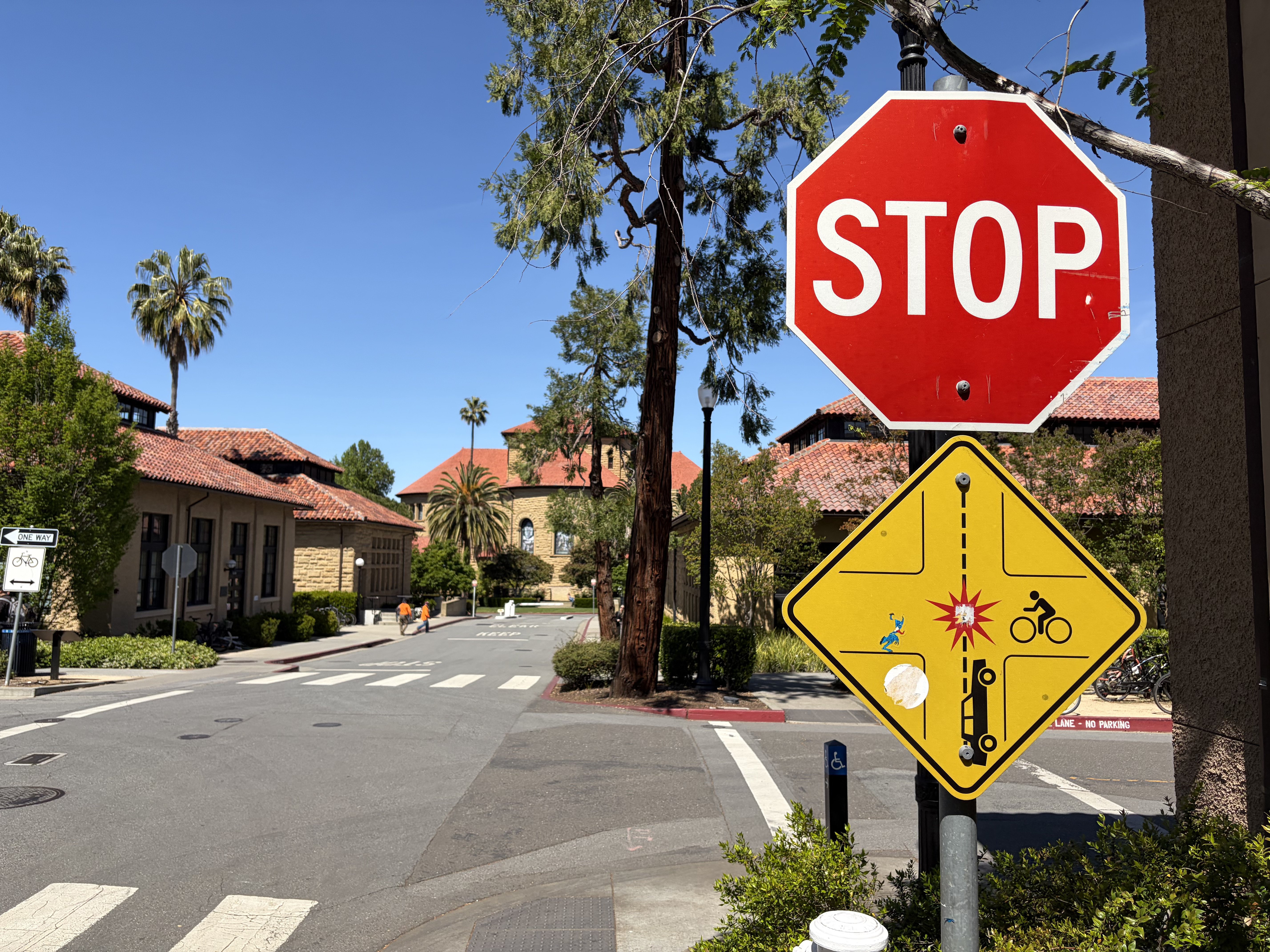
Stopping is confusing. To repeatedly go full speed, then suddenly stop and switch to another direction, takes a lot of energy. Yet sometimes, that is demanded from us.
I’ve noticed lately that multitasking has become rampant. Our minds are constantly stopping one task and switching to another. I sometimes see friends checking their notifications and suddenly scurrying to their commitments, caught off guard.
The Stanford environment is well known for challenging students to engage in numerous activities at once. From athletics and friends to classes and clubs, it’s hard to imagine a Stanford student who is not always busy.
I, too, have fallen into this trap. One passion led to another and before I knew it, I was lecturing two classes in one quarter, on top of being a full time student and member of three clubs.
I try my best to ward off the constant task switching by fully committing to one activity until I’m done. This usually does the trick. But then, as I was preparing my lecture slides, something strange happened.
I reached my limit — not mentally, but legally. I had worked my maximum number of hours in one week and I was forced to stop. Over the next few hours, red Slack circles appeared and the numbers within them grew — messages from co-lecturers and students sat idly.
Each notification haunted me. I had built full momentum for my job of lecturing, but I was forcibly stopped. Like a candle dunked in water, I yearned to relight my flame.
At first, I couldn’t stop myself from thinking about my students. So, I took a walk, trying to clear my mind. I then went to read a book, but my slides lingered in my head. What if I added this illustration to teach about vectors and maps?
Shortly before I could fully distance myself from the thrill of teaching, a new week began and I could work once again. But as some say, in absence, the heart grows fonder.
The love of teaching has been a gravitational center — I can be moving at a very high velocity on my courses or clubs, yet I still orbit teaching. Perhaps there is no stopping, just orbiting.
In my conversations with friends and even my dreams, I reflect on teaching. Across my education, I’ve had countless teachers, from formal professors to friendly mentors. And now I reflect on little remarks and decisions they’ve made.
I often hear teachers discuss course policies. I was confused how some teachers were quite lenient and others were stern. I thought at the time, Why? But now I understand: teaching has high burnout.
For teachers who are able to last a long time, they find ways to protect themselves. Often, that protection takes the form of strict policies. In my short time teaching, I’ve found within myself the leniency to support students across situations.
One weekend, I was on a retreat in Yosemite. Despite that, I responded to a student email within a few minutes at 11 p.m. My friends were concerned about my boundaries at the time. And now I worry that I’m missing the long-term protection from the strict boundaries that I see others set.
For me, it’s been easiest to work steadfastly. I obsess over the details of experienced lecturers as I’m supposed to learn about compilers and operating systems. But this momentum can be stopped.
I saw middle school teachers prying their eyes open with caffeine. I saw my high school change personnel as fast as the seasons. And now, just for a short break, a timecard stopped me.
A day of rest led to reflection that has been building for months. I see clearly how difficult the field of teaching can be. Thankfully, the fire in my heart has always been ready to spark ideas in others.
I just hope the fire won’t stop.