
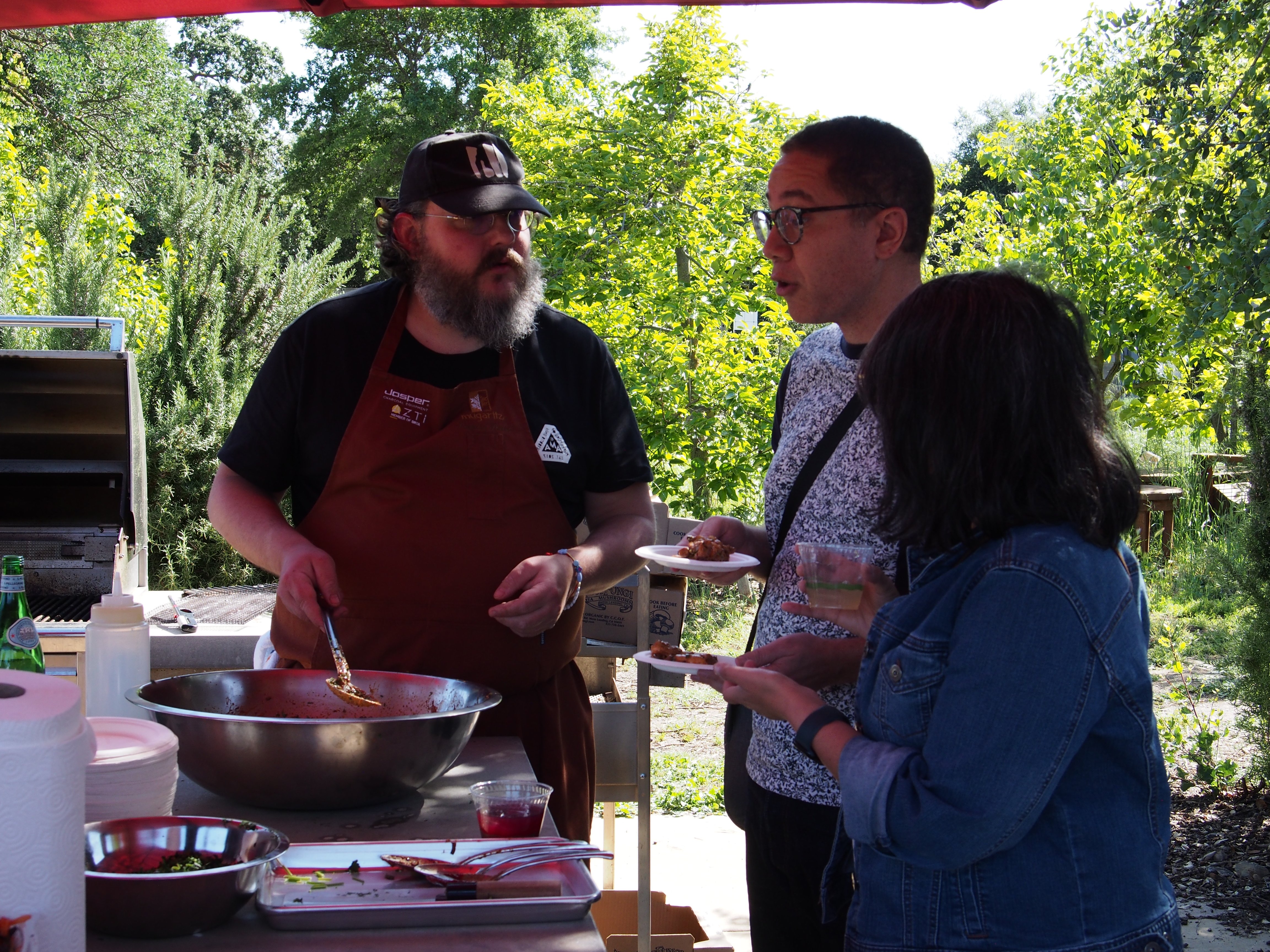
The word “fermentation” brings to mind strong smells some might consider strange. These associations are what Stanford Chef-in-Residence Ramón Perisé and Chef Jordi Bross hope Friday’s Fermentation Festival helped dispel.
The research and development chefs hail from Mugaritz, a restaurant in Spain with two Michelin stars. The duo whipped up a feast at O’Donohue Family Stanford Education Farm for the festival’s dozens of attendees. The festival was sponsored by the Office of the Vice President for the Arts and the Doerr School of Sustainability Visiting Artist Program.
The festival was part of the first year of Stanford’s new Chef-in-Residence program, an initiative pioneered by the department of bioengineering in partnership with the Doerr School of Sustainability and the Office of the Vice President for the Arts.
Vayu Hill-Maini, head of the Hill-Maini lab that “led the charge” with the Chef-in-Residence program, said that the program “helps us think not just about technology, but about how the perspectives in art and design can make sustainable food desirable — beautiful and delicious” in an interview with the Stanford Report.
Visitors who attended the event sampled a variety of fermented foods and charcuterie displayed across a long table. Dishes were unlabeled, leading attendees to taste and guess what each food was.
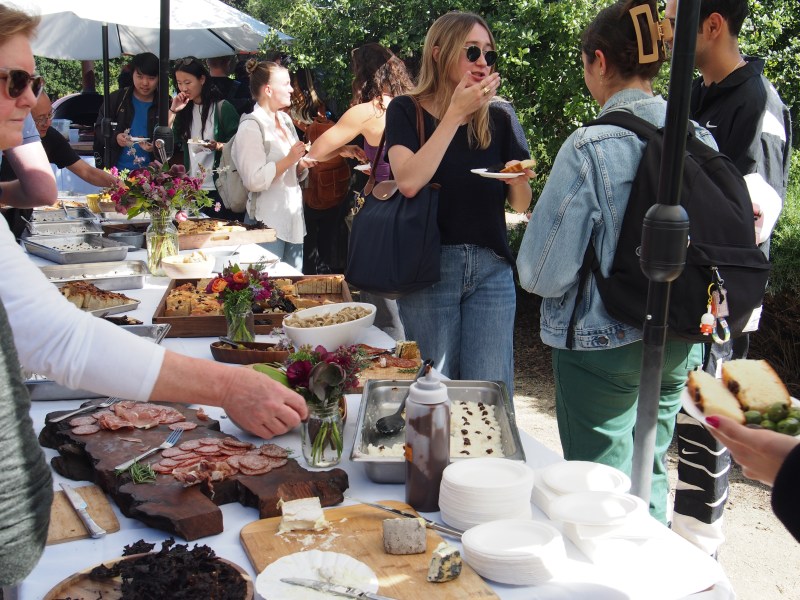
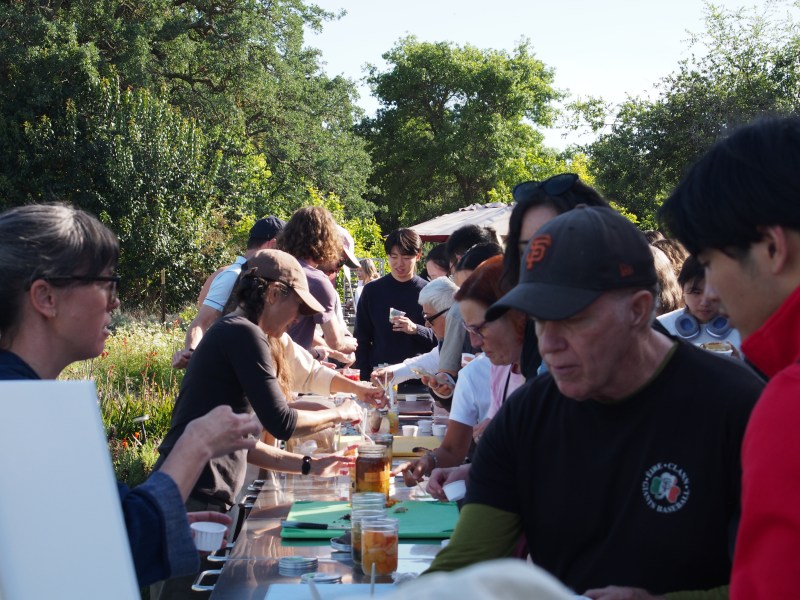
“There’s no sign, so I don’t know what everything is. But whatever I’ve had, it’s all good,” said Rahul Kanekar, a fifth-year Ph.D. student in statistics.
Speaking to the crowd, Perisé admitted that the food lacking a label was an accident.
“This is the first time we [the Hill-Maini lab and chefs] did this, so we forgot to put the labeling on the plates to let you know what you are eating — but maybe it’s better you don’t know,” said Perisé.
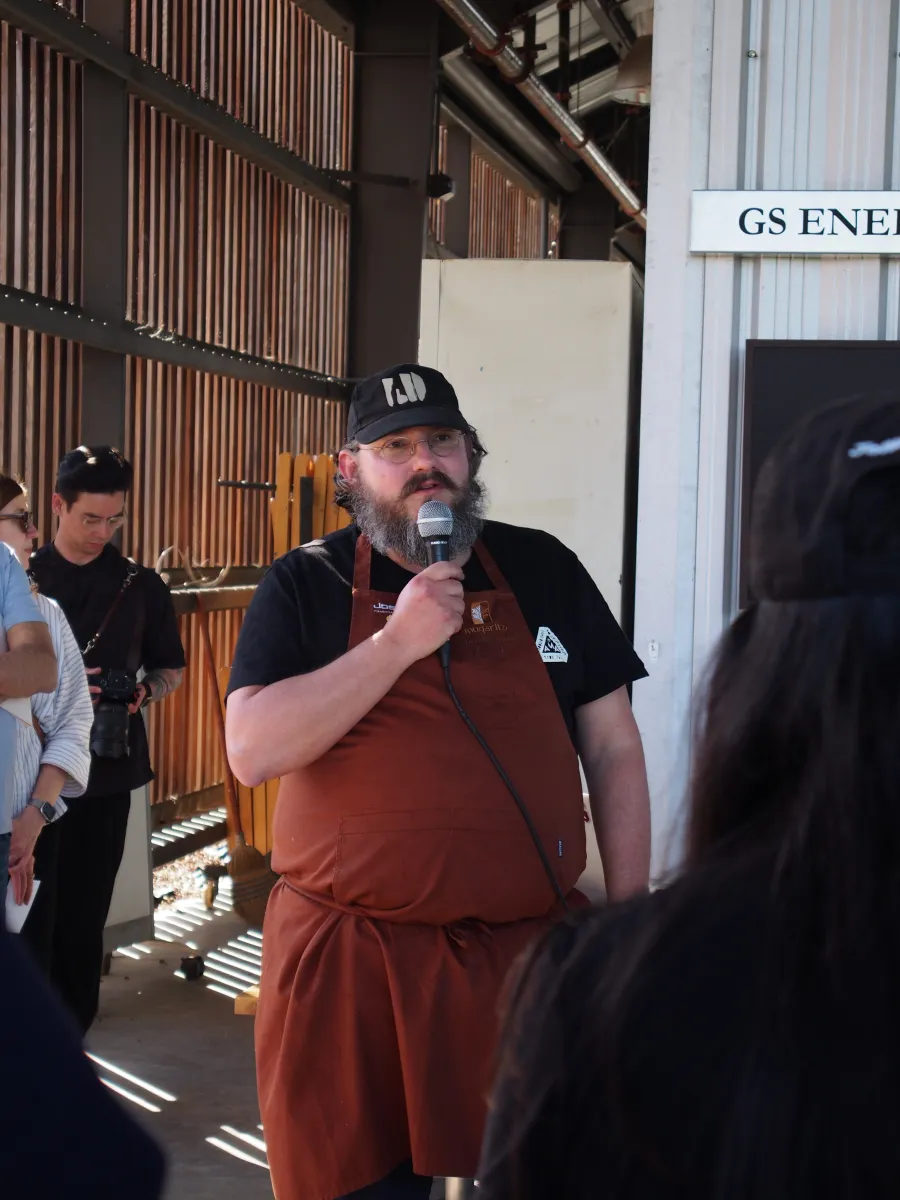
Perisé went on to explain where each dish came from, including the fungi grown to make each dish and which fermented foods were in each. The chefs brought the fungi in from Far West Fungi in Santa Cruz, while some acorns used in the food were gathered on Stanford’s campus.
“Some of these things I’ve eaten before, [but] I didn’t know they were fermented foods,” Etaash Katiyar, a third-year Ph.D. student in statistics, told The Daily.
Though the main attraction of the event was Perisé and Bross’s menu, the event also highlighted a zine and poster printed by the d.school. The zine contains essays and art from individuals whom Perisé and Bross met during their time at Stanford.
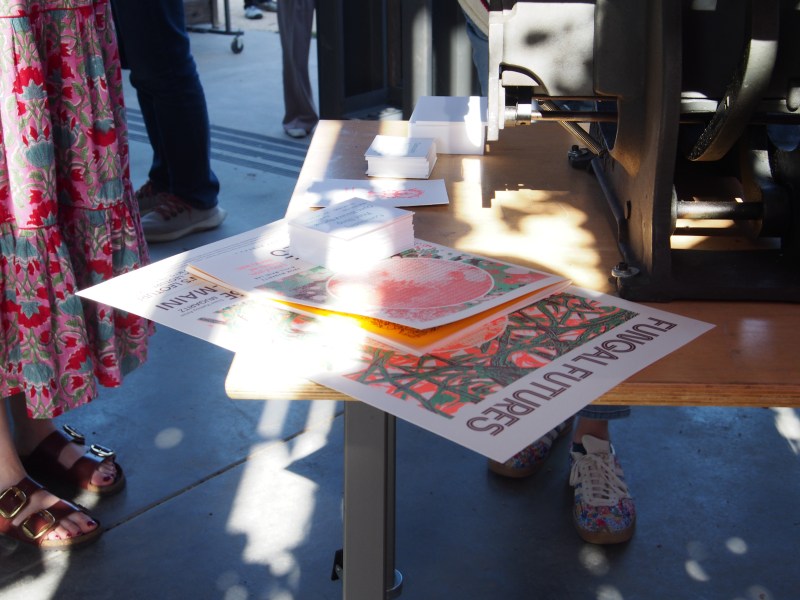
According to d.school environments manager Owen Hipwell, Perisé and Bross toured the Product Realization Lab (PRL) with Hill-Maini months ago. During the tour, they saw the nearby Community Printshop and said that they would like to create a zine together during their residency.
“We had a bunch of meetings, and then all of a sudden, all of the work came together,” said Hipwell. “They gave us 54 pages worth of content, and then we got to work on printing it.”
Design students like Aaron Zhang ’27 and Madison Fan ’25 M.S. ’26 helped put the zine together, Hipwell said.
According to Zhang, events like the Fermentation Festival make academia “fun.” The Hill-Maini lab, which has helped spearhead the festival and chef-in-residence program, focuses on interdisciplinary research “characterizing and engineering fungi for sustainability applications, with a strong focus on improving the food system.”
“I’ve always thought my friends do such cool research, but I have no way to engage with it,” Zhang said. “It’s so cool that even though it’s super academic, [Hill-Maini’s research] can also be touched [through food], and we can make zines about it and have a good time.”
For Bross, the chef-in-residence program is more than just bringing a chef into the laboratory.
“Our residence here is a synergy, a collaboration in different schools at Stanford,” said Bross. “It has brought people together in an almost a myceliar way… we think the continuity of this program could be a great opportunity to create synergies between different areas of the university.”
Update: This article has been updated to clarify that Perisé and Bross visited the Community Printshop while on their tour of the PRL.