
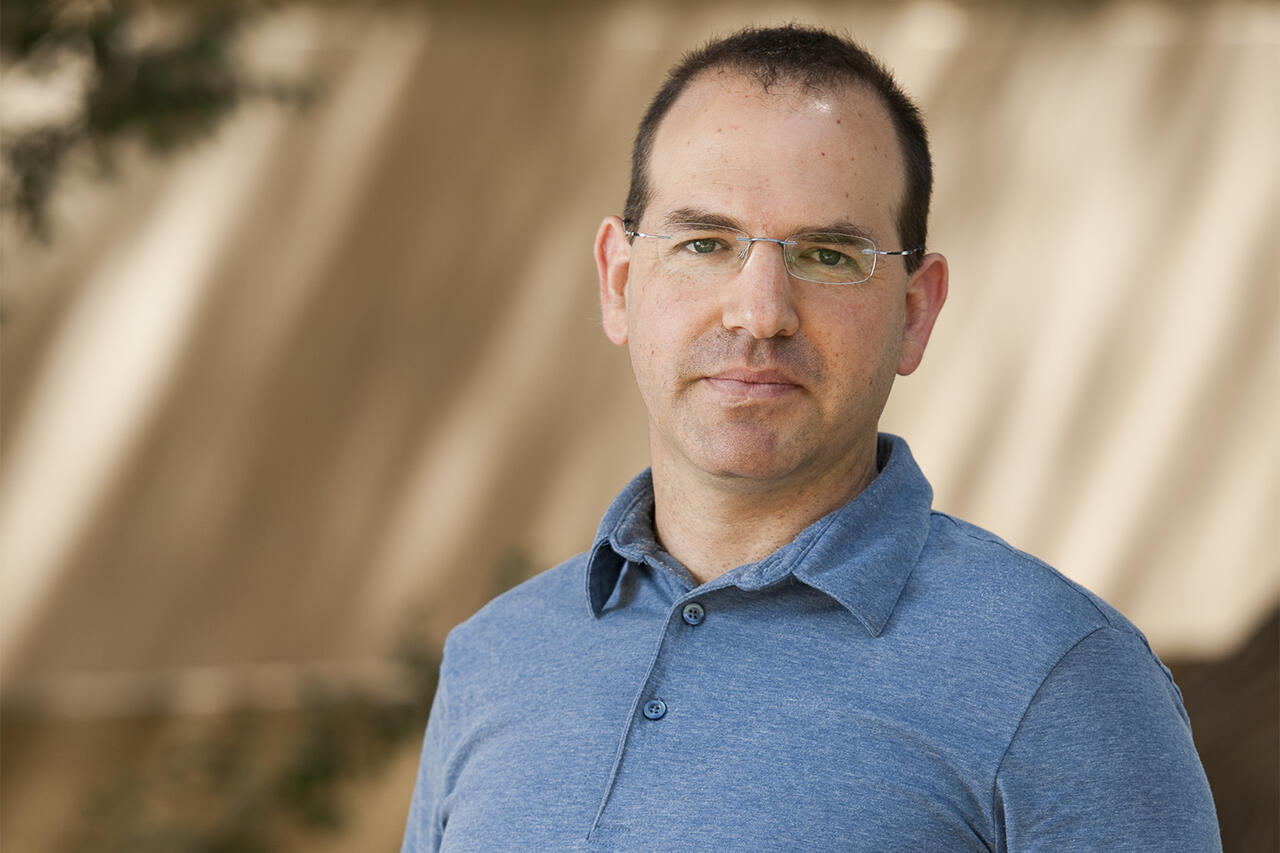
Stanford economics professor Ran Abramitzky is one of five Stanford winners of the 2026 Guggenheim Fellowship, alongside history professor Joel Cabrita, anthropology professor Angela Garcia, sociology professor Robb Willer and anesthesiology professor Sheng Xu.
Abramitzky is also the senior associate dean of the social sciences at Stanford University. His research is in economic history and applied microeconomics, with focus on immigration and income inequality. He is the former co-editor of the journal “Explorations in Economic History.”
His recent book with Leah Boustan, ‘Streets of Gold: America’s Untold Story of Immigrant Success’, which uses modern data analysis to study immigration and economic outcomes of immigrants in America, was listed on The New Yorker’s Best Books of 2022, Forbes’ Best Business Books of 2022 and Behavioral Scientist’s Notable Books of 2022.
His first book, ‘The Mystery of the Kibbutz: Egalitarian Principles in a Capitalist World’, analyzed how Israeli kibbutzim thrived as equal-sharing communities within a capitalist world.
Chosen from a pool of nearly 5,000 applicants, the 2026 Guggenheim Fellows were selected based on both prior career achievement and exceptional promise.
Abramitzky wrote to The Daily about the fellowship, the future of immigration research and his advice for students.
The Stanford Daily (TSD): What does the Guggenheim mean for the project(s) you plan to pursue during the fellowship year?
Ran Abramitzky (RA): The Guggenheim Fellowship will give me the time and flexibility to further develop a research agenda that brings new data and a long-term perspective to two aspects of the American Dream: (1) immigration — the idea that families arriving in the U.S. with little can rise economically, and (2) social mobility — the extent to which U.S.-born individuals from all socioeconomic backgrounds can move up the economic ladder.
In earlier work, my co-authors Leah Boustan, Elisa Jácome, Santiago Pérez, and I find that children from low-income immigrant families experience higher rates of upward mobility than those from similarly low-income U.S.-born families. However, persistent negative stereotypes and unfavorable policies may limit immigrant mobility today. In related work with Jenna Kowalski, Santiago Pérez, and Joe Price, we find that low- and middle-income U.S.-born families continue to miss out on the gains from economic growth.
A central component of this work is the construction of new large-scale datasets, including linking millions of individuals across historical censuses and building new data on college students and faculty over the past century. These data allow me to study how institutions — such as education — shape mobility over the long run.
The fellowship will allow me to expand these data efforts, deepen the analysis, and integrate research with public engagement to identify barriers to mobility and evaluate policies that can improve outcomes for low-income families. I am deeply grateful to the Guggenheim Foundation for this honor and for its generous support, and to my mentors, colleagues, students, and family for making this work possible.
TSD: Your research program combines economic history, big linked microdata and policy relevance. Where do you see the next frontier for this kind of long-run, data-driven immigration research?
RA: A key frontier is linking together large-scale datasets to follow individuals and families over time and across space.
Much of my work relies on linking millions of individuals across U.S. censuses to study mobility across generations. The next step is to connect these data to other sources — such as college records, administrative data, and historical archives — to better understand how specific institutions shape economic outcomes.
For example, we are digitizing and linking records for millions of college students and faculty from over 100 institutions and connecting them to census data to study how socioeconomic background shapes access to higher education and elite professions.
Another frontier is using new tools, including AI and large language models, to systematically analyze large bodies of text — such as congressional speeches — to better understand how policies and public narratives around immigration evolve over time.
TSD: Given the current political moment around immigration policy, what do you most wish the public understood from the historical evidence?
RA: A key lesson from the historical evidence is that immigrant mobility is a long-term, often intergenerational process.
Many immigrants initially work in manual or low-paying jobs and do not move quickly from poverty to prosperity. However, their children often experience substantial upward mobility despite a challenging start.
What I think is often missing in today’s policy debate is this long-term perspective. Discussions tend to focus on newly arrived immigrants and their short-run outcomes. But historically, much of the economic success of immigrant families has occurred in the next generation.
A more long-term view would recognize these patterns and the contributions of immigrants and their children, and could lead to policies that are more supportive of immigrant integration and opportunity.
TSD: Any advice for Stanford students interested in economic history or applied microeconomics as a career?
RA: Economic history provides a powerful way to study important questions using real-world data. Many of today’s economic and policy challenges — such as inequality, mobility, and immigration — have deep historical roots.
What’s especially exciting is that the field is being transformed by new data. The increasing availability of large-scale micro-level historical data, along with advances in digitization and AI, allows researchers to study individuals and families over long periods of time and across generations.
My advice to students is to build strong empirical skills, but to remain focused on the questions they care about. Data, statistics, and AI are tools — the goal is to better understand the world and improve people’s lives.