
Content warning: This article contains references to suicide and self-harm. If you or someone you know is in need of help, you can call the National Suicide Prevention Lifeline at 988.
Editor’s note: All names in this article are aliases.
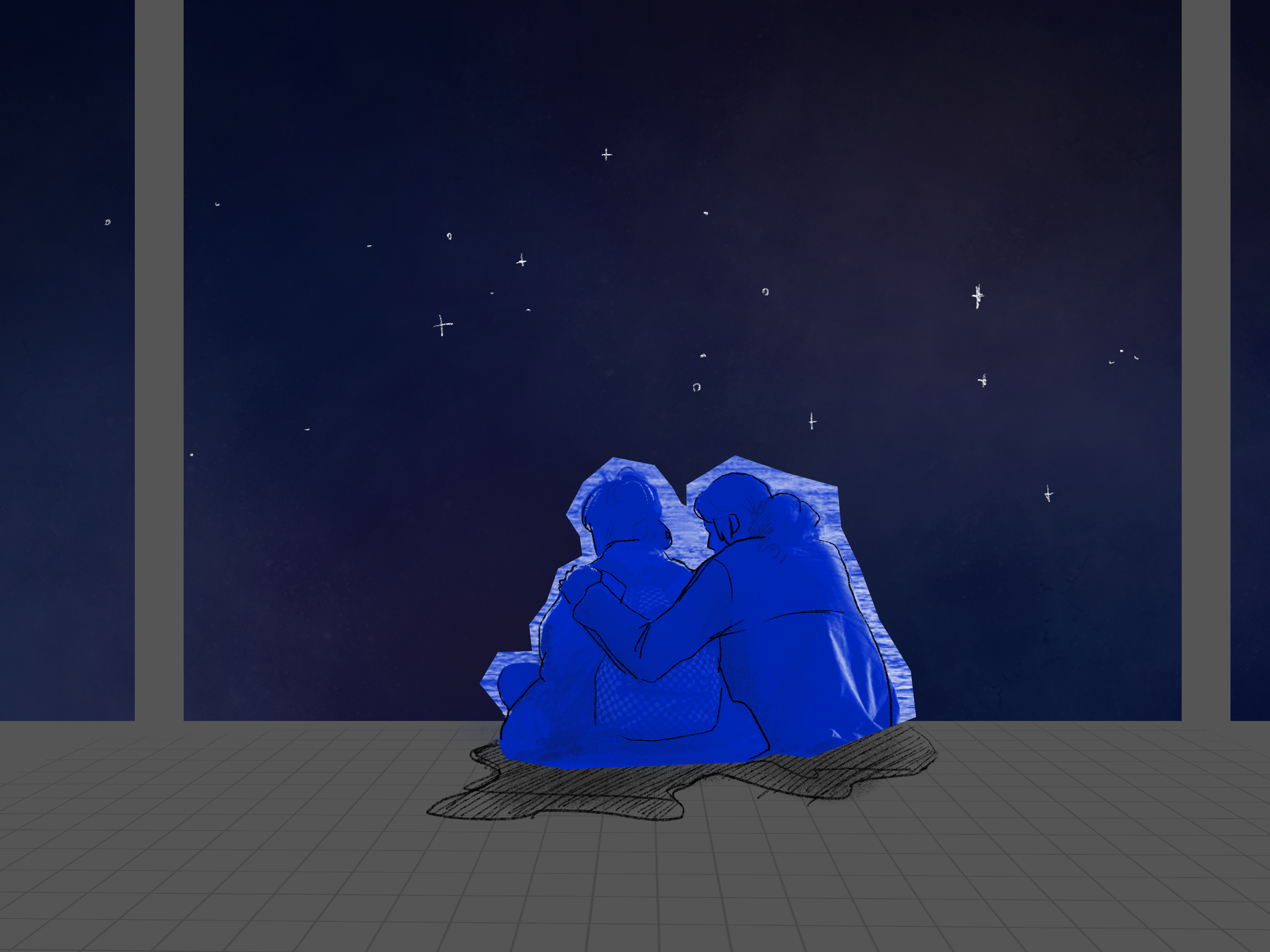
The night before the first day of fall quarter, I sat on my dorm porch, rubbing the back of a student as she cocooned into herself, yellow light casting down on us from the second floor. Through tears, she admitted that she didn’t think she could survive here. I sat in silence, stunned, watching tears streak down her blotchy skin. Behind us, my co-staff chalked affirmations onto the pavement to surprise our freshmen the next morning as they travelled to their first class.
During RA training, a Residential Director showed us a video of a man who survived jumping off the Golden Gate Bridge and lived to share the regrets of his attempt. We talked about supporting frosh with severe mental illness as a loose possibility and suicidal ideation as something easily deferred. She encouraged us to ask students directly if they were intending to “check out.” My co-worker Oliver told the RD that euphemisms were the last thing a suicidal person needed to hear. But that was our “training.”
On the porch, I trail my fingertips across Abby’s back as I scan the front yard, realizing how completely out of my depth I am. As RAs, we were only equipped with inspirational videos, two roleplays and a Vaden emergency number.
The next day, Abby is handled like clockwork. I provide a check-in, another RA walks Abby to therapy and Oliver sets up a nightly meeting. Her depression becomes something we, as RAs, manage together.
In the following weeks, I become an expert at reading faces and body language. I linger in doorways listening to ill-timed jokes, asking about classes and taking freshmen on grocery runs. I learn about residents’ dogs and entrepreneurial aspirations while also decoding implicit cues — something my brain has never before been able to grasp.
I learn to tell the difference between a face flushed from exercise rather than tears. I learn the difference between feet dragging from fatigue or heartbreak. I am endlessly peppy as I strain to be available and present.
In the fall, I spend Friday and Saturday nights patrolling hallways for the troublingly drunk, providing check-ins for people and distributing vomit cleanup kits. I master the art of strategic gossiping, which I employ to find out who was at a party that turned sour. Gossip becomes intel to find out who needs attention.
We are terrifyingly vigilant, yet when I turn in for the night, I feel proactively anxious, my stomach unsettled as I prepare for the next day. Despite the tall ceilings and the wide hallways, my home becomes overwhelmingly claustrophobic.
This job demands that I be both a confidant and a knowledge bank, while simultaneously trying to protect students from an institution I have learned can be unforgiving. I have a mental catalogue of scripts I hope I will never have to say: No, Stanford will not suspend your rapist. The Title IX process will take 1-2+ years, but appointments with the Confidential Support Team are free, and you can send your professor an email that your work will be late because of untimely trauma. It’s disillusioning to recommend resources funded by the machine that facilitates harm.
Then Abby has a bad day. She lies spread-eagled in the middle of the hallway, disrupting the rapid 9 p.m. foot traffic. I freeze.
I’ve been checking in regularly, forming a relationship that’s verging on friendship. How did I miss this? As people move through the hallway in squeaky shower shoes, we carefully cart her back to her room.
It is exhausting for students to seek resources, schedule meetings and sit across from people who are just there to check boxes. ResEd admins’ check-ins are mechanical and students’ struggles are pushed through endless pipelines. The University does not deal in justice or care; they make prevention and treatment laborious and bureaucratic.
Taking care of someone who is struggling at Stanford has meant being the resource and the solution. The process is cyclical, an extended form of moral injury creating tension between community care and self-care.
A friend of mine, a former frosh RA, once told me that this job will make you confront your anxiety. She feared that disaster would strike in the minutes it took her to go to the bathroom, anxiety breaching her privacy and emotional walls.
I schedule my own Counseling and Psychological Services appointments. I race from the front door to my room to avoid others’ needs, so I can even begin to address my own.
In a job meant to build culture and community, I unmake myself. Admin encourages me to maintain my boundaries, yet we spend all of RA training learning how to keep people alive at the expense of those boundaries. The University empowers RAs to be the first line of defense for students, but they tell me not to get too involved. This balance feels impossible when my neighbors are the people I care for. Despite all the rules, my empathy is drained. This type of care was only meant to be prescribed with caution and control.