
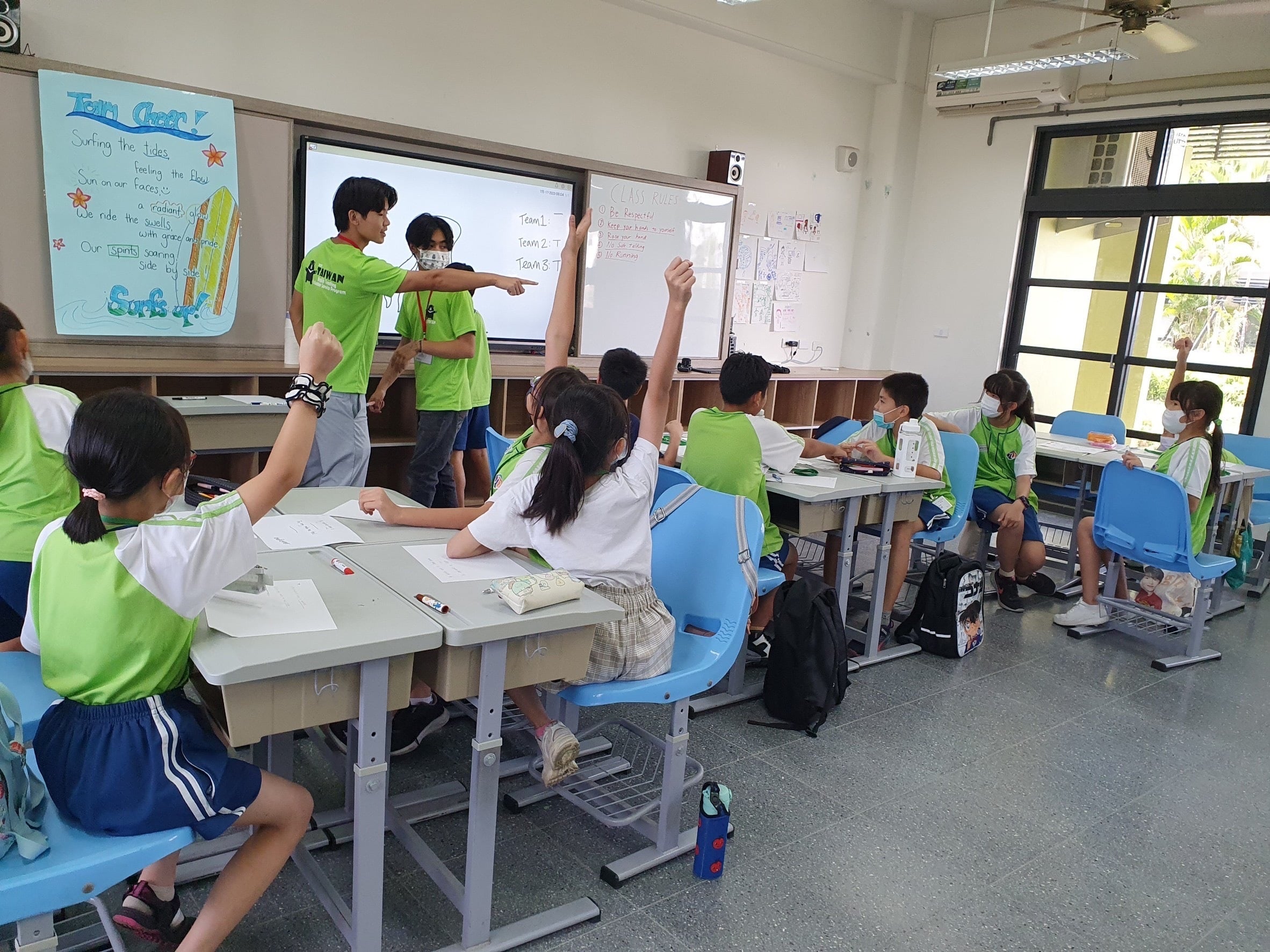
One of the most salient details of my summer in Taiwan was the number of people named after fruit.
I was teaching English at an elementary school run by a principal named Kiwi. The father of my host family was a gentleman named Cucumber. Most evenings he’d bring me rice or soup, and I’d say, “Thank you, Cucumber,” which made me chuckle a little every time.
My classroom was its own fruit basket. There was Apple, who taught me K-pop dances during lunch. There was Mango, who covered the blackboard with cartoons of me and my now-ex-girlfriend. There was a girl named Pear who had a crush on a boy named Plum. In total, I had 60 students ranging from ages nine to 12. Unsurprisingly, children oceans away are pretty much the same — obsessed with trending dances, excited by games and unreasonably interested in my love life. For the most part, Apple, Pear and the lot were a joy to teach and get to know.

But my most memorable student was Mulberry.
Mulberries are little, unassuming purple fruits, but my Mulberry was anything but. I very quickly realized that Mulberry had no interest in my teachings. He talked during lectures and threw paper at other students. I once brought in a toy ukulele, and he took it upon himself to silence the little instrument for good. One month, we tried to learn the Cup Song from “Pitch Perfect” to perform for parents, yet Mulberry made it his personal mission to sabotage everyone else’s cups. He was a menace.
Classes were taught in pairs, and unfortunately, I was the bad cop in mine. And even more unfortunately, discipline did not deter Mulberry. His reactions started by insulting me in English, then eventually switched to Chinese. Mind you, Mulberry was 11 years old — the perfect age to begin experimenting with more spirited insults. When he switched to Chinese, I knew he was getting creative.
I never said anything to the school administration because, honestly, it never felt that serious. His chaos was more exasperating than malicious. But one day he called me 笨蛋 (bèn dàn), which literally translates to “stupid egg.” Mildly offended and amused, I mentioned the insult during our daily debrief with Kiwi later that afternoon.
The day after, Mulberry was suspended from the program.
When Kiwi told me at recess, I remember feeling surprised, and maybe even a little relieved. But then, as my unprecedentedly orderly week went on, that relief turned into something closer to guilt.
Mulberry might have been a nuisance, but his suspension didn’t feel like a victory. It felt like a failure on my part. By inspiring — and allowing — Kiwi to remove him from my classroom, I had let him down.
If my time working with children has taught me anything, it’s that a young person’s identity is incredibly porous. They absorb the words used to describe them and build their sense of self out of them. Tell a kid they’re good at drawing, and suddenly they want to be an artist. Call them “smart,” “creative,” “kind” or “honest,” and they’ll often rise to meet that standard. And if you suspend a child for being “troublesome,” they’ll internalize that too.
In pursuit of my minor in education, I recently found myself writing an essay about the purpose of punishment in elementary school classrooms, inspired by Mulberry. It is my strong opinion that exclusionary discipline — time-out chairs and suspensions — often do more damage than good. When you exile a child for being a problem, you aren’t just managing a classroom. You are handing them a narrative about who they are.
At my explicit request, Mulberry returned to my classroom the next week.
Although his presence did not make my job any easier, I’m proud of the way we eventually grew into a kind of mutual understanding — maybe even respect. At the end of the program, he wrote me a card which remains pinned to the corkboard above my bed at home.
It reads: “Thank you teacher. Sorry for what I said. You are nice and cool.”
I don’t know, I think that’s kind of sweet.