
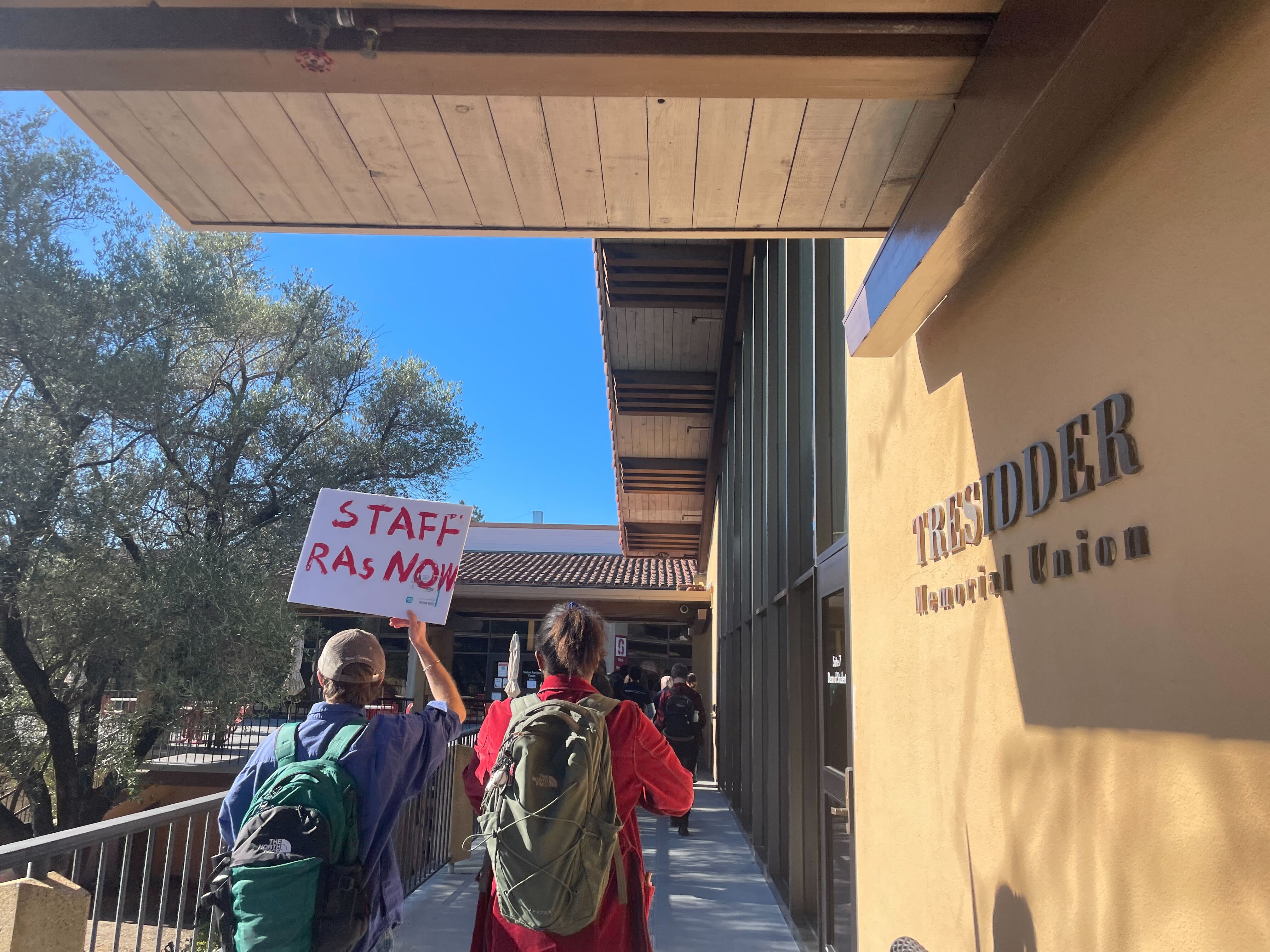
As a frosh resident of the Explore Energy house, I can say that my resident assistants (RAs) are extremely dedicated student workers. They not only provide consistent support to the residents, build community in the dorm and help plan academic and social events, but they also far exceed these responsibilities by planning multiple dorm trips, running regular events to further build community (like Music Mondays or the monthly GovCo social) and helping during crisis situations.
My RAs put considerable effort into creating a flourishing environment and, even more importantly, they truly care about the residents. I, for one, expressed interest in seeing the musical Hadestown; our RAs then planned a dorm trip to see it. Others expressed interest in doing a dorm wedding; our RAs then planned and executed the unforgettable event. The RAs do these things because they value their residents’ interests. They want to deliver the best dorm experience and create a prosperous, welcoming community.
While the countless dorm events create timeless memories, the RAs also show tremendous consideration for the residents’ mental health. I don’t think there was a single time when an RA wasn’t available to talk, despite their busy schedules. They never fail to make time for their residents. And by being present for us, they make us feel extremely cared for. The RAs don’t stop until they ensure we are okay, going beyond just providing resources to residents who might need them. Most importantly, the RAs not only fulfill their job requirements but also act as our friends, providing consistent support and care to each resident.
These stories are among the many that recount the deep positive impacts RAs have had on students on this campus. RAs deserve to unionize because despite the positive impacts they consistently make, they are constantly underappreciated and underpaid by the University.
Yet, despite the incredible work of various RA teams, I’ve noticed too many needless struggles that they have faced. For starters, since the beginning of New Student Orientation (NSO), I’ve heard about RAs being unjustly fired for missing training while sick, which led to understaffing in the dorms — which is unfair to the RAs, who have had to pick up extra work without just compensation, and unfair to the residents, who have reduced access to community engagement and support. And this understaffing happens due to a vague firing system that provides no rationale, no warning and no communication.
The current firing policy — or lack thereof — also created an atmosphere of fear among RAs since the start of the year, including in my house’s RA team. As they handled difficult cases involving other offices on campus, the fear that Stanford would rather fire them than have their backs was palpable, adding to ongoing stressors.
This stress is also exacerbated by insufficient pay, especially for first-generation and/or low-income (FLI) RAs. I was surprised when I found out that Stanford does not cover their room and board. Many other universities in the United States fully cover room and board. UC Berkeley RAs, in addition to room and board, get additional paid compensation at a minimum wage of $18.07 per hour for 3 hours per week. Stanford RAs don’t have this, and the current compensation fails to cover the high-intensity, always-on-call nature of the job, leading them to work long hours in mentally taxing roles while receiving less compensation.
Between all this, Stanford Residential Education also seems to provide little support. Stories about the lack of communication from residential directors and micromanaging from the financial directors are way too common. As a frosh student, I’ve come to learn about all the work that goes on behind planning even just one off-campus event — the receipts filed, emails with higher-ups and the additional funds they sometimes have to apply for. As someone who appreciates my RAs a lot, I feel they lack enough independence, respect and appreciation for their work from the university. The monthly appreciation email from Residential Education doesn’t cover it.
The RAs need a platform to advocate for their own needs. They deserve clear policies, fair pay and reliable support systems. Not just in houses like my own, which is both half-frosh and has an academic theme, but also in other residences on campus, like co-ops, whose RAs have faced even greater challenges as Stanford reduces the number of co-ops.
A union is necessary to give RAs greater say over their pay, benefits and working conditions. Right now, Stanford University controls all aspects of RA work, not to mention hiring and firing, with no standard protocol or transparent process. For the work the RAs put in, they deserve transparency, or at least deserve a platform to advocate for it.
Forming a union with collective bargaining rights will build power for the RAs, so that they can effectively negotiate with the Stanford administration from an equal standpoint and legally bind the University to contracts. RAs need a stronger voice to be able to stand up for themselves, and the best way to do that in the demanding and dynamic campus environment is to form a union, balancing employer power between the Stanford administration and the RAs. And RA unions have been implemented at plenty of other universities already, showing just how feasible this change would be.
Collective bargaining could help the RAs set priorities and agenda — they could elect representatives to negotiate on equal footing with administrators for improvements, like fair compensation, better support resources, protections from harassment and discrimination, just termination processes and other advancements that our incredible RAs deserve. With greater resources and job security, RAs would be better able and equipped to do their jobs, with less stress over compensation need, less need to take on an additional job, less frustration from ResEd and more effective support systems (such as through union grievance processes and resource-sharing). Most importantly, they’d have a voice in shaping the systems that best enable them to be job-secure, supported and effective.
So, I support an RA union, and I believe every resident should — better supported RAs would deliver an even greater, safer, more welcoming, more supportive campus environment to everyone. A petition of support is being circulated among the student body to give RAs the power to advocate for themselves.