
Over 200 attendees celebrated as the Department of African and African American Studies (DAAAS) opened its new location on Main Quad this Friday, transforming Building 80 into its new home.
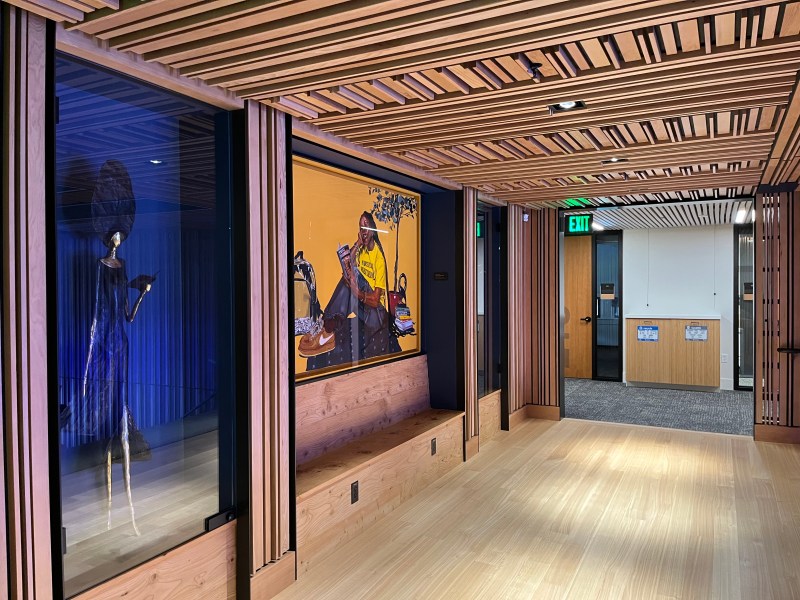
The space includes a theater with stadium seating, undergraduate and graduate lounges and office spaces for students and faculty alike. The department was previously situated in Building 360 with the Center for Comparative Studies for Race and Ethnicity, and the new location comes shortly after DAAAS transitioned from an interdisciplinary program to an established department in 2024.
DAAAS chair and English professor Ato Quayson said he wanted the space to be centered around “lingering and serendipity.”
“I wanted this to be a space where people, when they entered, didn’t want to rush out to leave,” he said. “We wanted it to be a hub for intellectual life, relaxation and community events.”
According to Quayson, the 18-month process involved $10 million in funding, including completely redesigning the original layout of office spaces. The new location will provide opportunities for events and gatherings and serve as a study spot for all.
Quayson noted how the space leans into intentionality, showcasing significant moments in African and African American history. The photograph next to the building’s entrance depicts the Take Back the Mic protests in 1968, where 70 members of Stanford’s Black Student Union (BSU) took the stage at a convocation four days after Martin Luther King Jr.’s assassination to demand better support for Black students and faculty.
The new space also displays artwork rooted in various traditions and history, including statues, musical instruments and both modern and traditional paintings. The build utilized recycled Stanford trees.
“We wanted to have a form of environmental mindfulness embedded in this space,” Quayson said. “Everything was conscious, and it was consciously discussed and implemented over the 18-month cycle.”
The launch of the department space began with reflections and statements at Memorial Church from Provost Jenny Martinez and various professors, followed by a ribbon-cutting to mark the official opening. Over a hundred alumni were present at the opening, as they were on campus for the 2026 Stanford Black Alumni Summit.
Omowale Satterwhite Ph.D. ’77, who delivered the 10 demands at Take Back the Mic, addressed the crowd at the ceremony, recounting BSU’s history and impact on campus.
“It’s an honor to participate in this historic event,” Satterwhite said in his speech. “When you’re making history, you don’t know you’re making history.”
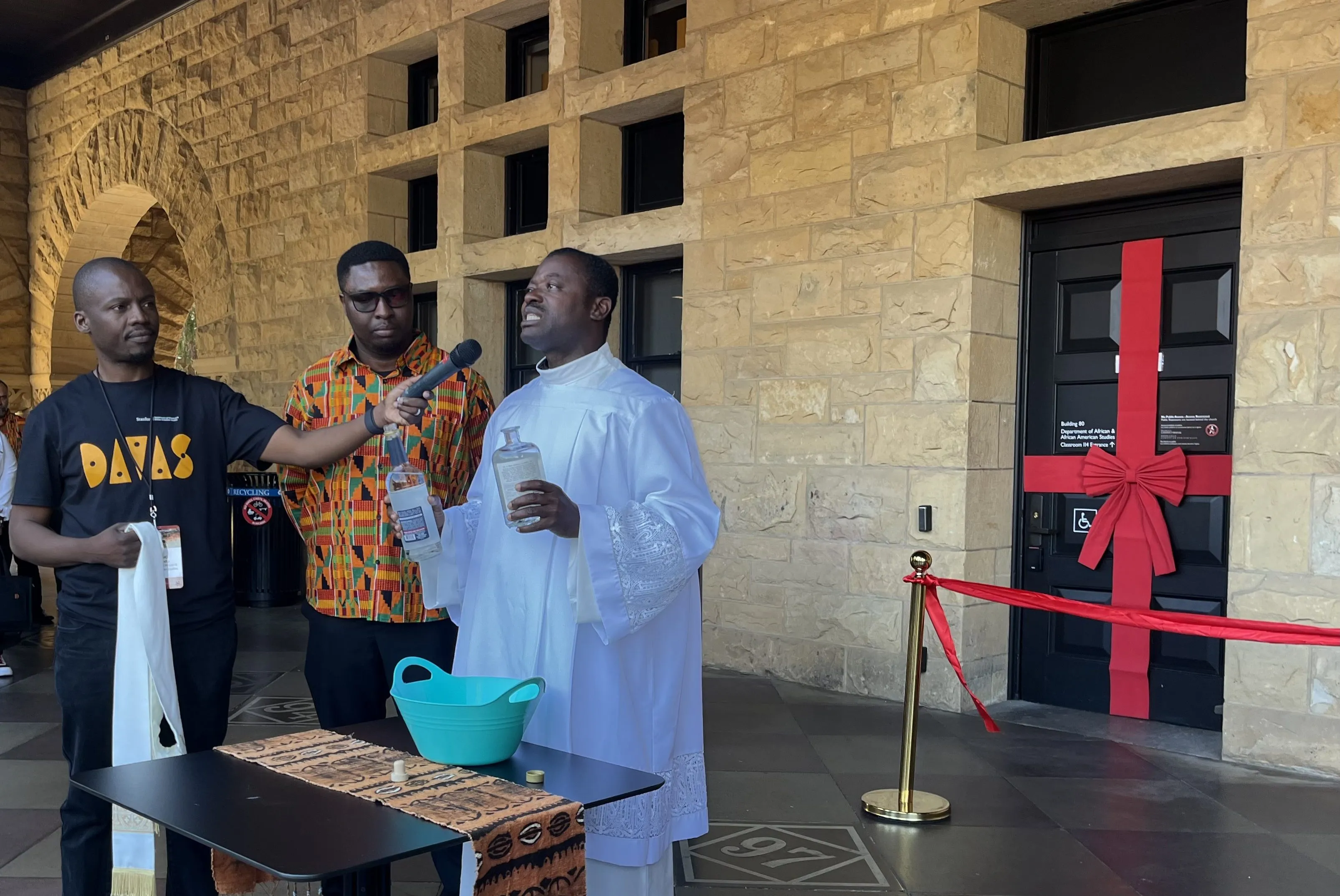
The launch also included prayers and libations over the space from Samuel Nkanash, a priest and visiting lecturer in DAAAS. According to Quayson, the prayer translated to a call that “the ancestors should fortify us in all that we do in our quest for truth. It should fortify students and faculty in the pursuit of knowledge.”
Michele Elam, senior associate vice provost for undergraduate education and former director of DAAAS, hopes the space will attract people from various communities on campus. “I have the greatest faith that all passers will be pulled in here, drawn in by the irresistible force of these inviting, dynamic, inspiring spaces,” she said at the launch.
The opening offered tours to guests, explaining the artwork and the vision behind the space. For some alumni, the new space elicited strong emotions as it offered a new location in which to celebrate African and African American history and culture.
Leaving the space, Angela Lewis ’85 recalled moments of racial injustice during her time at Stanford and the importance of having designated spaces.
“If this space had been here when I was a student… I would have had more peace,” she said, tearing up.