
Fentanyl & Addiction Awareness Week on campus featured a series of events to educate students on opioid overdose risks, recovery support and harm reduction last week. The Prevent, Educate, Empower, Refer (PEERs) program and the office of Substance Use Programs Education & Resources (SUPER) collaborated to plan programming.
At Monday’s Recovery Allyship workshop, student facilitators emphasized that supporting individuals in recovery begins with language and community. As an ally, one can use terms that minimize stigmatization, as words shape conversations about substance use, said workshop facilitator Rose Bracken ’27, who is also a student leader with Cardinal Recovery.
The workshop framed allyship as both interpersonal and structural. Bracken encouraged participants to “empower people in recovery and advocate for their needs,” supporting substance-free spaces, and recognizing that “recovery is not one size fits all.”
Katherine Healzer ’26, a co-presenter at the workshop and PEERs educator, explained how support can take simple but intentional forms: being attentive to friends at social events, respecting boundaries around alcohol use and incorporating inclusive practices at gatherings such as offering “equally appealing non-alcoholic beverages,” or EANABs. Healzer also encouraged students to continue learning about recovery support beyond the session.
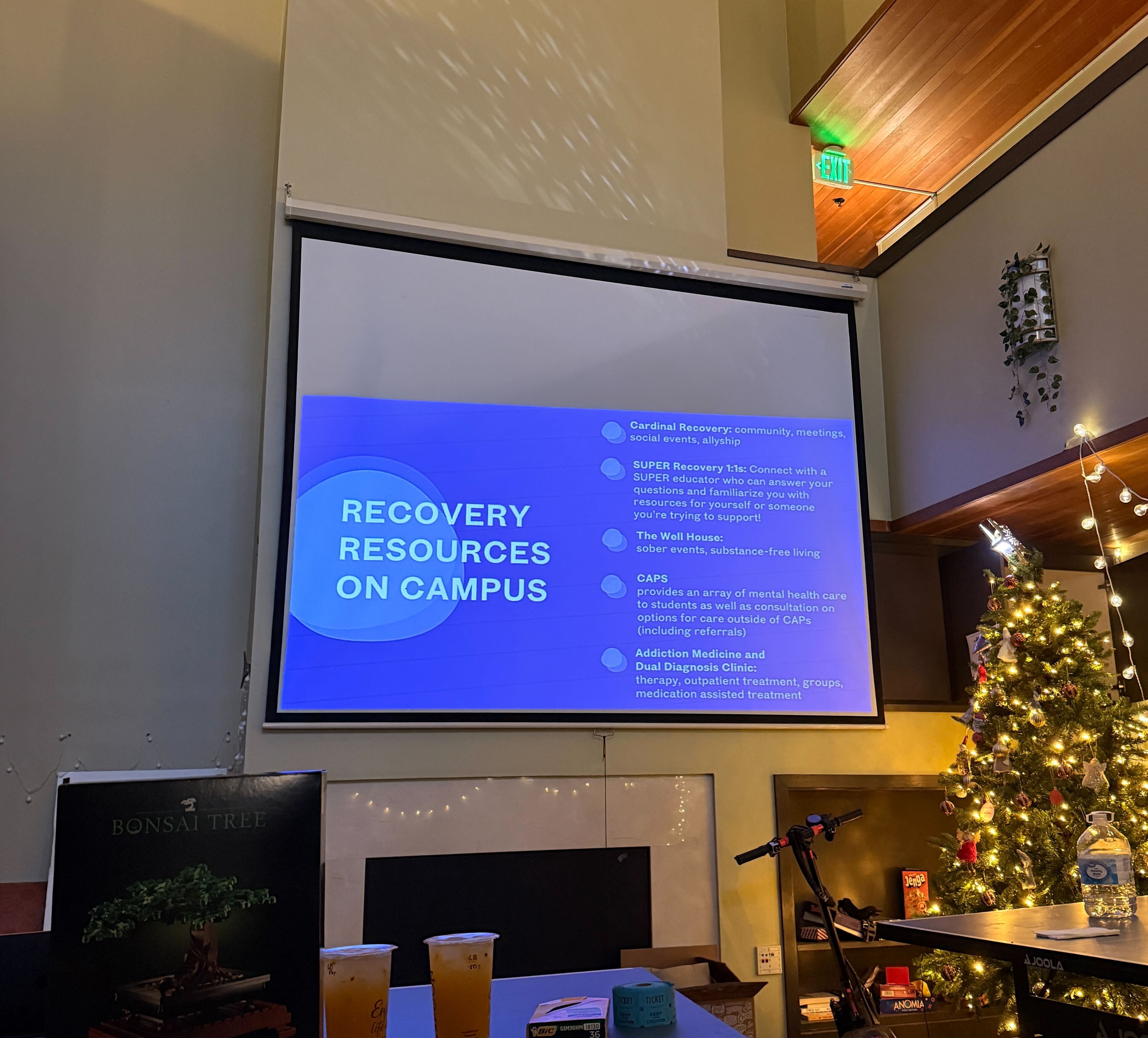
The workshop highlighted campus resources, including Cardinal Recovery, the Well House and Counseling and Psychological Services (CAPS), as well as weekly recovery meetings open to students at different stages of engagement.
“Offering unwavering support to someone in recovery can truly make the world of difference,” Heazler said.
Event attendee Roanne Lee ’29 noted how she appreciated the clarity and depth of the presentation.
“The programming helped us recognize the reality of issues and concerns related to fentanyl and addiction on and outside of campus,” she wrote.
For some organizers, the work is deeply personal. Reflecting on her involvement, Bracken described growing up around recovery spaces through her father’s participation in Alcoholics Anonymous (AA).
“It was really beautiful to see the community,” she said in an interview with the Daily, referencing the AA meetings she attended as a child. After her father’s passing in 2020, she continued supporting people in recovery at Stanford.
In contrast to Monday’s event, Wednesday’s naloxone training focused on urgent intervention in cases of fentanyl overdose, which now drives a majority of overdose deaths nationwide, according to information from the training.
PEERs educator Alikhan Madibekov ’28 stressed how opioid exposure is more common than many people assume.
“The majority of us in our lifetime will take an opioid at some point,” he said during the presentation, noting that risk extends beyond illicit drug use to prescribed medications and accidental exposure.
The training also challenged common stereotypes about overdoses. “Overdoses do not happen to only one type of person,” Madibekov explained. “They can happen to anyone.” With nearly half of illicit drugs potentially laced with fentanyl, even occasional or first-time users may be at risk, he said.
Participants learned how to identify overdose symptoms as well, including slowed breathing, discoloration of lips and unresponsiveness, and how to respond by calling 911, administering naloxone and placing the individual in a recovery position.
After the session, student organizers noted how fentanyl awareness programming is evolving as the campus becomes more familiar with naloxone.
Charm Ang ’28, a PEERs educator, said that Stanford has recently expanded access to naloxone across campus.
“Every dorm roughly has access to these boxes,” he said. Combined with required pre-matriculation training for incoming students, this shift is changing how PEERs approaches outreach, according to Ang.
“We’re slowly phasing back physically teaching people to use naloxone,” Madibekov said, explaining that fewer students now need introductory training. Instead, future programming may focus more on broader substance use education and interactive events.
Still, both Ang and Madibekov emphasized that fentanyl awareness remains critical. Rather than eliminating naloxone education, the goal is to integrate it into a wider culture of prevention and peer support.