
Editor’s Note: This article is purely satirical and fictitious. All attributions in this article are not genuine, and this story should be read in the context of pure entertainment only.
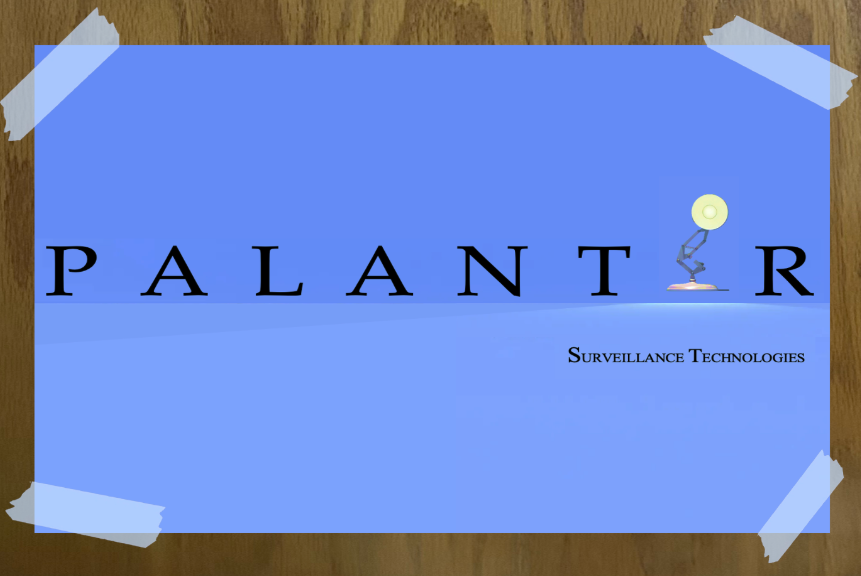
After current and future RAs announced their plans to unionize, University administrators outlined a new residential model that replaces RAs with student safety androids operated in partnership with Palantir Technologies.
Although the androids’ physical bodies would be supplied by third parties, they would use Palantir’s AI and facial recognition tools to identify students, collect their data and location information and report transgressive, unsanitary or unlawful behavior. The contract between Stanford and Palantir refers to these androids as Software-Automated Undergraduate Resident Outcomes Negotiators, or SAURONs. Daily reporters sat at a roundtable conference with both Stanford and Palantir’s leadership to learn more about the new contract and its implications for student life.
“It’s about efficiency,” said Alex Karp J.D. ‘92, CEO of Palantir. “Your frosh RAs spend the month of September memorizing the names and faces of their residents before they meet them. Meanwhile, our software offers automatic facial recognition. And it doesn’t ask for room and board.”
“I used to live here, and I expect our student surve– I mean, service… models to contribute positively to student life.” Peter Thiel ‘89 J.D. ‘92, co-founder of Palantir, offered his insight as a former Stanford undergrad. “We’ve trained our SAURONs to help students complete medical forms and inspect your social media accounts.” After a pause, Thiel noted, “To make them more aesthetic.”
Vice Provost for Student Affairs Michele Rasmussen added, “They can also accompany students to protests. For safety.”
President Jonathan Levin agreed, emphasizing the role that SAURONs could have in empowering open dialogue on campus. “If the drones supervise enough protests and we analyze their video recordings, we might even learn why students feel concerns about free expression on campus.”
The partnership would also provide the Office of Community Standards (OCS) with software to identify “students with future accountability requirements,” with recommendations based on predictive analyses of a given student’s dorm and demographics. To supply the partnership’s required infrastructure and computing power, ResEd will replace Casper Dining (previously marked as the lowest-performing dining hall) with a new data center to store and process footage from Hoover Tower, Tresidder and strategically placed Flock cameras, which Stanford plans to install throughout campus beyond their current range.
Students expressed a variety of reactions to the new initiative. Some students, like Nadal Thierr ‘28, protested the RA replacement. “While an AI chatbot can be my math tutor, my therapist, my source for medical advice, my lawyer, even my best friend, I draw the line at AI telling me that I can’t day drink in my dorm lounge.”
Russ Traited ‘28, Theirr’s roommate, said, “I’d rather have human RAs. We need a human voice of reason in the dorms. Last week, Nadal came home drunk and threw up on my bedsheets! And then, instead of apologizing, he went on and on about how his best friend Claude told him he deserved space and that I wasn’t being accommodating. Like, what?”
But not all students oppose the Stanford-Palantir student service model. “I’m actually optimistic,” said Wanda Selout ‘29. “My only concern is that it might affect my work-life balance.” After Daily reporters asked her to elaborate, she continued, “Oh–What do I mean? I’ll be working at Palantir this summer. Well, I’m technically waiting for my return offer right now, but that’s a formality. We can coffee chat about this more next week if you’d like!”
In a follow-up interview, Thiel expressed humility about Palantir’s role in the future of student life, pointing to the broader business relationships that make the surveillance model possible.
“We only make and manage the software. The physical androids are a collaboration between Boston Dynamics and Lockheed Martin,” Thiel explained. “Regardless, I’m proud to finally contribute something meaningful and lasting to Stanford’s campus in my own little way.”
Angie Nearing ‘26, an Aeronautics and Astronautics Major incoming at Lockheed Martin, reflected on her future role designing the androids. “My freshman RAs were the best! I really hope these SAURONs can provide the same experience to them that my RAs did for me.”
After the interview, Nearing’s roommate told Daily reporters that she saw Nearing welding a prototype for the androids’ protective metal shell.
Yet not all Stanford students benefit from this arrangement. When Daily reporters asked the University about the RAs who signed union cards, Rasmussen replied, “We want to prepare students for the real world. In the real world, AI will take over your job. Well, it’s not really a job. We don’t like to call them workers for legal reasons.”
Selout asked to amend her quotation to the Daily after learning that her application to work at Palantir was rejected. She submitted the following revision:
“They’re heartless monsters building the modern civilian surveillance state, and anyone that works either for or with them is a villain.”