
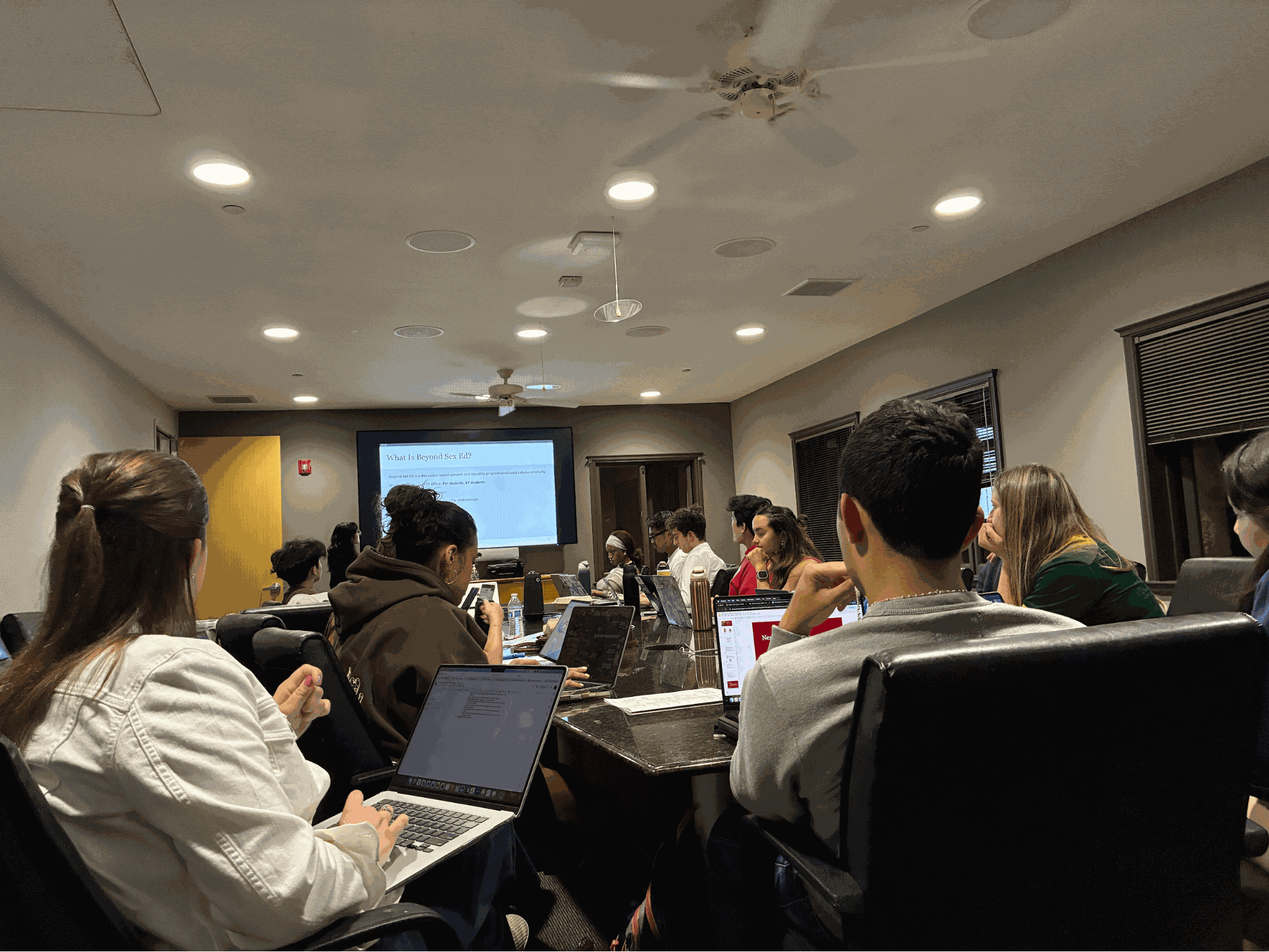
The UGS heard a presentation from treasurer Minji Cho ’28 on the future of Beyond Sex Ed and student survey feedback on sexual education programs on campus at its Wednesday meeting.
Cho explained that Beyond Sex Ed, which has run as a mandatory New Student Orientation (NSO) program for the past 10 years, will be made optional for the upcoming 2026-27 academic year. The program will also likely be significantly different from past years, as the storytelling class that prepares students for presenting their stories at Beyond Sex Ed was discontinued.
Cho said Beyond Sex Ed was unique because it “was developed by students as a program that focuses on and uses consent, communication, healthy relationships, but most importantly… student storytelling.”
Following the decision to make Beyond Sex Ed optional, the only mandatory sexual education program for incoming freshman students will be an online module. Cho emphasized that the decision to make Beyond Sex Ed optional will create a campus without a common culture around sexual health and well-being, fostering unequal knowledge on the subject.
“Students who are least likely to voluntarily attend a prevention program are probably the most disconnected from consent education and need these programs the most,” Cho said.
Cho said she took issue with the University’s lack of transparency and failure to get input from students or Sexual Harassment/Assault Response & Education (SHARE) staff before making the decision, adding that the UGS only found out about the decision through an anonymous source.
The UGS sent out a survey on May 6 to gauge student support for mandatory sexual education programs. 78% of respondents supported a mandatory sexual health and consent education program during NSO and stable University funding for Beyond Sex Ed.
Some survey respondents raise concerns with Beyond Sex Ed, stating that it presented content that was contrary to their moral beliefs. Others stated that Beyond Sex Ed was important to their experience at Stanford, such as a freshman Resident Assistant (RA) who wrote that they “[couldn’t] stress enough how Beyond Sex Ed was important to the residents.”
Cho added that she will be having a meeting with Vice Provost for Student Affairs Michelle Rasmussen and Associate Dean of First Year Experience in Academic Advising Edith Wu ’99 to further discuss the decision to make Beyond Sex Ed optional.
The UGS also heard from Edith Efner, associate vice president of land use and environmental planning, and Kathleen Kavanaugh, director of Stanford real estate development, on StanfordNext — the University’s land development initiative. Efner and Kavanaugh explained the process to get Stanford’s next General Use Permit (GUP) and shape the University’s long term plan to build out housing, research and sustainability goals. The last GUP was granted by Santa Clara County in 2000, which provided the University with 2 million square feet to develop.
Efner discussed the team’s outreach efforts, which included assembling an advisory council that represents many different members of the greater Stanford and Bay Area community: CalTrain representatives, bikers, East Palo Alto residents and San Jose residents, among other perspectives.
“‘Who else should we be talking to?’ — that’s a question we ask every meeting that we have,” said Efner.
The team plans to submit its GUP application in the summer, and predicts that it will likely be approved in 2028 if things proceed smoothly. UGS Co-Chair Laila Ali ’28 added that the UGS will be having an On Call event later this month with StanfordNext for students to learn more about the process and provide feedback.
The UGS also passed the Joint Resolution Calling for Accountability, Transparency, and Student Protection Following the April 22 Assault at White Plaza. During an April 22 tabling event that featured an Israel Defense Forces (IDF) soldier and Miss Israel, the soldier tackled a student who took a cardboard sign from the table. According to the bill, this event was put on by the Stanford Israel Association, who brought in guests from Israel-is, an Israel-based organization that seeks to “[improve] Israel’s global image” through programs like bringing their ambassadors to college campuses.
This resolution calls for the University to publicly explain why no AlertSU was issued. It also asks the University to disclose the standard used to classify the incident as an altercation rather than an assault, what information was obtained about the identity of the soldier, what support services were provided to the student who was tackled and the details of the tabling compliance investigation that the University completed.
The resolution additionally calls for the University to pursue a stay-away order for the soldier, revoke Stanford Israel Association’s White Plaza tabling privileges and adopt a formal governing protocol for issuing AlertSU notices. It will now move to the GSC for a vote.
The UGS also passed the Bill to Ensure Equitable Representation for Stanford Transfer Students, which will require one of the three seats in the upperclass district of the UGS to be designated for a transfer student.
“Ultimately, this legislation strengthens the senate by making representation more reflective of the whole undergraduate community and by ensuring that transfer students’ perspectives are no longer systemically overlooked,” Cho, who helped co-author the bill, said.