
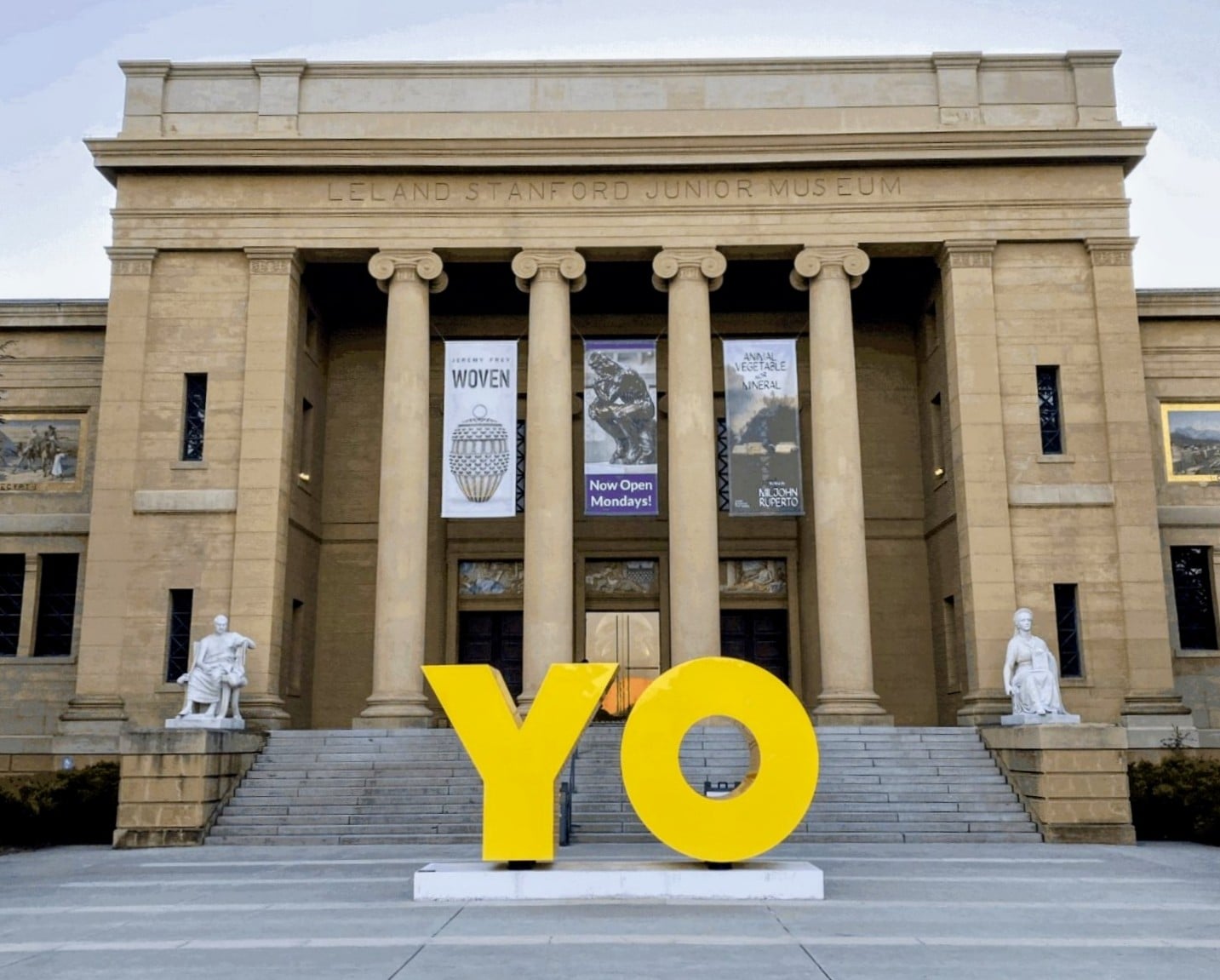
Editor’s Note: This article is a review and includes subjective thoughts, opinions and critiques.
Each year at Stanford, my fall quarter is filled with Coupa Cafe catch ups with friends, Oktoberfest and redownloading Fizz. Yet the second January hits and winter quarter arrives, campus begins to feel dull. Everyone shuffles into Green Library to work on their p-sets and whisper about the hopes of spring darties just around the corner.
During my freshman winter, I felt lost. I hated the major I thought I would’ve loved, the social life in Branner was dying and all the while, I was scrambling for a summer internship. I felt like Stanford was making me go crazy. After another rainy Saturday in the chemistry building for office hours, I was exhausted and feeling hopeless. That’s when I stumbled upon the Cantor Arts Center.
When I first entered the doors of the Cantor, it was as a refuge from the stormy rain that haunts winter at Stanford. I wiped my shoes on the doormat and grimaced at the cheery staff member, aware of my jacket dripping water onto the floor.
What I had initially assumed was a small university museum ended up being a long path of twisting rooms, filled with increasingly curious art. That afternoon, I was able to see oil paintings, photographs, statues and carvings.
It felt as though a portal had opened, showing me how small my life was in comparison, and how little my fears over failing my chemistry classes mattered; Stanford felt small, and the world felt big.
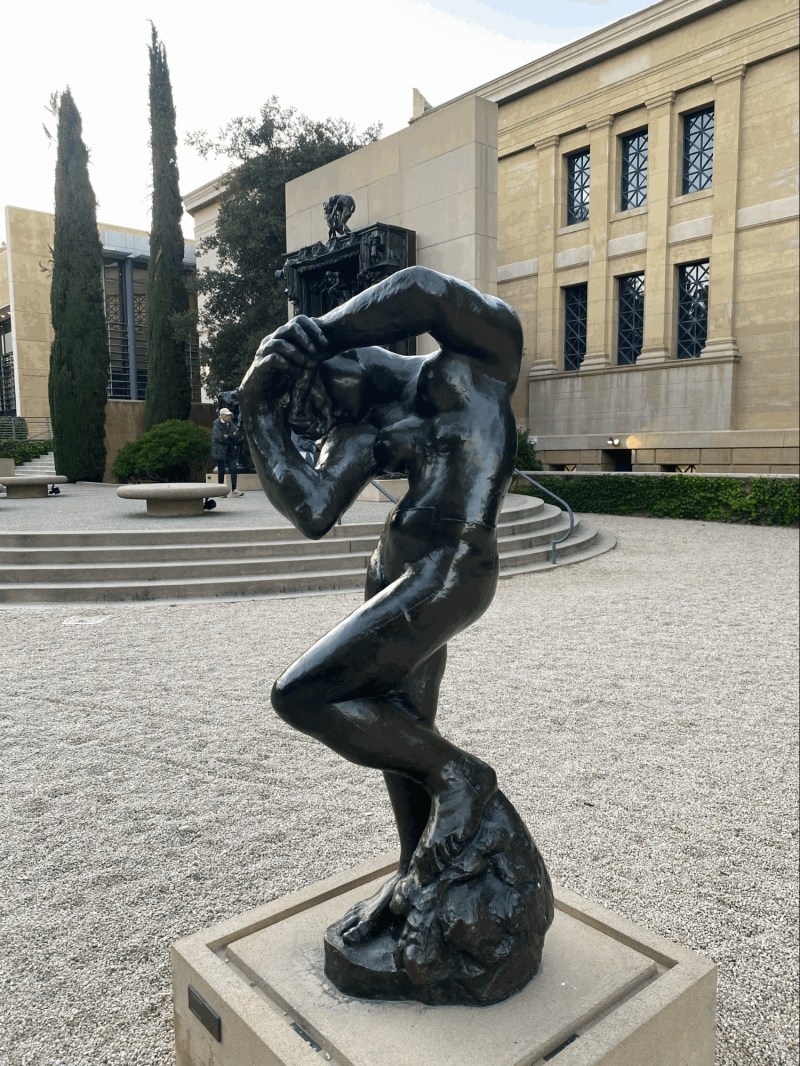
The Cantor Arts Center has more than 38,000 works, spanning 5,000 years. Each piece was specifically chosen by one of the many curators to bring a new special something to the Cantor, according to Veronica Roberts, the John and Jill Freidenrich director at the Cantor.
To learn more about what the the Cantor Arts Center is all about, I spoke with Roberts and Yael Eytan, the director of marketing, communications and strategic partnerships.
According to the Cantor’s own website, around 200,000 people visit each year, from many different countries. Curiously, many classmates of mine know nothing about the Cantor, and though I might also just be in a small pocket of students who don’t appreciate art, I found that many visitors to the Cantor aren’t students at all.
Last week at the museum, I saw a teacher guiding her class on a field trip. Though stressed, she lit up describing her students’ excitement to learn and her gratitude for the museum’s vast history.
Later, I met tourist groups from Europe and Asia eager to experience Stanford. One group from France called it an honor to visit a place they saw as rich in knowledge, even detouring hundreds of miles from their U.S. itinerary just to spend a day on campus.
Hearing these interviews reminded me how much power the Cantor Arts Center has and how lucky we are to have it here at Stanford. People travel thousands of miles to learn about the rich history and culture the Cantor displays, while most of us students pass it by on our way to classes without a second glance.
Roberts expressed just how involved Jane Stanford, co-founder of Stanford, was in creating the museum “in tandem with the University and not as an afterthought.” Roberts emphasized that it was intended to be an important part of students’ education.
Jane Stanford’s involvement in the museum, and Stanford as a whole, highlighted her deep passion and commitment to education and art from different perspectives and cultures. That goal is just as evident today: the Cantor is a place for Stanford students to learn about the world and see themselves with new eyes, according to Roberts.
Roberts expressed the intensity of technology in our lives: “At a moment when AI is transforming our daily lives at hyper-speed, I love that museums are places where we gather in person to contemplate art made by human hands and minds for human eyes and hearts.”
The Cantor gives students in the heart of Silicon Valley an opportunity to experience thousands of years of human expression and curiosity. It allows us to take a breath and learn in a way that is different from any Stanford class.
“Museums are engines for imagination, curiosity and discovery” Roberts said. Her perspective on museums as a hub of invention was something I hadn’t heard before.
Eytan also noted the importance of remembering that audiences “can and do find relevance in historic artworks on their own terms.”
“Relevance does not only arise from what’s familiar, but also in what’s different and new,” she said.
The Cantor gives people the opportunity to find themselves throughout history, which in turn can give them the opportunity to learn more about themselves.
Roberts also said that the Cantor is the only museum she has worked at that has been free for visitors. Most museums, including the Met, MoMA and even the Berkeley Art Museum and Pacific Film Archive, have high ticket prices for entering the museum. However, the Cantor’s goal is to be accessible to both students and the general public, according to Roberts.
Within the Cantor, there are famous statues by Rodin and astounding paintings by Pollock, but there are also many hidden gems. Roberts expressed how each piece of art in the Cantor was handpicked and chosen thoughtfully, even those less famous: “In my experience, sometimes the most beloved works at museums are by little-known — or even unknown — artists.”
Now, each time I push open the doors at the Cantor, it reminds me of how many possibilities there are in life. Stanford might be a mini Silicon Valley, but it also houses art, history and literature. In a world moving at light speed, with new technologies arising every day and increasingly intense political climates, art asks us to slow down and ponder, an invaluable skill today.
Correction: This article has been updated to reflect that the Cantor hosts works by Pollock, not Waugh. The Daily regrets this error.
Correction: This article has been updated to reflection the correction attribution of quotes to Eytan and Roberts. The Daily regrets this error.