
Editor’s Note: This article is a review and includes subjective thoughts, opinions and critiques.
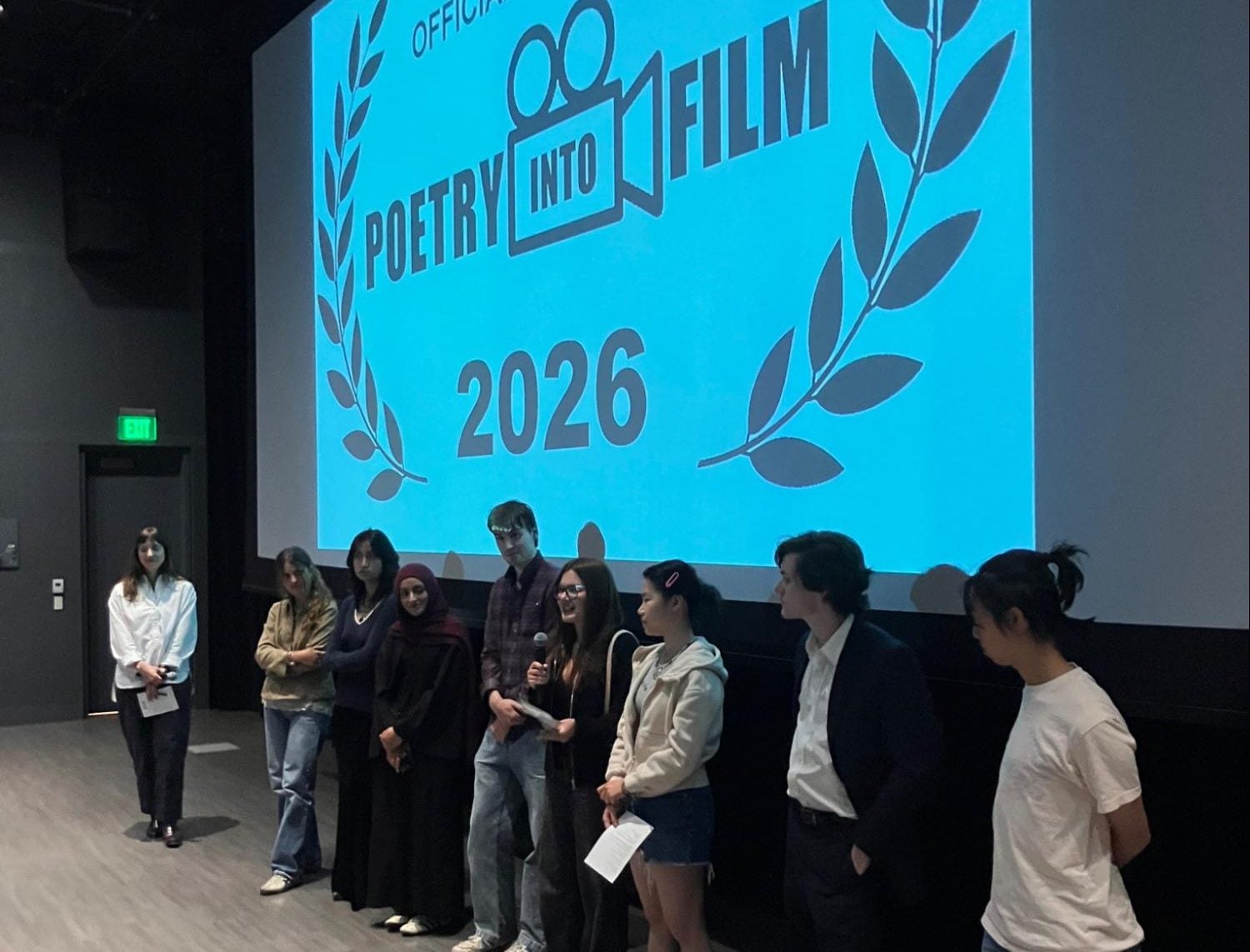
From startups emerging every few days to sculptures taking shape in makerspaces across campus, Stanford is home to constant innovation. This spring, students created and directed films centered on poetry, blending written and spoken verse with visual storytelling for the 14th annual Poetry Into Film Festival.
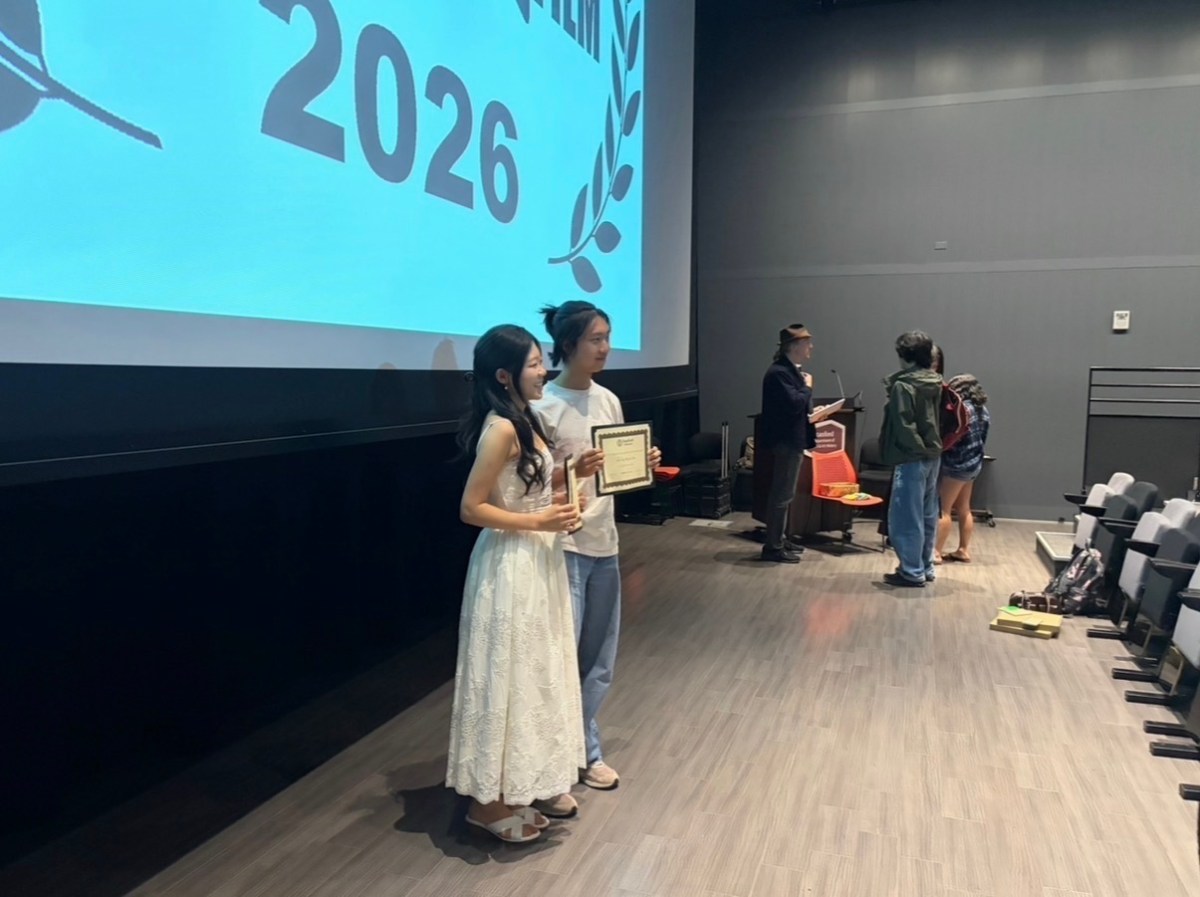
Hosted by the Stanford Art and Art History Department on May 14 at Oshman Hall, the festival featured nine 5-minute films with varying themes, perspectives and styles. Dozens of students and community members attended the festival, including Festival Director and Jones Lecturer in creative writing Kai Carlson-Wee and judge and Jones Lecturer Kate Folk. Awards ranged from Best Editing to Best Director.
Before the screening, Carlson-Wee spoke to the power of the students’ work: “Each film is pushing boundaries in surprising ways,” he said. I was certainly surprised by both the creativity and nuance of many of the films shown that night.
The first film, “a liberated breeze” by Ameera Eshtwei ’28, focused on culture and liberation, pairing sweet jazz with footage of crashing waves. The visuals were serene, though at times the symbolism felt somewhat clichéd.
Next was “Fly” by Yeva Allyn ’29 and Bella Zhou ’29, a film about the Chinese diaspora. Though delivered in a breathy, emotional tone, the poem reached for a deeper meaning that the film itself struggled to fully convey due to rushed pacing. The ending left me with lingering questions about the speaker’s emotional resolution, while the explicit references to Stanford’s campus made the setting feel overly concrete and pulled me out of the poem’s otherwise reflective atmosphere.
Third came “Counterpoint” by Merve Ondogan ’27, a unique film featuring a woman dyeing her hair brunette and walking the Stanford Oval in chains. While visually striking, the editing occasionally distracted from the message, with production cues like “Go!” audibly left in the final cut.
The fourth film stood out among the rest. “Become Color Pt. 1” by lok Kei Kevin Chen ’28 and Jia Lin ’26 was striking in its raw emotional depth and constantly shifting visual patterns. The desperation in Chen’s voice punctuated every line, especially one that lingered afterward: “Was it the faded color of you?”
Fifth was “Fragments” by James Fox ’26, which combined a beautifully written poem with silent video clips. Individually, both the poem and visuals showed promise. Together, they became overwhelming. Brief moments of nudity contributed more shock value than substance, and lingering shots, such as extended close-ups of fluttering eyelashes, dragged on.
“God” by Hailey Zhang ’28 followed, in which she read a poem by famous poet Langston Hughes depicting a couple falling in and out of love. The film was well shot, though as with “Fly,” the recognizable backdrop of Stanford dormitories occasionally broke my immersion.
The seventh film, “not sponsored (hot boi chili oil)” by Bryan Nguyen ’28, was the evening’s only overtly satirical work. The poem leaned heavily into ironic end rhymes over clips showing Nguyen spreading chili oil across his face, hands and random objects. It was a welcome break from the serious tone of many of the previous films.
Next was “From the Atlantic to the Pacific — growing forward” by Aiden Ackerman ’28. The film featured footage of Ackerman giving speeches and reflecting on his childhood dreams, blending personal ambition with broader themes of growth and identity.
The second-to-last film was “The Clouds Are a Dragon When I’m Asleep,” lok Kei Kevin Chen’s ’28 second contribution of the evening. The poem itself — though it seemed thoughtfully written — was almost overshadowed by the beauty of the accompanying music and lush nature cinematography.
The night concluded with my favorite film of the evening — “Tourbillonnant” by William Montgomery ’28. Featuring a poem by poet Dylan Thomas, “Tourbillonnant” followed two students running across Stanford’s campus at night in the rain, laughing and dancing. Here, Stanford’s setting enhanced the piece rather than distracting from it, reinforcing the poem’s themes of youth and impermanence. “Rage against the dying of the light” was repeated loudly by Montgomery, almost shouted, lending the film a stark intensity absent from many of the softer-spoken works.
Overall, while a few films stood out, many felt repetitive. Smooth jazz appeared constantly in the background; rain, plants and oceans dominated the visuals; many performers adopted the same breathy cadence, as though emotion could simply be forced into existence through vocal delivery alone.
This led me to question what transforms something into poetry. Is a poem meaningful simply because it is spoken in a hoarse, dramatic tone or paired with artistic visuals? If someone mimics the emotional cadence of dramatic film monologues, does that automatically give their words weight? Similarly, many of these films seemed to rely heavily on emotions audiences already associate with certain aesthetics. Does the use of jazz, rainfall and nature imagery convince audiences that a work is profound?
Still, despite uneven quality and student-level production, it was obvious that every producer, actor, speaker and director poured immense effort into their work. With the films exploring vastly different subjects, from war to chili oil to youthful exhilaration, together they formed a compelling portrait of what it means to be human.
Every filmmaker revealed a deeply personal urge to feel — loudly enough for others to witness and hopefully understand.
“It was exciting yet humbling to see our film on the big screen, and led me to see the effects of our decisions a lot more clearly, thus informing me of future artistic choices I can make to execute my ideas more coherently,” Chen wrote to The Daily.
The collective ambition of students striving to create something meaningful stayed with me long after the festival ended. There is courage in publicly sharing deeply personal work, and that courage was perhaps the festival’s most powerful achievement.