
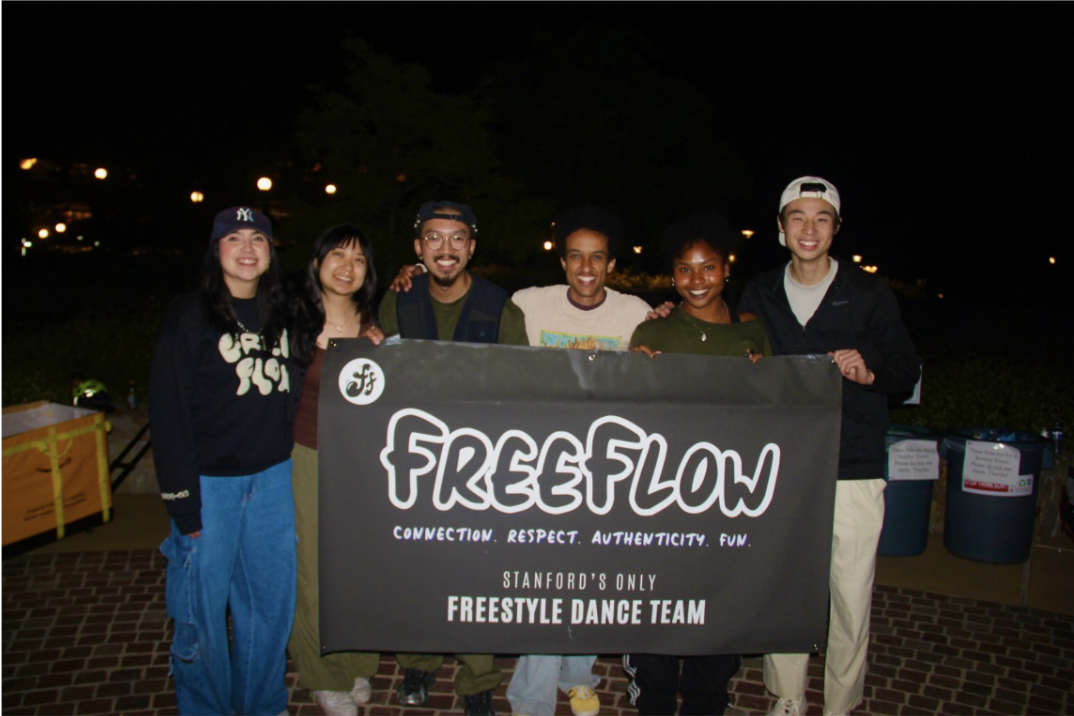
Dance battles at Meyer Green, Latin boogaloo workshops at EVGR, casual freestyle sessions around campus: this is FreeFlow, Stanford’s only freestyle dance group. Established in 2021, the group is dedicated to creating a welcoming space for dancers to engage in popping, house, locking, hip-hop and more.
For many Stanford students interested in dance, the hardest part is knowing where to begin. As a non-audition-based dance group, FreeFlow strives to lower the barrier to dance and become that entry point. Outlined in its constitution are the group’s core values: authenticity, connection, respect and fun.
“Students who want to experience dance culture and community are able to do so at FreeFlow without feeling pressured,” said Mia Clark ’27, who joined the group during her freshman winter. “Dancing can be a very scary thing. It’s very hard to put your authentic self out there.”
Connection is at the core of the group. As Clark said, hip-hop “all started as one big party.” Conscious of these origins, FreeFlow strives to understand and remember the history of hip-hop. Both an art and a social scene, the genre emerged in the 70s when Black and Latino communities in the Bronx faced segregation, poverty, desperation and gang violence. Out of those conditions came a cultural movement and a way for people to come together.
Annie Xu ’27, a transfer junior student from Columbia, said Freeflow allows her to “dance to her own rhythm [and] dance to her own way of thinking.” At Columbia, she added, there was no comparable space where she could express herself.
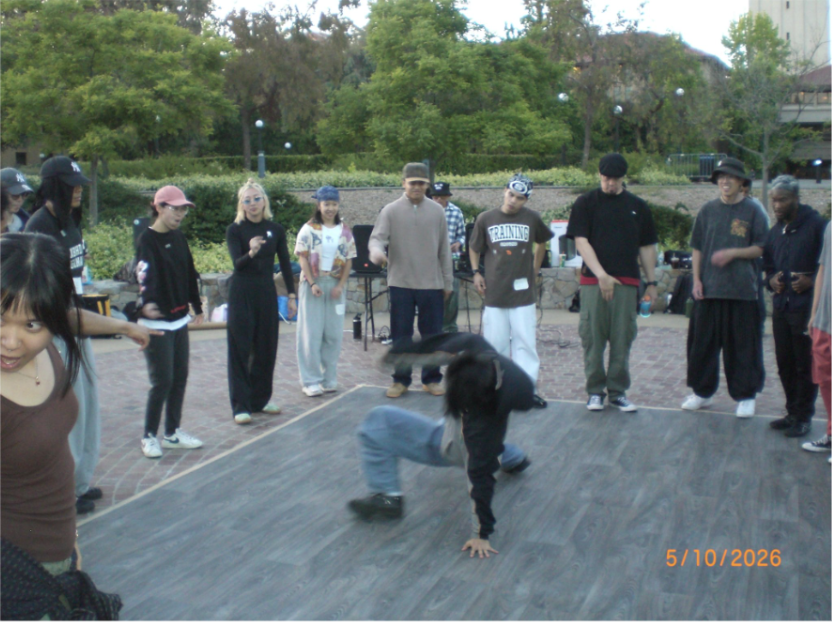
At FreeFlow’s weekly freestyle sessions, beginners are a constant presence, and there is little pressure to jump into a cipher (a dance jam where members circle up and take turns freestyling). Some members actively help newcomers learn how to freestyle; others simply show up to meet others and be part of the community.
“We are super passionate about bringing people in,” Clark said. “That’s how we grow, and the best kind of community is made up of people who want to learn and absorb.”
What began as a small group of four or five dancers has since grown into a thriving community that regularly brings in professional dancers and battlers from across the Bay Area, creating a space that extends far beyond campus.
FreeFlow members Julia Hok ’25, Justin Qin ’26, Michael Bereket (third year PhD student), Kristen Corlay M.S. ’26 and Clark began expanding the group’s reach by attending and jointly organizing events with Bay Area dancers, including Str8Jacket (a house and hip hop community in San Mateo), Bounce Back (a hip hop session in Oakland), the Bay Area Campbellock Collective and the SF Dolores Freestyle Session. From there, members kept attending other dance battles, parties, get-downs, jams and events across the Bay Area, meeting dancers, teachers and battlers who later came back to Stanford to freestyle with FreeFlow members.
“They’re like family to us,” said Mavis Stone, a third-year PhD student and FreeFlow member. Fellow FreeFlow dancer Henri Greamo ’28 described the Bay Area dance community as deeply “loving and supportive” and genuinely invested in seeing the group thrive.
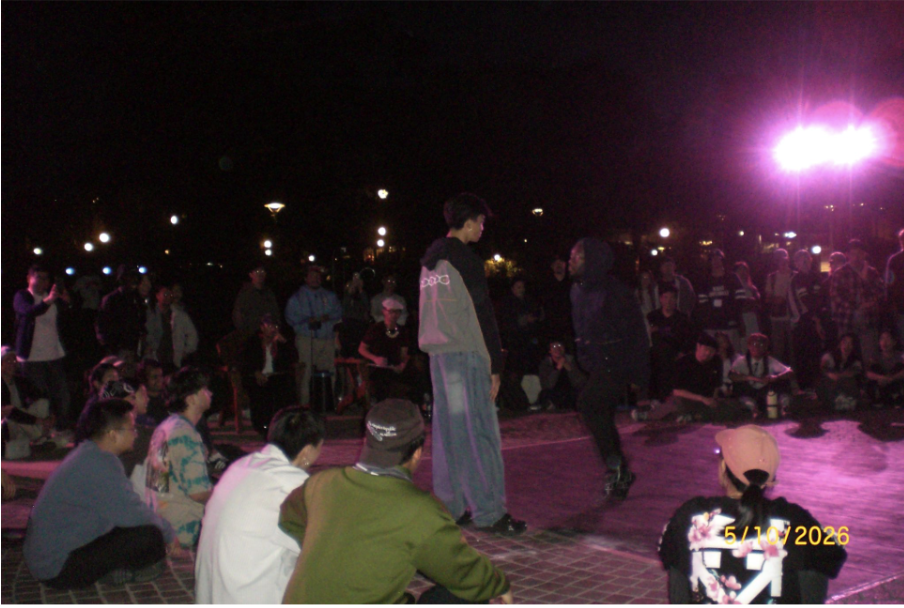
These relationships helped FreeFlow expand both its visibility and opportunities on campus. On May 10, for example, the group was able to host a 1-v-1 all-styles battle at Meyer Green. Bay Area artists judged, DJed and lit the event.
Between funding cuts and fragmented communication between arts groups, however, student leaders often feel like they are fighting for the arts alone, lacking institutional support that matches their level of “ferocity” and urgency, Clark said. Other financial barriers make dance inaccessible for many students: Taking classes off-campus at studios like City Dance can cost upwards of $25 per session. FreeFlow helps lower those barriers by bringing artists and dancers to campus to host free workshops.
Outside of its weekly sessions, FreeFlow will be performing at Alliance’s annual dance show Hipnotized this Friday at Dinkelspiel Auditorium.
“There is no feeling like freestyling, ever,” Clark said “People will chase people, money, substances to get the kind of high that dance offers you. You can be anywhere. If you are dancing with the people you love, it is the most euphoric feeling for me.”
Correction: This article has been updated to correctly attribute photos to Xu, not Clark. The Daily regrets this error.
Correction: This article has been updated to accurately reflect how FreeForm expanded its reach through the Bay Area. The Daily regrets this error.