
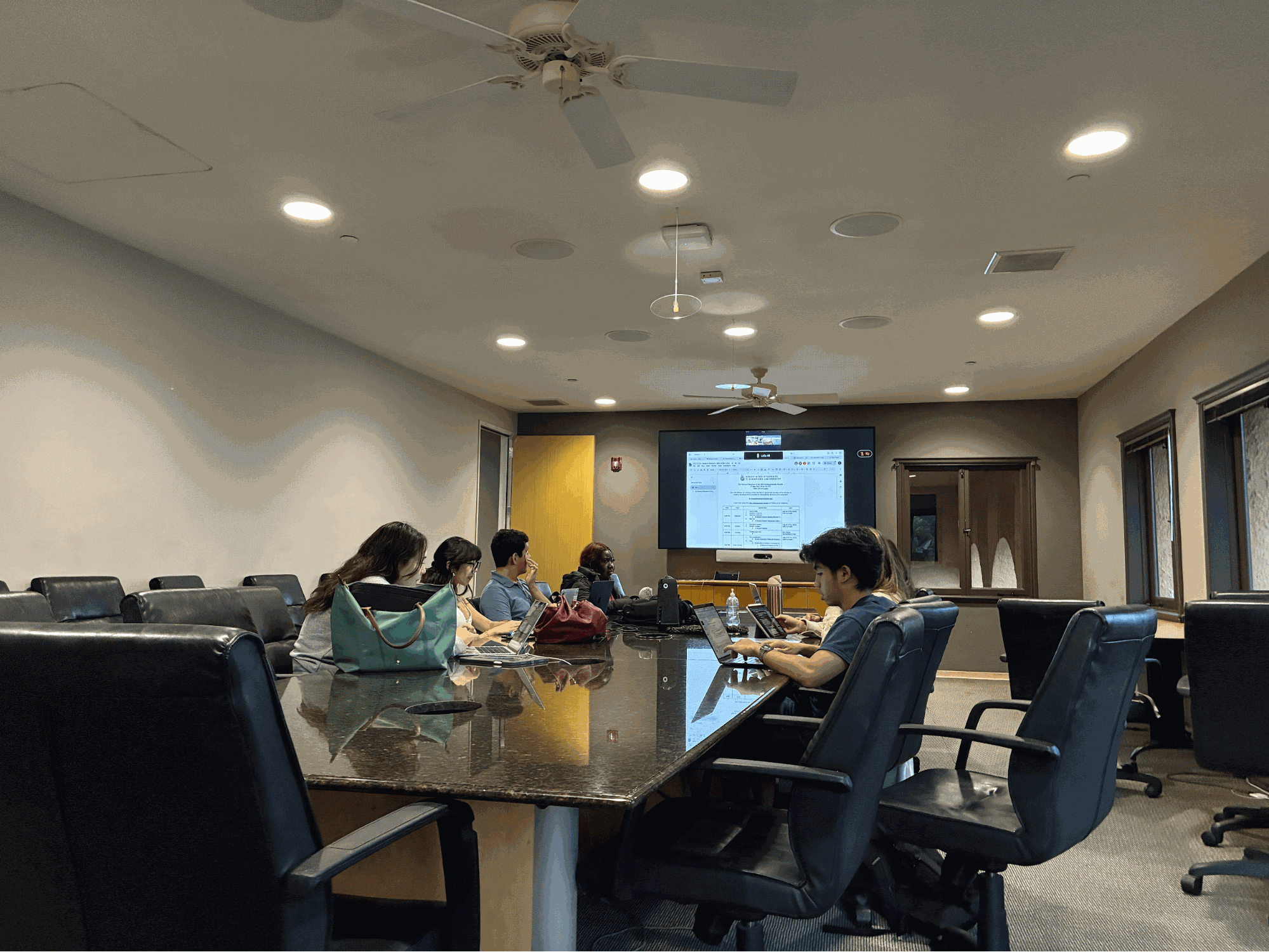
The Undergraduate Senate (UGS) passed bills to create a community center working group and a sustainability working group at its Wednesday meeting.
Senators heard a presentation from senator Jan Dwayne Cacnio ’29 on the importance of creating a Sustainability Working Group and the details of the proposed group. Cacnio described the StanfordNext initiative, which is working towards creating the University’s next land use application, and successes and failures in environmental issues like the University’s food waste sustainability efforts as significant current developments that indicate the necessity of a sustainability-focused working group.
Cacnio stated that the working group would hold the University accountable for sustainability goals like achieving zero waste by 2030.
“The Undergraduate Sustainability Working Group will work directly with issues related to the intersection of sustainability, transportation, housing, waste, university divestment, as well as indigenous stewardship,” said Cacnio.
Cacnio emphasized the importance of hearing a wide range of perspectives, especially from indigenous communities, in the working group. Besides the UGS, the working group will include representatives from Stanford Transportation, StanfordNext, Stanford waste systems, the Doerr School, Students for a Sustainable Stanford, the Native American Cultural Center (NACC) and the Stanford American Indian Organization (SAIO).
“We really hope to work towards having student as well as worker voices included with this initiative,” said Cacnio. Following the presentation, the UGS unanimously passed the bill to create the Sustainability Working Group.
The UGS also heard a presentation from co-chair Laila Ali ’28 and co-chair of Political Action Intisar Alkhatib ’28 on their work with community centers and their initiative to establish a Community Center Working Group.
Ali and Alkhatib met with Associate Dean of Students Abiya Ahmed, who helps oversee the community centers on campus, and Associate Vice Provost for Inclusion, Community and Integrative Learning Samuel Santos to discuss changes that have been made to community centers this academic year and to discuss student concerns with these decisions.
“The core issue… that we were trying to address was the breakdown in institutional trust, a lot of staffing, programming, institutional changes were happening, and [students] weren’t communicated to as to why,” said Ali. Through their meetings with Ahmed and Santos, Alkhatib mentioned that the cuts to community center funding is part of a larger University-wide budget reduction of 10-15% across all departments due to broader University financial planning.
Alkhatib added that they will investigate the loss of temporary staffing positions at community centers — namely, whether the University plans to extend their contracts or hire other staff. Alkhatib emphasized the knowledge and relationship-building that is lost with the termination of community center positions.
“The loss of support is definitely felt with the sunsetting of these positions, whether or not it was planned and executed strictly in this year’s time frame,” said Alkhatib. Ali added that administrators made these decisions with the intention to preserve as many of the student-facing aspects of the community centers as possible, and to keep all eight community centers open.
Ali referenced the University of California, Berkeley Multicultural Center, which the Trump administration investigated and was shut down for several months because of pro-Palestine imagery hung on the wall.
“That was a really powerful story of how our current federal administration can really get into the work that these centers are trying to do, and how important it is for us to be able to learn the ways that we can advocate and practice in these centers while still protecting them,” said Ali.
She added that the creation of a working group is important to help communicate these goals and changes to community centers and establish a better relationship between the administration and the students involved in them.
The UGS unanimously passed the bill to create the Community Center Working Group, which will include representatives nominated by the ASSU and each campus community center who will meet with Ahmed and Santos.
The UGS also passed the amended version of the bill calling for “accountability, transparency and student protection” after an IDF soldier tackled a Stanford student at an April 22 White Plaza tabling event, which has already been passed by the Graduate Student Council (GSC).
The new version of the bill more explicitly targets the administration’s alleged lack of infrastructure for handling incidents like what occurred on April 22. It also clarifies language regarding the authority and jurisdiction of the ASSU in taking punitive measures against Voluntary Student Organizations (VSOs), making it clear that those responsibilities fall under the Office of Community Standards (OCS).