
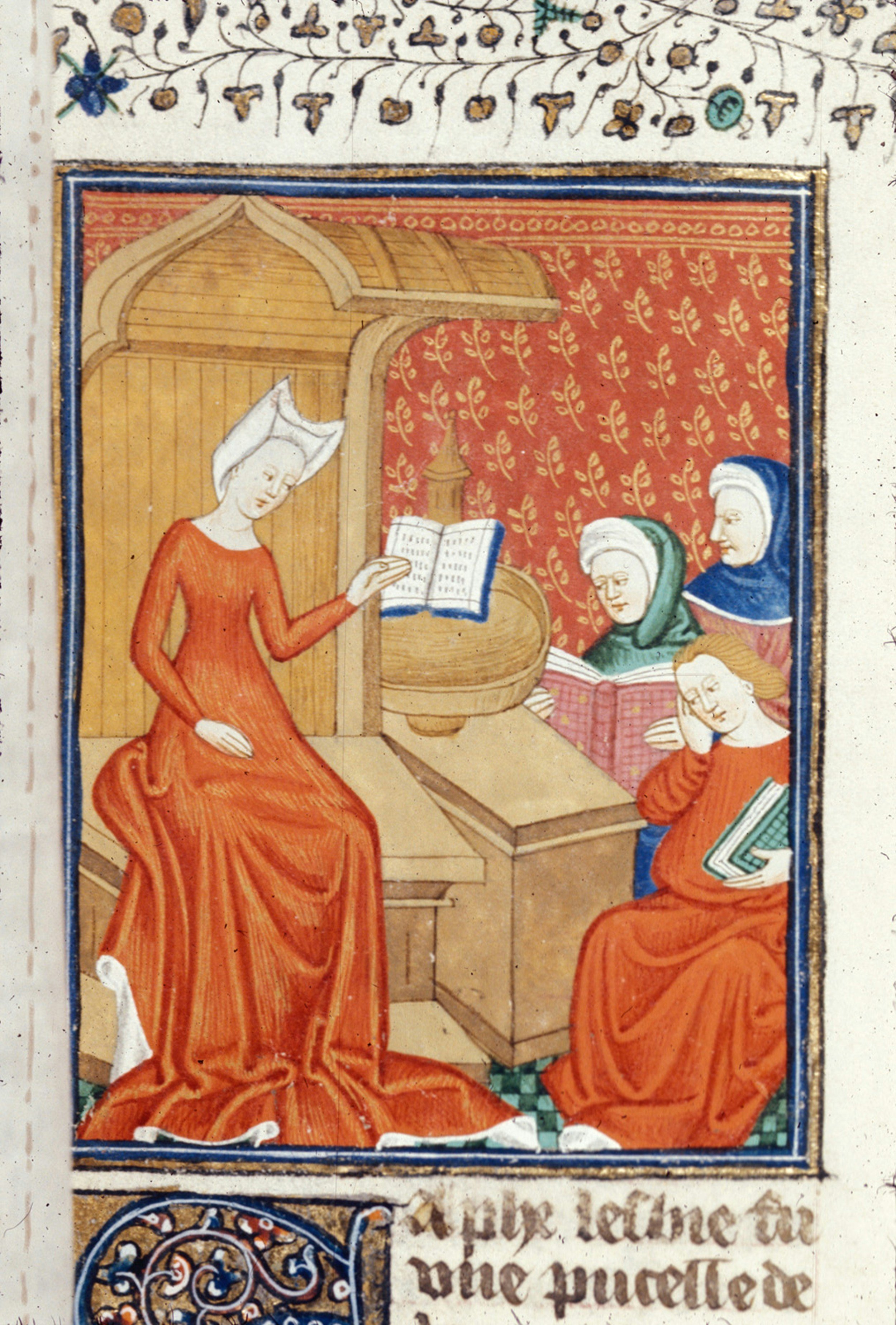
What do a miniature, pewter toy of a penis in a pan, demonic apparitions in Ukraine, and tattoos in a manuscript from the Philippines have in common? These are merely a few of the subjects discussed in the wonderfully interesting and occasionally peculiar lectures at Stanford’s Center for Medieval and Early Modern Studies (CMEMS). Stanford is often defined as the intellectual force behind the digital age, but students might not know that we also have a thriving, world-class community of medievalists and early modernists here. CMEMS is one of the great hidden gems of this university, one which I hope more students have the chance to discover.
CMEMS brings together students, faculty, and the broader community to explore new perspectives in medieval and early modern studies. Under the leadership of professor Rowan Dorin, the center runs a variety of events, including working groups, seminars, conferences and “Medieval Matters” public lectures. CMEMS has an expansive focus, bringing faculty from universities across the world to present on a diverse range of scholarship about the global premodern world. Fernando Martinez Periset, a Ph.D. student in comparative literature and former workshop coordinator, described how the center’s vibrant research community has helped fuel new scholarship.
“Perhaps the most significant thing is the thought that our conversations at CMEMS have supported multiple projects and, at some point in the future, each of the talks we heard will become a published article or a monograph,” he said.
The heart of CMEMS is its weekly Wednesday workshops, which has become a vigorous space for interdisciplinary academic exchange. Dozens of medieval and early modern scholars, students and other interested folks come together from humanities departments across campus for a lunchtime lecture and spirited discussion. Sophomore Ailon Goraly enthusiastically lauded the weekly workshops for “the collective understanding the audience has of what makes great historical analysis.”
Ailon wrote that CMEMS “is a hub for curious minds,” welcoming frosh and faculty alike, and “does a fantastic job of showing that the expansion of knowledge is a humble quest.”
“During Q&A, audience members often complement the most impressive and meaningful parts of the research presented, and the seminar usually ends with a debate on open questions and directions for future research,” Ailon noted. “This drive for quality and rigor is something I have carried with me. It’s not something that can easily be found in an undergraduate seminar where students are working through complicated texts for the first time.”
His favorite CMEMS memory was a memorable talk by professor Robert Harrison about Shakespeare’s soliloquies and Dante’s monologues. “There was something marvelous about an emeritus professor returning, wearing a suit jacket on top of a red, white and blue America t-shirt, to deliver a talk about how the way people think about the world beyond their local communities has changed since antiquity,” he reflected.
Gillian Smith, second year Ph.D. student in history and the current workshop coordinator, described how CMEMS has made her life and academic growth richer by connecting her to new colleagues and friends from every across the humanities. CMEMS, she declared, “has single-handedly made [her] Stanford experience truly interdisciplinary.” Reminiscing fondly about a spirited workshop lunch over barbecue ribs last year, Gillian wrote, “I never know quite what I’ll be learning on a given Wednesday, but I always emerge from each workshop buzzing with ideas (and with a full stomach!)”.
CMEMS also “offers a place for academic relationships to develop across the Bay,” remarked Jenny Smith, Ph.D. candidate in early modern history at UC Berkeley. “As a UC Berkeley grad student studying pre-modern Europe, CMEMS has provided an intellectual home,” she said. “On any given week after seminar, I might find myself in a conversation with an historian, musicologist, or literary scholar as we puzzle over the marvels and complexities of studying a world so different than our own.”
For me, CMEMS has been a highlight of my time at Stanford and an unexpected academic home. I’ve often felt out of place in the technology-dominated undergraduate culture here, where pursuing the humanities can feel like an unseemly, almost shameful secret. CMEMS was the first place that showed me I didn’t have to feel that way.
A few weeks into my freshman year at Stanford, I took my first steps in the German Studies Library. I glanced around nervously at the graduate students and faculty, feeling distinctly out of place as an awkward, unsophisticated frosh. I’d only just plucked up my courage to email its director, professor Rowan Dorin, who suggested I come along to their next workshop. Yet, as I looked around the room, I was met with smiles and warm welcomes and sat down to a tasty meal of onigiri and a captivating lecture about medieval landscapes and depictions of early modern Bengal. Far from judging me, the people here, I realized, were simply fascinated by the premodern world and eager to help me explore it too. I soon found that the workshops slotted into place as a core part of my weekly routine.
At CMEMS, I’ve become part of a uniquely kind, intellectually curious community of friends and colleagues across Stanford and beyond. The weekly workshops were the place where I met people who would become close friends and mentors, and began to view myself as someone capable of serious intellectual discourse. I appreciate the center’s student-first approach, which encourages undergraduates and graduate students to be the first to ask a speaker questions, helping students recognize that they, too, have valuable contributions to make. Conversations over lunch at the CMEMS workshops or with visiting speakers have turned into connections that I will carry with me even as I leave Stanford.
CMEMS has also dramatically widened my view of the medieval and early modern eras and what scholarly research about them can look like. The wonderfully eclectic assortment of lectures and events at CMEMS has thrown me into corners of the medieval and early modern world I otherwise would never have encountered. I’ve also delighted in the many auxiliary reading groups (shoutout to Old French!), special collections visits, music and choral performances, classes, social events and other adventures that the center has helped catalyze.
Now, a few weeks from graduation, I look back on those first moments at CMEMS with so much affection. My Wednesdays will feel strangely empty without the familiar ritual of a friendly lunchtime debate about scribes at female monastic institutions or Jewish kabbala. At the same time, I look forward to seeing new students discover the same joys I’ve found here.
I’ve had such wonderful experiences at CMEMS and wholeheartedly encourage other students to dip their toes into the medieval and early modern world at Stanford. Come along to the weekly workshops, mull over a remarkable lecture, strike up an extended conversation with the visiting scholar sitting next to you — and perhaps you’ll also find yourself, years later, marveling at how much CMEMS has shaped you.