
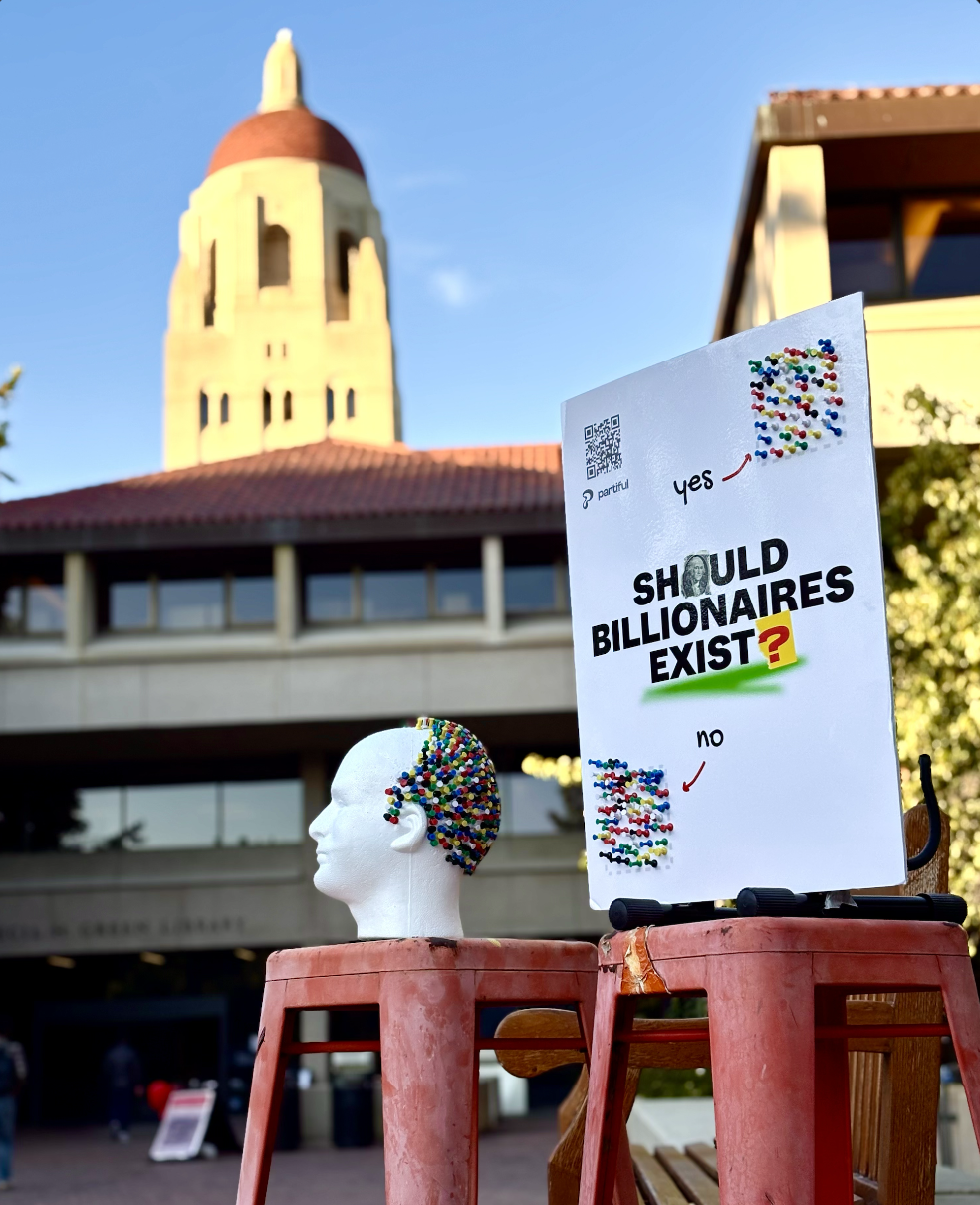
Outside Wallenberg Hall and Lathrop Library, men with clipboards have been making the rounds. Their pitch is simple: sign a petition to put a billionaire tax on California’s November ballot, tax the state’s wealthiest residents and fund healthcare and schools. It sounds good on paper.
Think of a vacation town that resents tourists. These people drive up prices, crowd local spots and buy second homes, leaving less for the locals. The town grumbles. Some activists propose chasing them out. Then the visitors leave, taking their restaurant bills, property taxes, ticket revenues and staff salaries with them. The town discovers, too late, what the tourism had made it reliant on. California is one big vacation town, and the train is already leaving back East.
The 2026 Billionaire Tax Act, backed by Service Employees International Union-United Healthcare Workers West (SEIU-UHW) and now headed for the November ballot after organizers collected 1.6 million signatures, would impose a one-time 5% tax on the net worth of California residents worth over $1 billion. It targets roughly 200 people who collectively hold an estimated $2 trillion in wealth and is projected to raise $100 billion. Sounds great, right?
Gavin Newsom, California’s governor, opposes it. The reason why is quite visible in the data. California’s billionaires currently contribute an estimated $3 to $6 billion per year in state income taxes, a figure that shrinks every time someone crosses a state line.
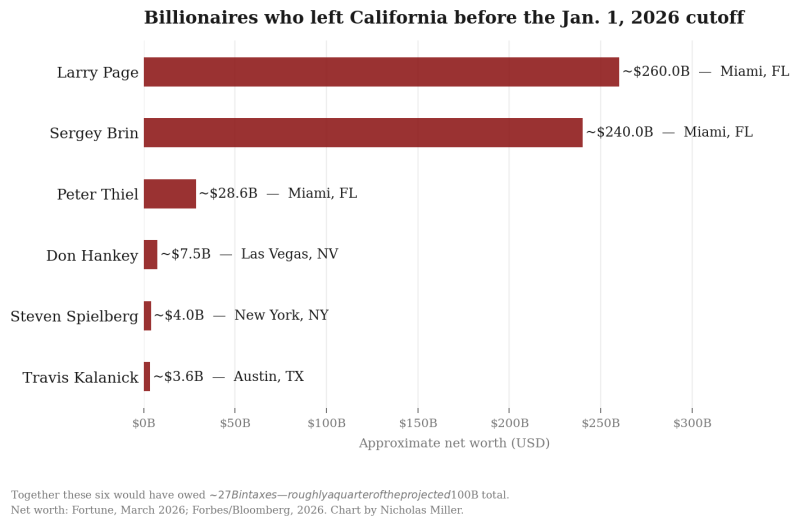
Six confirmed billionaires left California before the January 1, 2026 residency cutoff used to determine who owes the tax. Larry Page and Sergey Brin relocated to Miami. Peter Thiel followed. Don Hankey left for Las Vegas. Travis Kalanick announced he had moved to Texas. Steven Spielberg became a New York City resident on New Year’s Day. That cohort, six people out of 200, would have generated $27 billion in tax revenue, roughly a quarter of the initiative’s entire projected haul. Mark Zuckerberg reportedly left as well, though after the January 1 deadline.
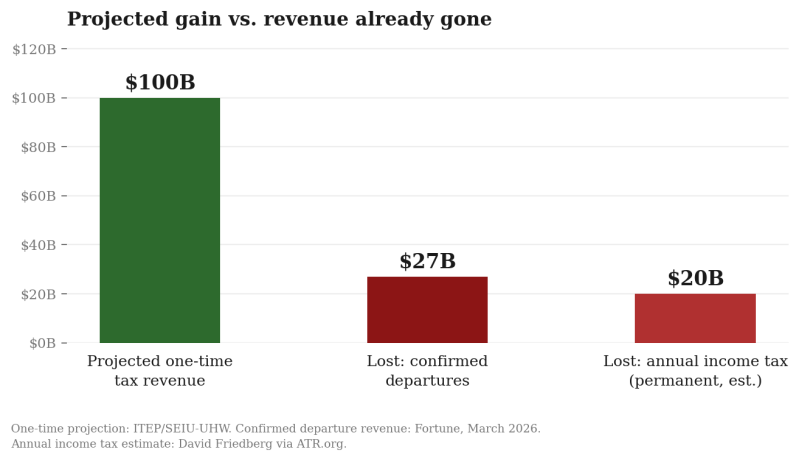
The arithmetic gets worse from there. Entrepreneur David Friedberg estimates that $2 trillion in assets have already left the state. At California’s existing income and capital gains tax rates, that represents approximately $20 billion in annual tax revenue gone permanently, in exchange for a one-time windfall that may now collect far less than projected. A private poll of individuals subject to the tax found that 80% to 90% said they had already left California or intended to leave if the initiative looked likely to pass. California’s top 1% of earners currently fund roughly half of the state’s income tax revenue. The visitors have always kept the economy afloat.
There is an irony that petitioners outside Wallenberg may not know. Sergey Brin, one of the billionaires who left for Miami, donated $20 million to a group called “Building a Better California,” which is actively opposing the initiative and paying $15 per signature to people who sign countermeasures. In 2024 alone, Brin’s foundation gave $68 million to UCSF and $32 million to Stanford University — money that went directly to the institutions California prides itself on.
In 2025, through his foundation and nonprofit Catalyst4, Brin donated over $1 billion to philanthropic causes, with the majority of the donations focused on California. The billionaire tax was designed to capture what billionaires owe the state. It did not account for what they were already giving voluntarily, and it does not account for what Stanford’s endowment loses when that giving eventually stops.
The title of this piece is a deliberate double meaning. Get rid of the billionaires’ tax, or get rid of the billionaires? California has spent months threading that needle and managed to accomplish the second before accomplishing the first. The little vacation town chased its visitors away, and now the spots are quiet.
The question is not whether taxing extreme wealth is a worthy goal. It is whether California has thought carefully enough about what else leaves when the wealthy do. The November vote will answer it. The January departures already have.