
“In TALK, we find each other.”
I used to hear that line and treat it as a nice slogan for a poster. Then I started showing up on Wednesday nights, week after week, and I learned it was simply true.
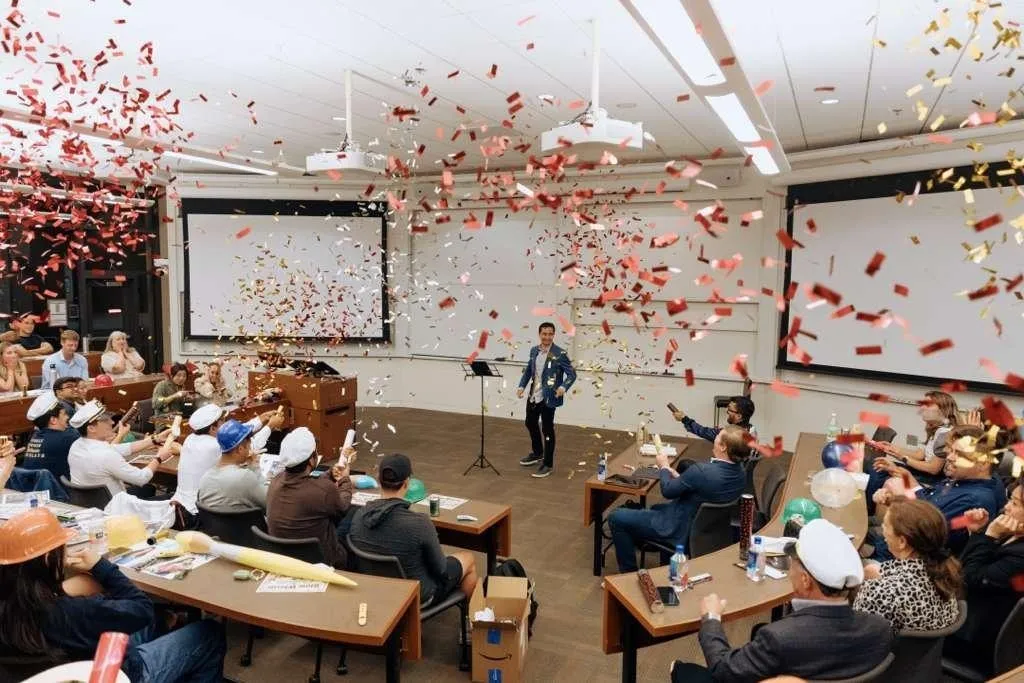
TALK is a sacred tradition of the GSB. Every Wednesday during the school year, from 8:30 to 10:00 p.m., two classmates stand at the front of a room, and each tells the rest of us the story of their life. Thirty uninterrupted minutes, in their own words, in front of the people they have spent two years studying alongside. Nothing at the GSB gets the same protection on a calendar. Nobody plans a class event over a Wednesday night. You move the drinks, finish dinner early, find another time. TALK is the one thing the class agrees to make room for, week after week.
TALK opened my world. It taught me about the beautiful, varied surface area of the human experience, the parts I never would have seen on my own. I sat in that room and traveled to places I had never been and into lives I had never imagined: a childhood in a Jamaican town where the kids grow up playing cricket, a Tunisian man’s weathered hands holding his grandson, a Brazilian boy watching sunsets with his grandma in a small beach town, a family that climbed an oil rig to escape Vietnam. I learned of a Turkish boy on the Bulgarian border whose culture was pressed thin between the two surrounding it, and a grandfather in China who survived the Cultural Revolution and built a family on the other side.
I heard what privilege sounds like, and what its absence sounds like. I heard people describe oppression, and others describe the kind of love and support that carries you when nothing else will. I heard people name the anxieties and fears they had spent years hiding, sometimes for the first time out loud.
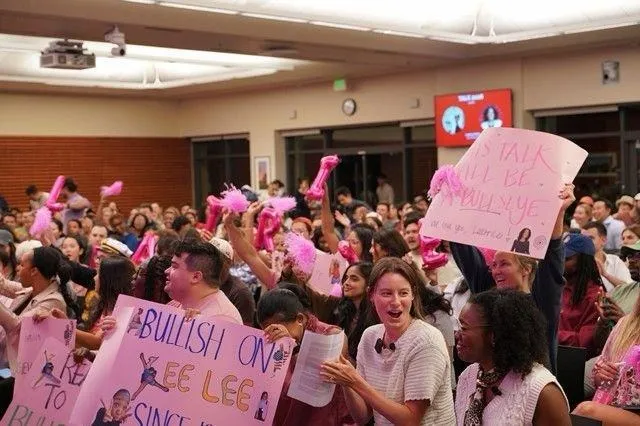
That’s not nothing, especially here. Business school can sometimes feel like one long exercise in curation. We often thin-slice each other on competence and capability. We self-promote in essays and coffee chats, telling people the ‘what’ of our work while keeping the ‘why’ locked away. TALK is the rare place where the whole thing inverts. The minute someone tries to use that stage to promote themselves, the room can feel it, and the performance collapses. You cannot fake your way through thirty minutes. It is too long, too honest, too exposed. What is left, once the curation falls away, is something real: the actual reasons people are the way they are, the inner thoughts and concerns underneath the polished version.
I think that’s why TALK is built the way it is. You don’t give a ten-minute puff speech about how impressive you are, but a thirty-minute life story, with the entire class sitting in a room, fixated, caring about nothing except where this one person came from and where they are going. Everyone gets their authentic ‘main character’ moment. People I considered my closest friends, and people I had barely met, all stood at the front and were seen completely. I watched a classmate sing like a professional. I watched another drop into a breakdance and pull off a windmill spin. I watched best friends and near-strangers alike lay out the most tender parts of their lives, across the class of 2025, my own 2026 and the class of 2027 just getting started.
What TALK did, more than anything, was force me to rewrite the stories I had already written in my head. We all arrive here with assumptions about who people are and what drives them. TALK makes you peel those back. Again and again I realized how wrong I had been, how badly I had misread someone, how much was happening under a surface I had glanced at and decided I understood. There is a word for what it taught me: sonder, defined as the recognition that every person around you has a life as vivid, complicated and full as your own. You cannot sit through a season of these talks and walk out believing anything else. Everyone is carrying their own challenges, their own happiness, their own private triumphs. The loud one is loud for a reason. The quiet one is not empty inside.
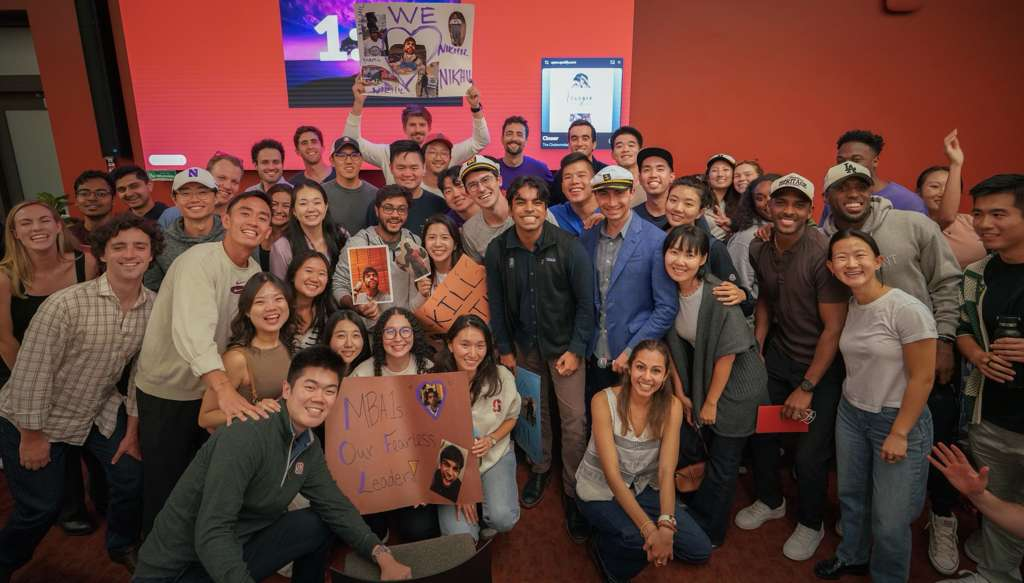
None of this happens by accident. TALK works because a group of people pour themselves into it every single week. The support captains, a couple of the speaker’s best friends, show up to string the decorations and run the after-party where the class gathers to celebrate the person who just bared their soul.
And the coaches in our year — Paola Peraza, Muneeb Ata, Alex Nguyen-Phyc, Jordan Isham and Hannah Ni — do the tireless and largely invisible work: rehearsing speeches at all hours, calming nerves and, yes, moving the chairs and sweeping up the confetti after everyone goes home. It is a genuine act of service and care.
When my own Wednesday came, TALK gave me the same thing it had given everyone I watched. It let me tell the story of the communities that built me, across five countries and ten cities. It let me talk about the happy parts and the hard parts in the same breath, the challenges I spent years hiding and the slow climb back out of them. Most of all, it let me describe a family that showed me what unconditional love actually means, the kind that believes in you when you have stopped believing in yourself. I had spent so long deciding which version of myself to present. For thirty minutes I got to be the whole thing, in front of the people I most wanted to know me.
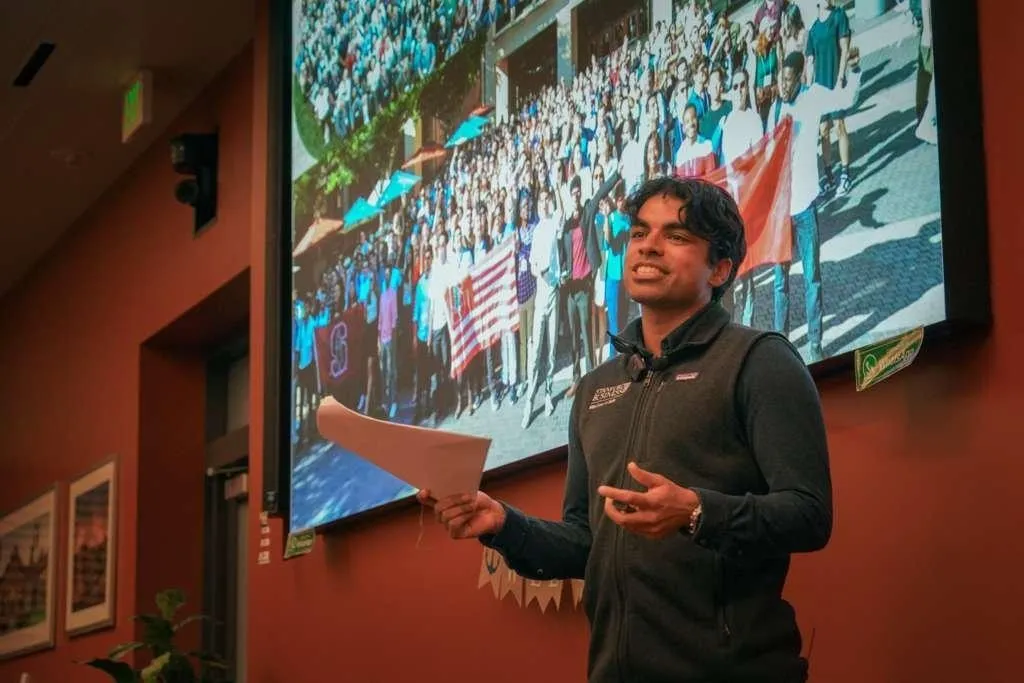
That is the strange magic of it. In a place built around standing out, status and the constant management of how we are perceived, TALK carves out a space where the entire class agrees, for ninety minutes every Wednesday, to do the opposite. To be vulnerable. To celebrate someone for their honesty rather than their accolades. To simply listen.
I came to Stanford expecting to learn business frameworks and meet a lot of people. I did not expect a weekly ritual to teach me the most. But TALK widened my world more than any class did. Each story I heard made my own world broader, kinder and more beautiful. I am leaving understanding that I knew almost nothing about the people around me when I arrived. Learning the truth about even a few of them has been one of the privileges of this place.
I will spend a long time grateful that I got to listen.