
The wine-dark sea sows chaos.
It speaks of the anger of the gods, and it is merciless as it is beautiful in Christopher Nolan’s “The Odyssey” (2026). Released two months ago, it has already grossed over $1.7 billion at the box office, making it Nolan’s highest-grossing film yet.
The film is adapted from Homer’s ancient Greek epic of the same name, which dates back over 2500 years ago. It follows King Odysseus (Matt Damon) as he attempts to make it back to his home Ithaca following the 10-year Trojan War. He runs into a myriad of obstacles, including a man-eating cyclops, violent iron-clad Laestrygonians and the stony snake-like Scylla that feasts on his crew. The ocean itself, a stand-in for the will of the wrathful sea god Poseidon, becomes the protagonist’s main enemy.
Audiences can expect a visually beautiful adaptation of the epic. Most of the gods themselves remain undepicted, yet Nolan embodies their divinity brilliantly through worldly symbols: “Who doesn’t understand thunder, fire, a baby’s cry?” Athena (Zendaya) asks Odysseus. The result is a film that allows the audience to both experience and imagine divine horror all at once. The ocean’s violence, the sky’s volatility in a storm and the hesitant grasses in a wind — ominous stand-ins for the wills and wraths of the gods — make sure nothing is reduced to a backdrop.
As can be expected of an all-star cast, the acting is brilliant across the board. Damon is convincing as Odysseus, never allowing the audience to lose sight of his weariness. Anne Hathaway delivers a fierce Penelope, in contrast to Tom Holland’s Telemachus who seems (at least intentionally written to be) helpless in his own home. Disappointingly, Zendaya only appears on screen for a few minutes, whereas Athena’s role in the epic was much larger. Nevertheless, her solemnity captures the scenes for even the short moments in which she appears on-screen.
The score, composed by Ludwig Göransson, never misses a beat. The pulsating rhythm, almost violently metronomic, syncs perfectly with the events on screen, from Odysseus’s cyclops escape to his visit to the underworld. The heartrending flute melodies create a sense of intimacy even when the scope of the film (and its setting) feels vast.
Yet for all the visual extravagance of Nolan’s Odyssey, its characterization of Odysseus himself remains damningly timid, and the entire film suffers for it. Nearly every morally reprehensible action our protagonist takes in the epic is wiped away in favor of creating an unreprimandable — and thoroughly penitent — main character that Nolan is desperate for the audience to like.
Odysseus, famous for shouting his true name to a furious, wounded cyclops, does no such thing in the film. He is only blamed for shooting the cyclops a second time. He is then chastised by his first mate, Eurylochus, for doing so — as they were literally running for their lives — rather than choosing “mercy.” Aside from the fact that the characters were long past the point of merciful strides, the comment fits poorly in a film that borrows its entire narrative from a story that is decidedly devoid of mercy; the narrative made clear there is no shame in harming one’s enemies. To make such a change to a character’s moral response, as in the case of Eurylochus toward Odysseus, leaves gaping inconsistencies regarding the worldly perceptions of Nolan’s characters.
In addition, Odysseus does not kill all the suitors wooing Penelope, only the ones who directly provoke him. He does not kill all the maids who were involved with the suitors, one of the most terrible decisions he makes that has had readers questioning why he chooses to slaughter (probable) innocents. He also does not commit adultery knowingly — he does not sleep with the sorceress Circe, and any implied romance he had with the nymph Calypso is diluted since he cannot remember he had a wife in the first place.
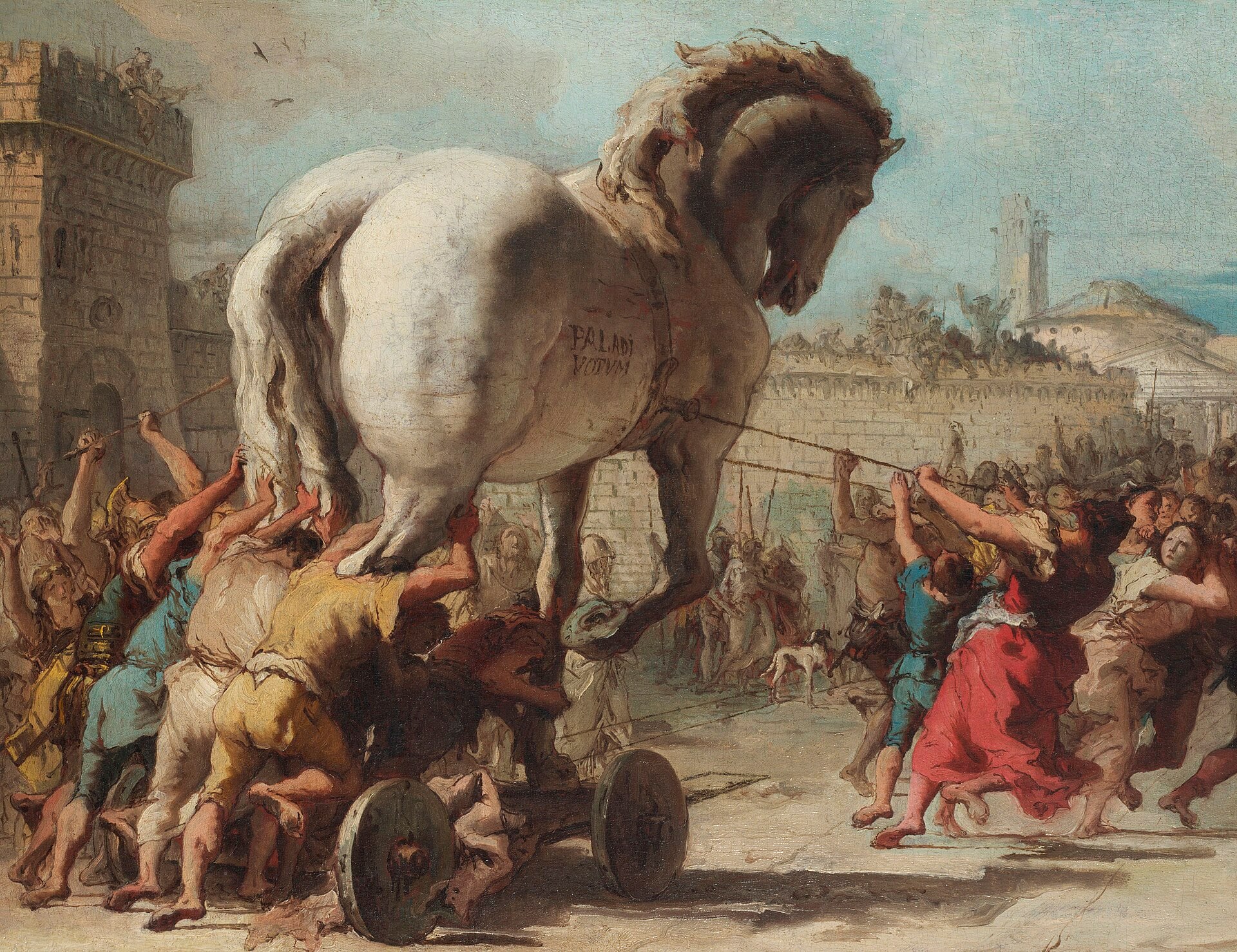
The issue with cutting these acts lies in the very first line of the epic the film is based on: “Tell me about a complicated man” (translated by Emily Wilson). What’s more, Nolan himself credited this line as an inspiration for his script. So the question remains: Why, then, make a morally complicated character … less complicated? In fact, the only thing for which Odysseus is judged guilty is devising the Trojan Horse scheme — something for which he is guiltless in the original. In an epic for which the protagonist is famous for lying, why would this deception in particular, which won him glory (a staple virtue of an ancient hero), be something he would regret?
By stripping Odysseus of the very things that made him so multifaceted, so difficult to pin morally, he becomes flattened into a figure that barely fills the shoes of his original iconography. In the end, the Odyssey expands into a screen, but Odysseus himself shrinks into a passable stand-in for himself.