
Turner Van Slyke ‘28 is an organizer with Stanford’s Class Action chapter, a national nonprofit organization of grassroots organizers reimagining “elite” higher education. The chapter can be contacted at [email protected].
I still remember my first steps on campus as a frosh. An absurdly large, firetruck-red New Student Orientation badge dangled around my neck. While I walked under the arcades ringing Main Quad, I thought about the mark I wanted to leave on the world. With one golden opportunity to attend Stanford, I was determined to solve big problems, help others and give back to communities like mine. Cute, I know.
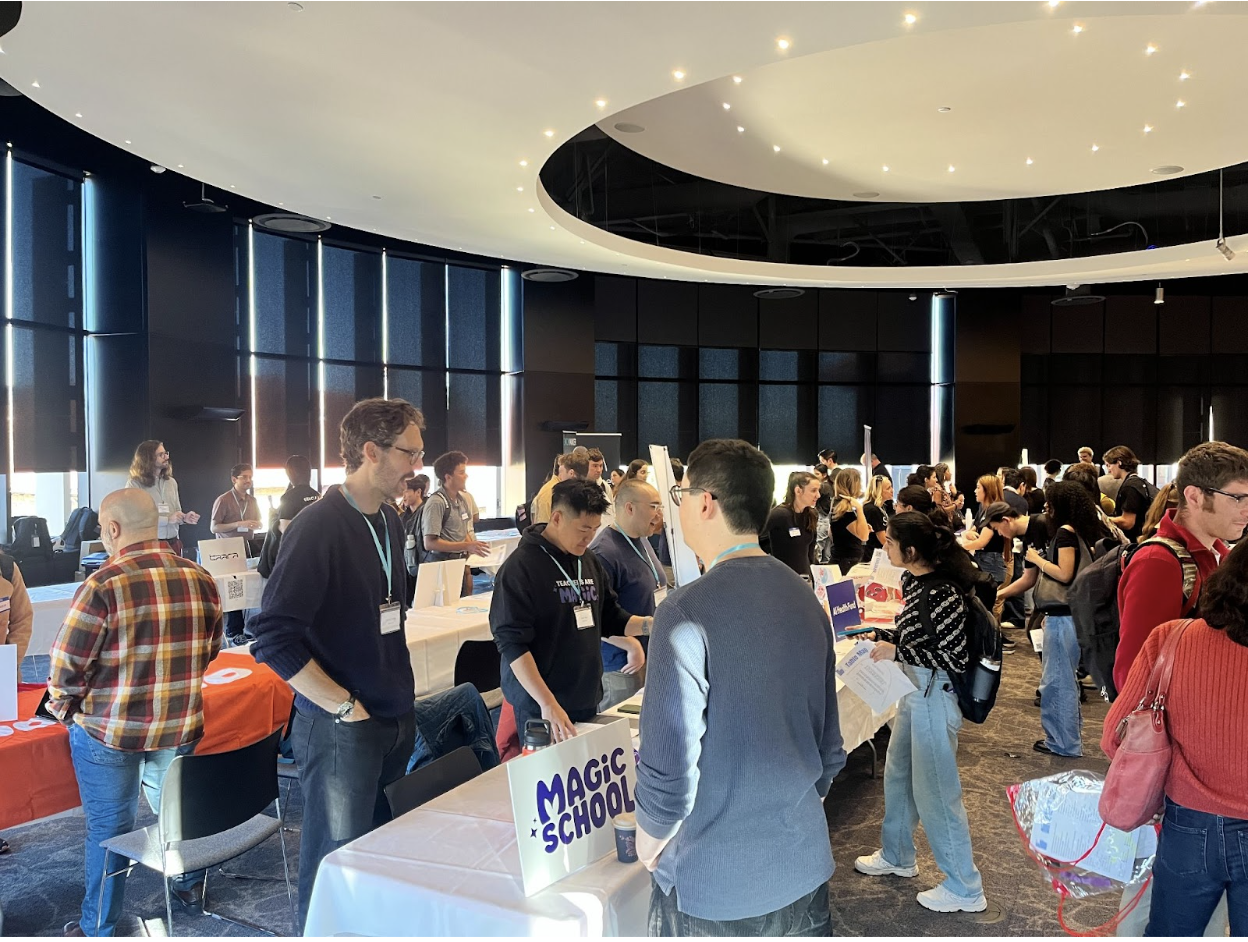
That fall quarter, I attended my first Stanford career fair. I was surprised by how few employers appealed to my interests, goals or values. I strolled by a handful of Big Tech companies. I walked faster past a group of defense contractors. I saw a long blue table with information about applying to be a “consultant,” whatever that meant. In a far corner, I chatted with a lonely spokeswoman for Cardinal Service.
Where was the moonshot save-the-world table featured in all those Stanford Instagram posts? Why were so many of my classmates suddenly applying for hyper-competitive internships on Wall Street? How did any of this align with the speech our president gave at convocation telling us Stanford was founded to “serve humanity?”
My experience isn’t unique. Class of 2030, over the coming months and years, you’ll also struggle against headwinds in your quest for purposeful work. In 2021, over half of recent Stanford graduates ended up in technology — overwhelmingly in Big Tech — or finance and consulting. These corporate careers aren’t a pitstop on the way to positive impact, either. While many consultants leave the industry after less than three years, the vast majority remain in the corporate world with fewer than 15% returning to the public sector or nonprofit work.
The contrast between the world-changing aspirations we express in admissions essays and the socially corrosive desk jobs we enter after college — work that pollutes our atmosphere, debilitates our democracy and results in the deaths of our neighbors — is the product of a deliberate process: career funneling. The good news? None of this is inevitable.
In 2015, sociologists at UC San Diego interviewed Stanford and Harvard students on their career plans in a paper titled “Career Funneling: How Elite Students Learn to Define and Desire ‘Prestigious’ Jobs.” The article outlines how Stanford collaborates with corporate recruiters to push an overwhelming number of graduates into high-stress careers that directly support the status quo in Big Tech, finance and consulting.
First, we arrive at Stanford with ambitious plans to change the world but little information about employment opportunities. Naturally, we rely on messages from university programs, peers and student organizations to fill in the gaps.
Second, campus career offices and academic departments run sponsorship programs where well-resourced employers pay to crowd out other options. The Department of Computer Science’s Computer Forum, Stanford’s largest technology recruitment program, is a perfect example. The Computer Forum charges affiliate corporations like OpenAI, Meta and Google a base annual charge of $27,000 for premium access to students in the form of on-campus interviews, information sessions, career workshops and company tours.
CareerEd, Stanford’s hub for post-graduate employment resources, is forced to raise a significant portion of its own budget. This resource shortfall creates a structural dependence on corporate sponsorships, making CareerEd’s stated vision to “prepare Stanford students of all identities to explore and pursue careers with meaning, purpose, and impact” a distant secondary consideration. Through Circles of Influence, the office’s “employer partnership program,” companies pay up to $15,000 annually for access to recruiting and marketing benefits in the form of exclusive slots at job fairs, résumé booklets and VIP event promotion.
Third, campus culture signals which careers are ‘prestigious.’ Student consulting clubs release membership applications early and hold coffee chats with company recruiters, driving social cachet for corporate careers. CareerEd networks amplify early recruiting deadlines and allocate disproportionate resources toward advising for Big Tech, finance and consulting. These practices exacerbate a sense of competition while communicating implicit expectations about which careers are worth pursuing. While the Haas Center and other public service programs support great work, they operate as an alternative to “regular” employment reserved for students with an exceptional commitment to service.
In a vicious positive feedback loop, the wealthiest employers gain special advantages and everyone else starts from behind in the scramble for talent. Our school’s career services screen which opportunities get exposure, undermining our freedom to explore without unfair interference.
After all this conditioning, we draw a thick dividing line between “ordinary” and “desirable” careers. We feel FOMO while our peers compete for selective summer internships at big-name companies. We treat once-respected pathways in impact technology, innovative startups, education, medicine, politics, the arts, conservation, journalism or service as impossible financial sacrifices or a waste of our education. We narrow our sense of possibility and internalize one corporate definition of success worthy of our Stanford degree. We’ve been funneled.
It’s up to Stanford to level the playing field. CareerEd, the critical resource we rely on throughout our employment journeys, must eliminate the pay-to-play corporate sponsorship model in favor of stable university funding that meets student needs. These new resources need to build pipelines into positive-impact careers that balance their corporate counterparts. Finally, Stanford must create an ongoing channel for student input into how CareerEd allocates our tuition dollars, holding the office accountable to the students it serves.
To support our efforts to combat career funneling at Stanford, write to us for details on how to join our campaign and attend our weekly meetings. We also urge you to sign the open letter we are circulating around campus to advocate for these changes. Your support sends a powerful message as we challenge CareerEd to support Stanford students in finding purposeful outlets for our talents and aspirations.