
Editor’s Note: This article is a review and includes subjective thoughts, opinions and critiques.
Every Stanford tour I give opens with the family. Leland Stanford was a railroad tycoon. Jane was his wife. Their brainy miracle-baby son, Leland Jr., died of typhoid at fifteen, and the university was built in his memory. Leland has his choo-choo trains and his horses. Jane is wife and mother. Yet the longer I give the tour, the more she crowds into it. At Memorial Church, I tell groups that she died in 1905, a year before the earthquake brought its tower down. She built the church, and she never saw it fall.
At the Cantor Arts Center, a new exhibition called “JANE!” picks up where my tour leaves off.
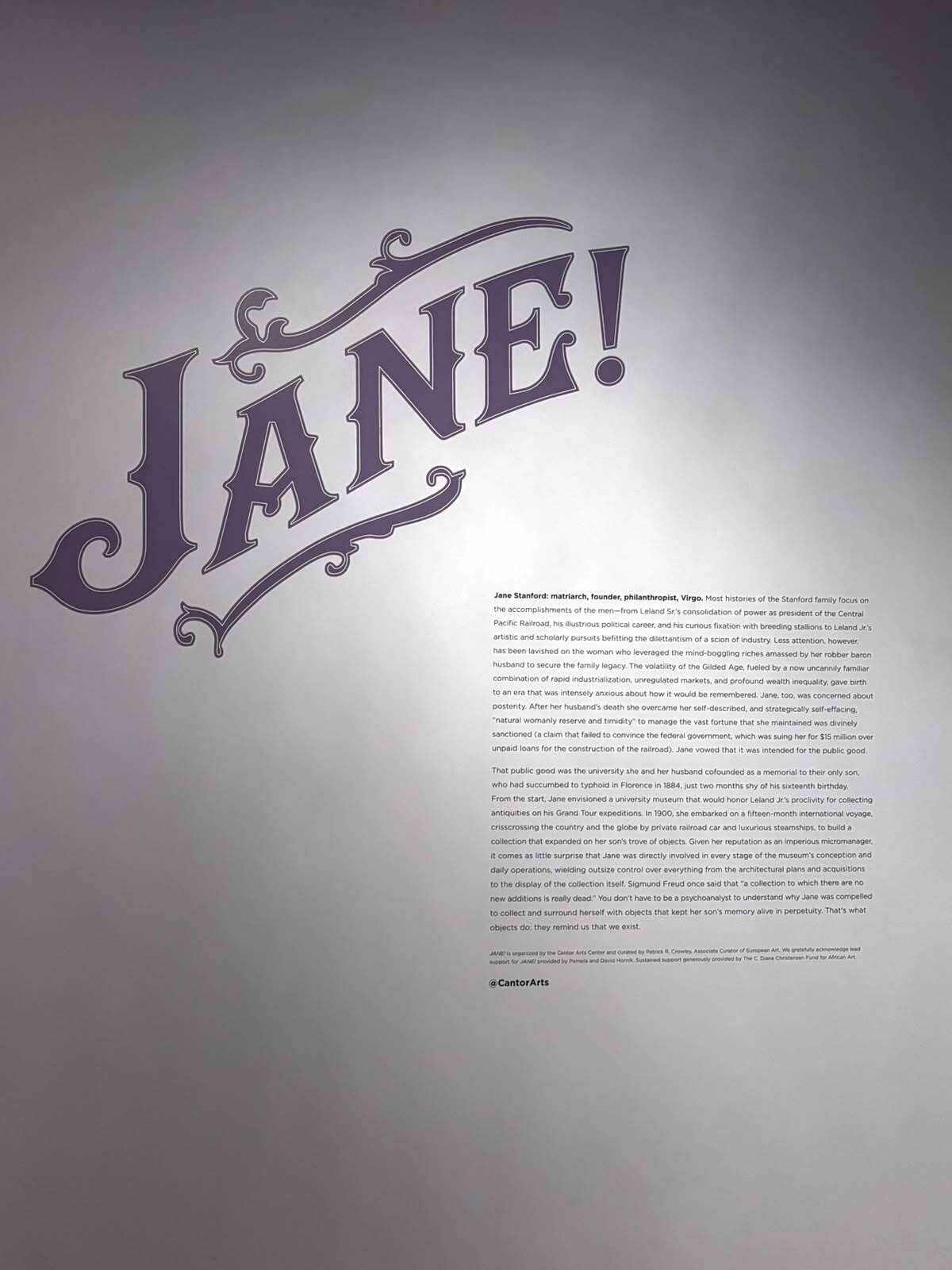
Curator Patrick Crowley set himself one rule while assembling the exhibition: no horses, no trains. He means it. The Golden Spike, long a fixture of these galleries, has been moved to a case off the lobby to make room for an exhibition about Jane alone, composed of her gowns, jewels, keepsakes, antiquities she collected and more. The opening wall text introduces Jane Stanford as “matriarch, founder, philanthropist, Virgo,” a joke Crowley explained at his curator talk by calling astrology the identity politics of our moment.
It works. Within minutes I was thinking about her the way you think about a friend: Jane would absolutely have been the kind of girl to do that. Crowley cites Cole Escola’s play “Oh, Mary!”, which reimagines Mary Todd Lincoln as a would-be cabaret star, as inspiration. He doesn’t take Jane that far. But the irreverence never reads as disrespect. It is the only way to make a woman who has become a floating name feel like a person again.
Every wall in the exhibition is lilac. It envelops you. The color reads as feminine, delicate and a little magical. Crowley noted that during the 19th century, lilac was also the shade of half-mourning, worn between full black and a return to ordinary life. The exhibition breathes life into that in-between space, where Jane’s spirit flourishes. Lilac is a color for people who are not finished grieving but have decided to keep living. Through “JANE!”, we learn that Jane’s grief for her son and her ambition never existed in opposition.
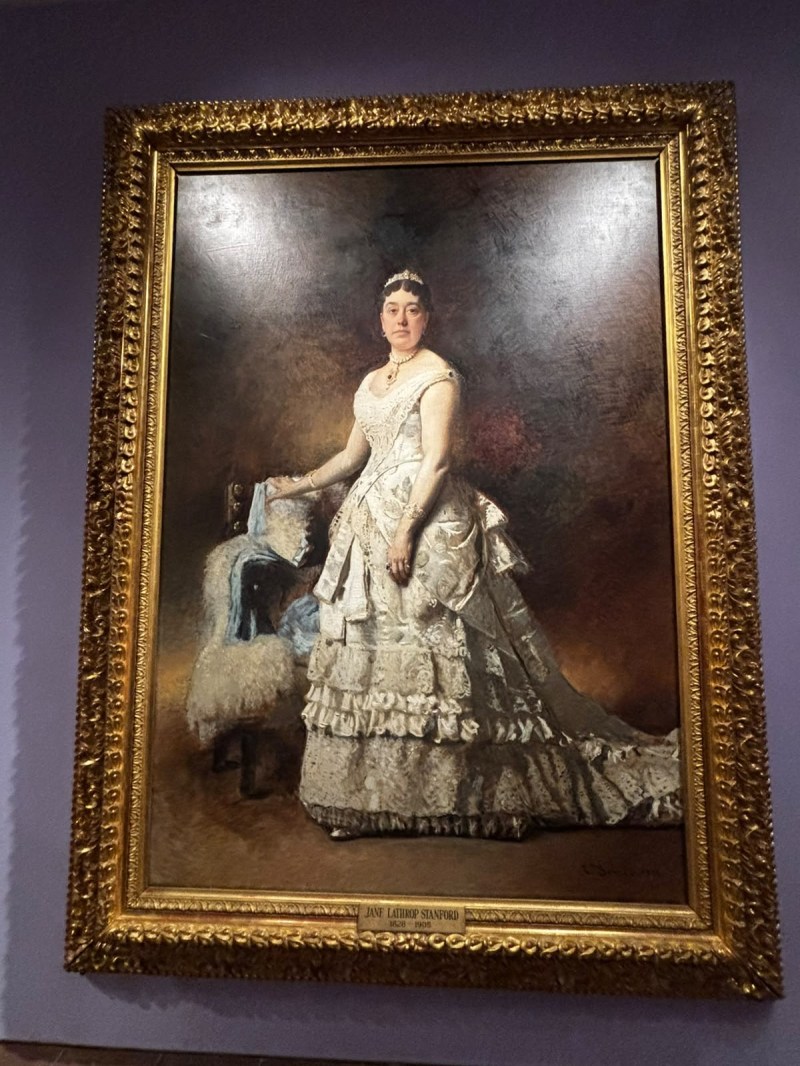
At the heart of the exhibition are two Janes, one standing and one lying down. In Léon Bonnat’s 1881 portrait, she stands close to life-size in a Parisian couture gown. She is dripping in jewels, framed in gilt, reserved to the point of stiffness, and you have to tip your head back to meet her eyes.
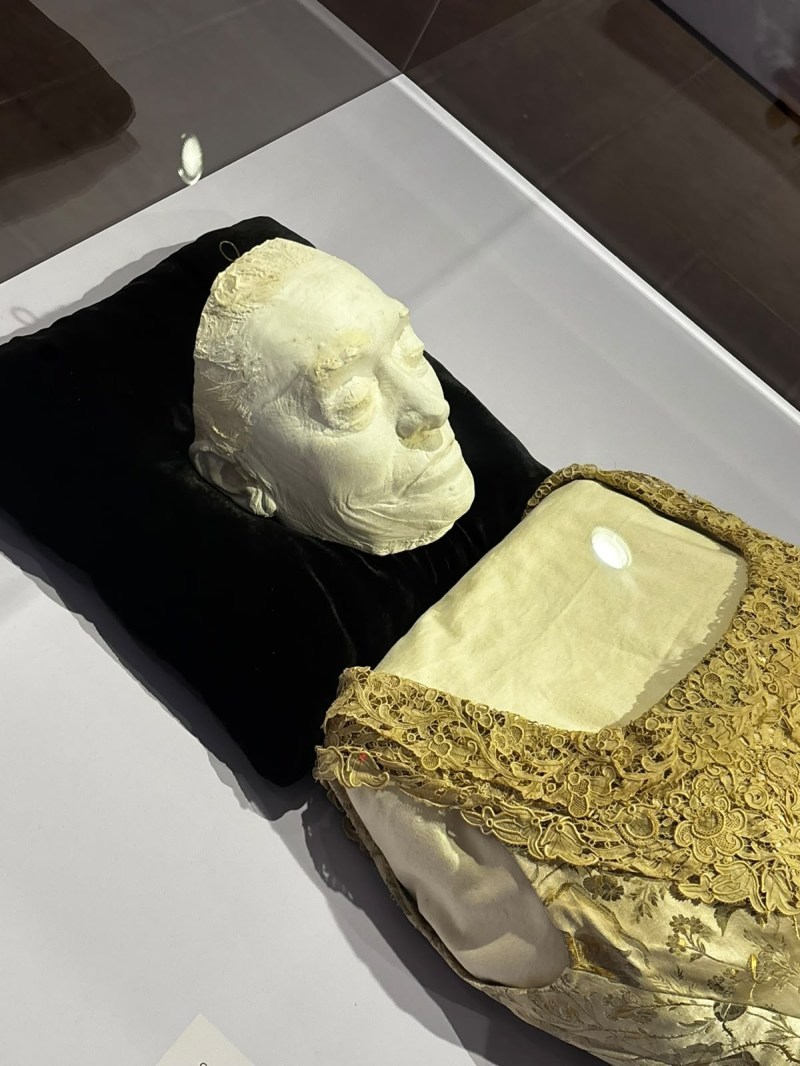
In the next gallery, that same gown lies flat under glass. Crowley admitted at his talk that the dress nearly stayed in storage because the museum had no case tall enough to stand it upright. He found a spare vitrine in the basement and laid the gown down in it like Snow White in her glass coffin.
“At first we just had the dress in there, and honestly, it felt spookier than now,” he said. “It sort of felt like she had been raptured or something.” The team padded it with muslin, which briefly made her look, in Crowley’s words, “a little bit like a burrito,” and set her death mask above the collar on a velvet cushion, the way Victorians displayed them.
“I was really trying to make this look clean and sort of respectful,” he said, “but it obviously has the tinge of the macabre.” The portrait gives you her grandeur and the gown gives you her actual size, and standing over it, I could almost see her lying there, lace lining her clavicle.
The grief in these rooms belongs to Jane as much as to us. Émile Munier’s painting, commissioned after her son’s death, shows Leland Jr. as an angel comforting his grieving mother, a boy she once nursed now caring for her.
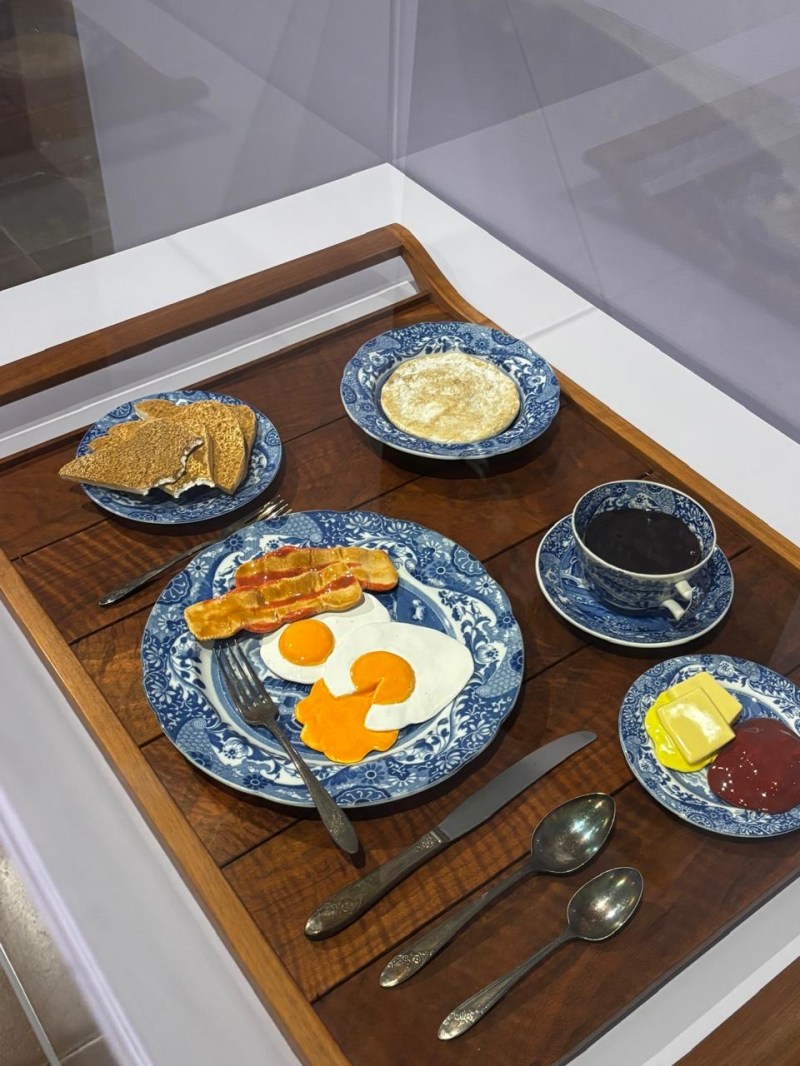
A few steps away sits David Gilhooly’s ceramic “Little Leland’s Last Breakfast.” According to Crowley, generations of students swore that Jane had preserved her son’s final meal and kept it on display. Crowley said the registrar had heard the story too but had never found the meal. The Cantor commissioned the sculpture in 1991 to stand in for it. Crowley places it near the Egyptian objects Leland Jr. loved. In ancient Egypt, the living left food in the tomb so the dead would not go hungry. Jane built a museum on the same instinct.
Rather than tell you who Jane was, the exhibition asks what she kept. Her glasses and handkerchiefs carry her monogram. Julia Grant, the former first lady, gave her an ivory prayer book and a card case. Her battered traveling trunk, stamped “Mrs. Leland Stanford,” is numbered “9,” which raises the question of how many others there were. These are the possessions of a woman with taste, preferences and a clear sense of how she wanted the world to see her.
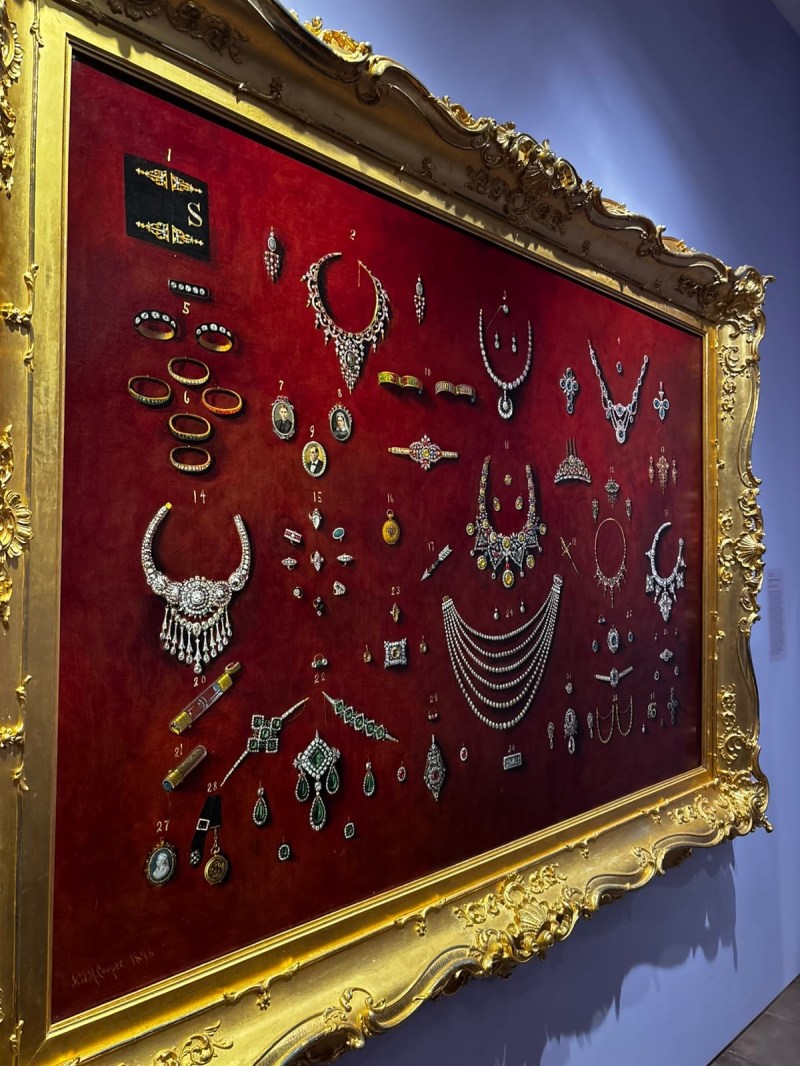
Then there is the question of when she let things go. After Leland Sr. died in 1893, the family fortune was tied up in court while the federal government pursued railroad debts. Jane kept salaries paid and the university open. She tried to sell a large share of her jewels in London during Queen Victoria’s Jubilee, failed, endured mockery from society friends and eventually sold them piece by piece. Before she did, she arranged them on red velvet exactly as she wanted, had them photographed and commissioned Astley D. M. Cooper to paint them at actual size. That painting began as an auction advertisement. It hangs now as a portrait of what she was willing to give up. The show is frank about the robber baron money behind all of it without wagging a finger.
Near the start, the exhibition quotes Freud: “A collection to which there are no new additions is really dead.” Crowley compared Jane to Sarah Winchester, who kept building her San Jose house for decades. A museum that never stopped collecting, he argued, would keep her son’s memory alive in perpetuity. Jane could have handed someone a sack of money, Crowley said. Instead, she bought, arranged and curated the collection herself, and told her curators that once she was gone they could do as they liked, but for now, it was her show.
Jane was 39 when Leland Jr. was born. She was a woman who hoped and who wanted, and who kept building after everything she had hoped for had been buried. During tours, I walk groups through a campus she never stopped adding to. I used to believe that I was telling them her story; after “JANE!”, I feel as though I am part of her collection.
“JANE!” is on view at the Cantor Arts Center through May 18, 2028.