
Content warning: This article contains references to sexual assault.
The night that I blacked out as a sophomore in 2022, two women from my dorm were there for me. One, a year younger, helped me walk straight toward the 5-SURE ride. The other, my RA, sat beside me as I waited to be taken to the hospital. Certainly, either one of them could have taken advantage of me. But they never even considered it.
I was supported by everyone who interacted with me: the women who got me home, the administrators who fairly handled my reckless, underage drinking case. No one ever made me feel like I, as a person, was wrong for what I did and how I chose to seek help. I consider myself lucky. Unfortunately, the case of many women in vulnerable situations on their college campus is the exact opposite.
One such woman is the former Cornell University student who recently filed a lawsuit to allege gang rape while under the influence of drugs that she was forced to take. Going by Jane Doe, the plaintiff alleges that seven then-members of the Cornell chapter of the Chi Phi fraternity forced her to snort ketamine on one of their erect penises, take other substances and be subjected to numerous acts of sexual violence for nearly seven hours. She is not just arguing that Cornell officials, various Greek life figures and a local bar were complicit in the underaged drugging and gang rape she experienced. She is going so far as to say a trusted friend of hers at the time — Matthew Ingalls — was the first to propose sex and the one who lured her into the room in which she was abused.
On many levels, the case of the Cornell 7 — Ingalls as well as Scott Kretzschmar, Winston Lee, Gillio Lopes, Jonathan Newell, Scott Norris and Diego Sarabia — demonstrates the realities that the women in our lives know all too well. For starters, 35% of undergraduate women at Cornell reported experiencing non-consensual sexual contact in 2025. Nearly 90% of college victims in general report knowing their abuser. Over 20% of women report having experienced sexual assault at some point in their lives. This data demonstrates why the Cornell case hits close to home for women everywhere.
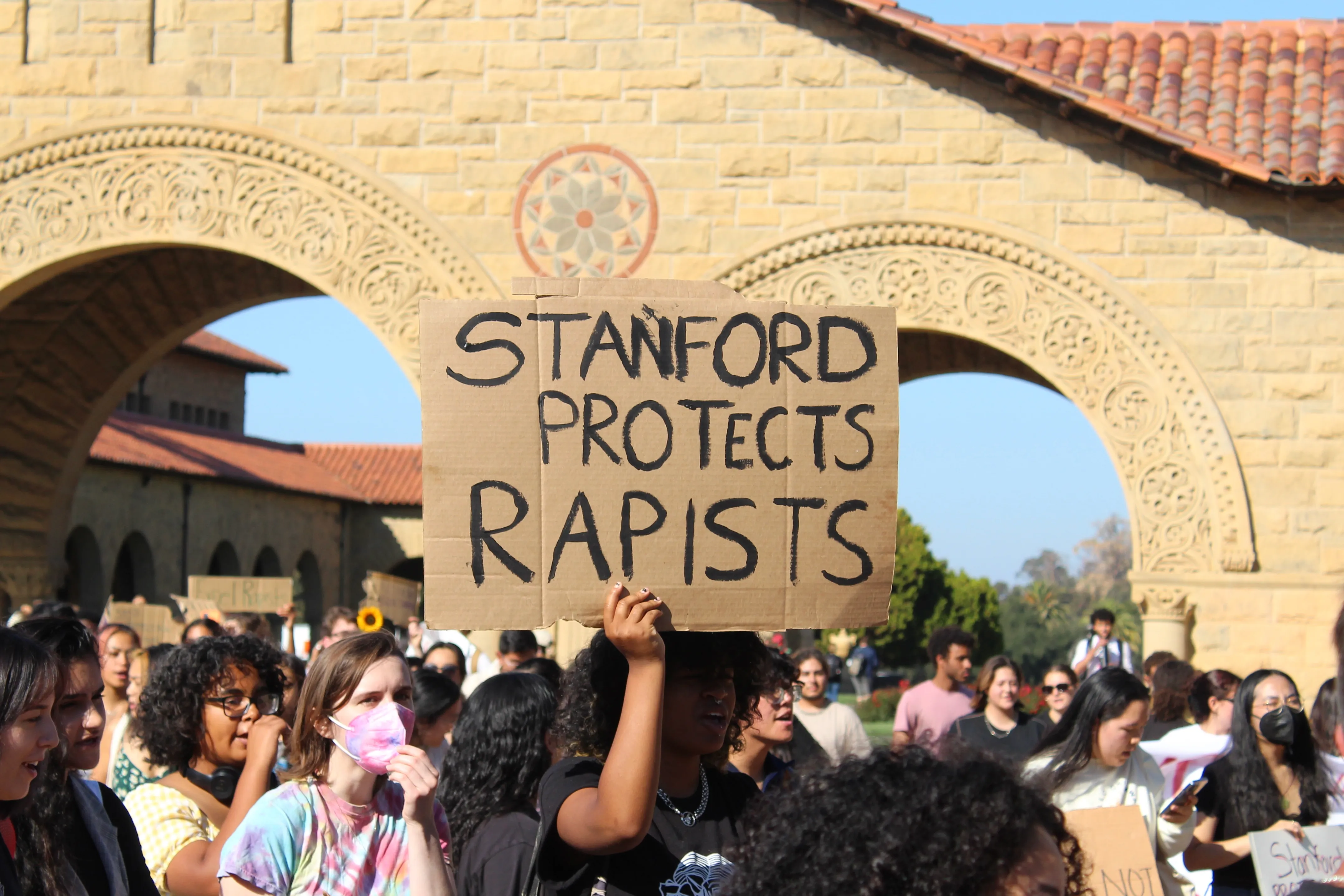
Evidently, Cornell’s culture is to blame — the Cornell 7 are no anomalous ‘bad apples.’ The pervasiveness of sexual assault speaks to a student body too willing to look the other way and a culture of surivors feeling as though their silence is the only peace they will ever get. Rape culture is alive and well at Cornell. It is something that I — a survivor who repeatedly covered sexual assault for The Stanford Daily nearly four years ago — believe the Farm is no exception to. Survivors deserve a strong culture of accountability and compassion that puts them, not their assailants, first.
To say that the SHARE Title IX and Title VI Office delays justice and is poorly run would be a gross understatement. The SHARE office took two years to suspend a student’s assailant, despite assuring her it would not take longer than four months. The most recent annual Title IX report on their website is from three academic years ago. The SHARE office even omits from its list of misconceptions about sexual assault the ‘stranger danger’ falsehood.
By delaying justice, preventing transparency and misinforming the campus community on cases of sexual assault, the SHARE office leadership is discouraging survivors from filing a report in the first place. This is a malignant institutional cycle that downplays the severity of sexual assault and preserves campus rape culture.
Stanford’s systematic betrayal of survivors is not exclusive to the SHARE office, for it also includes morally repugnant cuts to sex education and assault prevention resources on campus.
Vice Provost for Undergraduate Education (VPUE) James Hamilton and Vice Provost for Student Affairs (VPSA) Michele Rasmussen stripped Beyond Sex Ed (BSE) from mandatory New Student Orientation (NSO) programming. Sexual assault awareness program Flip the Script was also cut. VPUE and VPSA are working in tandem to make it harder for students to dispel anti-survivor myths, foster a more upstanding campus culture and understand the nuances of consent and power.
Stanford Law School (SLS) has stated the position that Supreme Court Justice Clarence Thomas is someone whom it “would be honored to host.” By entertaining the notion that Justice Thomas is an honorable character, SLS has sent the message that Anita Hill — who accused Thomas of sexual harassment while she was his subordinate — was wrong to speak her truth. By platforming him, SLS subtly suggests to its female students and faculty that they would also be wrong to speak up.
The Stanford Doerr School of Sustainability and the computer science department continue to have Bill Gates on their advisory board and building name, respectively. Gates knew Jeffrey Epstein was a convicted sex offender when he repeatedly met with him in the 2010s. To have him advising a vital source of leadership at Stanford, and have his name on the same building that survivors see on their way to class, sends the message that even the men who spend years in silent complicity with sex crimes are rewarded.
It is no wonder that, under the University’s put-survivors-last approach, it only expelled 0.3% of reported sexual assailants between 1996 and 2013. Stanford’s track record is that it will neither be strong enough against cases of sexual assault nor give students the tools to combat rape culture itself. The years of rape culture accumulate to the point of, for example, fraternity brothers committing rape three times as often as their non-fraternity peers. Emboldening rape and other facets of sexual harm is so core to Stanford’s leadership that it infects decisions made beyond Title IX and sex education directly.
Any one of these issues with Stanford’s schools, departments and leaders would be appalling and worthy of resignation in isolation. But by the power of pattern recognition, from NSO to SLS, I cannot help but see Stanford as a systemic accomplice to rape culture itself. This pattern can only be broken if we hold each other and the University accountable in the drastic ways that this moment calls for.
Students, faculty and staff should demand that the Santa Clara Board of Supervisors follow the bold example set by the mayor of Ithaca, New York, who acted decisively against Cornell’s appalling record on sexual violence. The Mayor rightfully proposed a blanket denial of city permits for Cornell student groups’ gatherings in Ithaca. The Board of Supervisors should go one step further and place conditions on moving forward with StanfordNext — the University’s bold plan for future campus land development. The Board should demand de-housing for Greek life organizations complicit in sexual harm and that the University hire the seasoned, trauma-informed attorneys that survivors can actually rely on. Government force is needed to show Stanford that its complicity in rape culture will not go unnoticed.
Looking to on-campus governance, every Faculty Senate meeting and town hall with university leadership should be used to demand Bill Gates’ removal from the Doerr School’s advisory council and the CS building. A true moral fire should be lit ablaze to ensure that SLS and any other organ of the University not host the likes of Justice Thomas ever again. Refusing to honor and platform the individuals directly engaged in or complicit in sexual harm should be a red line that we no longer cross. The Faculty Senate should certainly entertain the threat of a no-confidence vote in senior university leadership to force their hand on survivors’ behalf.
We should thrust that moral clarity into our friendships, relationships, club memberships and even class enrollments. Even if it means mood-ruining conversations, the Farm must be a place where every remaining social vestige of rape culture is extinguished.
I can think of no better voice for inspiration than what The Cornell Daily Sun’s Editorial Board said in its bold push against the Cornell 7:
“To Matthew Ingalls, Jonathan Newell, Winston Lee, Gillio Lopes, Diego Sarabia, Scott Norris and Scott Kretzschmar: We know who you are and we refuse to let you benefit from this University’s concealment.”
For far too long, every manner of sexual harm and violence has profited from Stanford’s widespread betrayal of survivors. Stanford, like Cornell, is no exception to the rape culture that keeps survivors from speaking their truths and securing their peace.
As the Stanford community, we must follow the example set by The Cornell Daily Sun’s bold reporting, the moral clarity of its Editorial Board and the iron will of the City of Ithaca’s mayor to put survivors above all else. Let this be our call to action for survivors and against university business as usual. They deserve nothing short of full justice, peace and belonging at the Farm.