
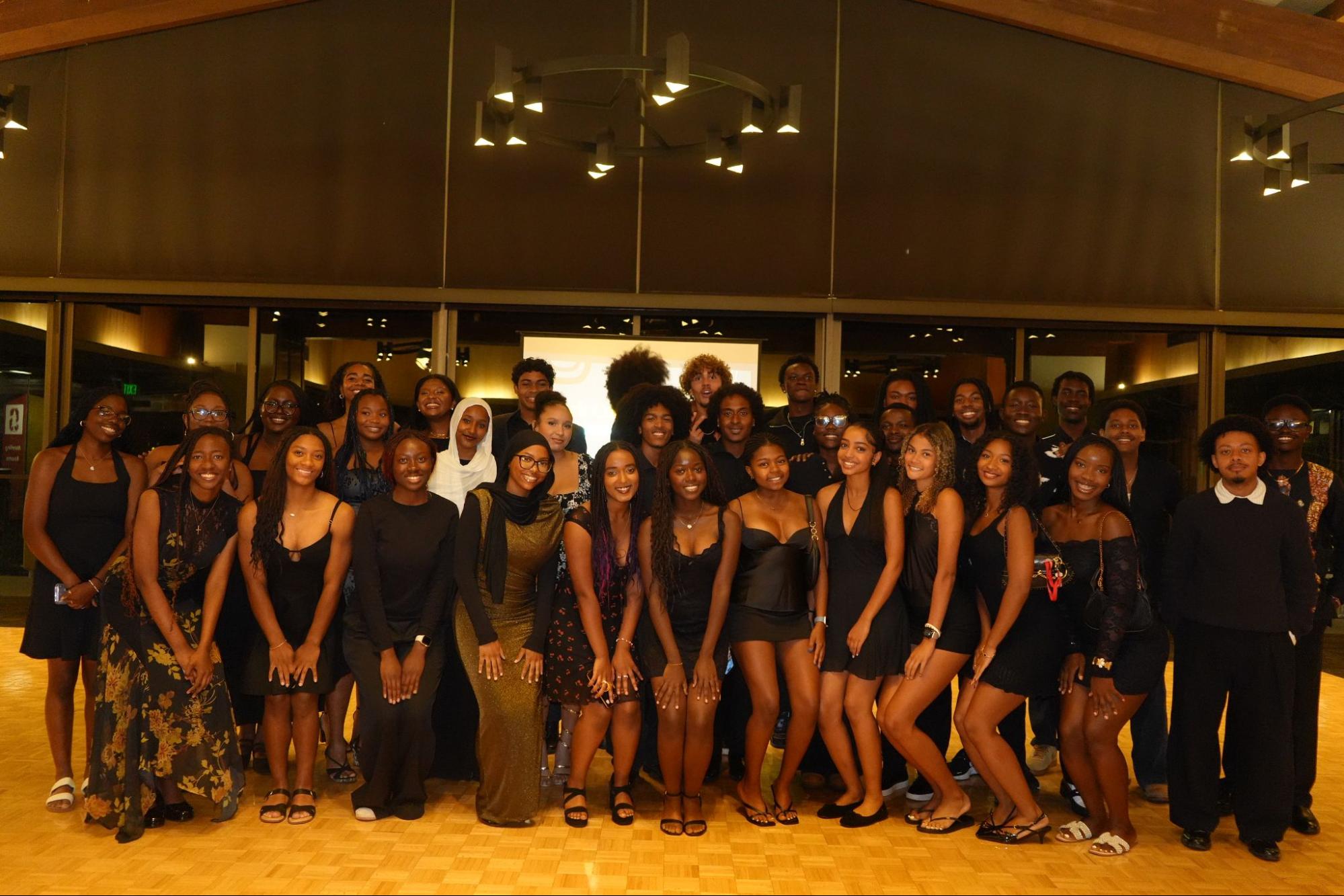
Stanford’s Black Frosh Convocation welcomed Black first-year students into a community built around belonging, cultural connection and Black joy, last Friday at Tresidder Oak Lounge.
Organized by the Black Student Union (BSU), this year’s convocation centered on the theme “To Be Young, Gifted and Black,” according to Desire Gee ’29, a BSU Frosh Transition Coordinator.
Convocation featured remarks from members of the Black Student Union (BSU), the Black Student Committee and guest speakers, performances by the historically Black Divine Nine fraternities and sororities and food. The night brought frosh together to celebrate students’ achievements while connecting them with resources and communities across campus.
“It’s important as a Black student on a predominantly white campus to be highlighted just for your excellence, your brilliance, your achievement,” Gee said.
The celebration comes amid concerns about declining Black enrollment at Stanford. Although enrollment data for the Class of 2030 has not yet been released, previous data revealed that Black or African American students accounted for 4.5% of the Class of 2028, down from 8.9% of the Class of 2027. Stanford’s Class of 2029 profile lists Black or African American students as 4% of the class, rounded to the nearest whole percentage point.
BSU co-president Nailah Karigaca ’27 said the convocation offered an opportunity to celebrate the Black community on campus while recognizing the need to uplift black students.
“[Frosh Convocation] is all about trying to uplift our Black communities and trying to center and uplift the power that is currently here,” Karigaca said.
Beyond the convocation, BSU organizes general meetings, game nights, cookouts and workshops. The organization has previously collaborated with CardinalBLCK, a student run group for Black student athletes, to host tailgates that bring athletes and non-athletes together, while its annual high school conference encourages prospective Black students to consider Stanford.
For frosh, the convocation offered an introduction to potential mentors and resources. Immanuel Baraka ’30 said the gathering helped him connect with other Black students and identify opportunities to make the most of his Stanford experience.
Baraka, a resident of Ujamaa, Stanford’s Black-themed dorm, said the Black community has shaped his residential experience.
“The community feels like family. It gives me a view of the future, you know, it’s possible, despite where you come from,” he said. Baraka also noted that Stanford could make the Black community more accessible to first-year students. “Even though we have many opportunities, as a freshman, I don’t know where to find them,” he said.
BSU vice president Naod Fessahaye ’27 also emphasized the importance of cultural communities in helping students feel accepted.
“Finding the spaces that were built specifically for you is the best way to be yourself without any fear of judgment on who you are,” Fessahaye said.
He added that Stanford could further support cultural organizations by making more event spaces available at no cost, as rental fees for higher-end venues can make it difficult for student groups to host events in spaces that reflect their significance.
For Otis Ward ’27, who helped plan the convocation, Black spaces such as Ujamaa have helped him feel accepted at Stanford. He shared that his sister, who attends Xavier University of Louisiana, a historically Black university, warned him he might feel pressure to change how he dressed and presented himself at Stanford.
Instead, Ward said, joining cultural organizations and spending time in Black spaces has helped him realize he can be himself.
“Being in these Black spaces, being in these communities, like a historically Black fraternity, the Black house, et cetera, I realized that I don’t have to change who I am,” Ward said.
Ward said Black Frosh Convocation gives incoming students an early opportunity to discover these communities and find places where they belong. But he also stressed the need to address declining Black enrollment, which he said has affected student organizations, campus social life and Black events.
“I think just admitting more Black students is a big thing,” Ward said.
As students and organizers look toward the future, the convocation offers a reminder of the Black community that exists on campus, and the importance of ensuring new students can find their place within it.