
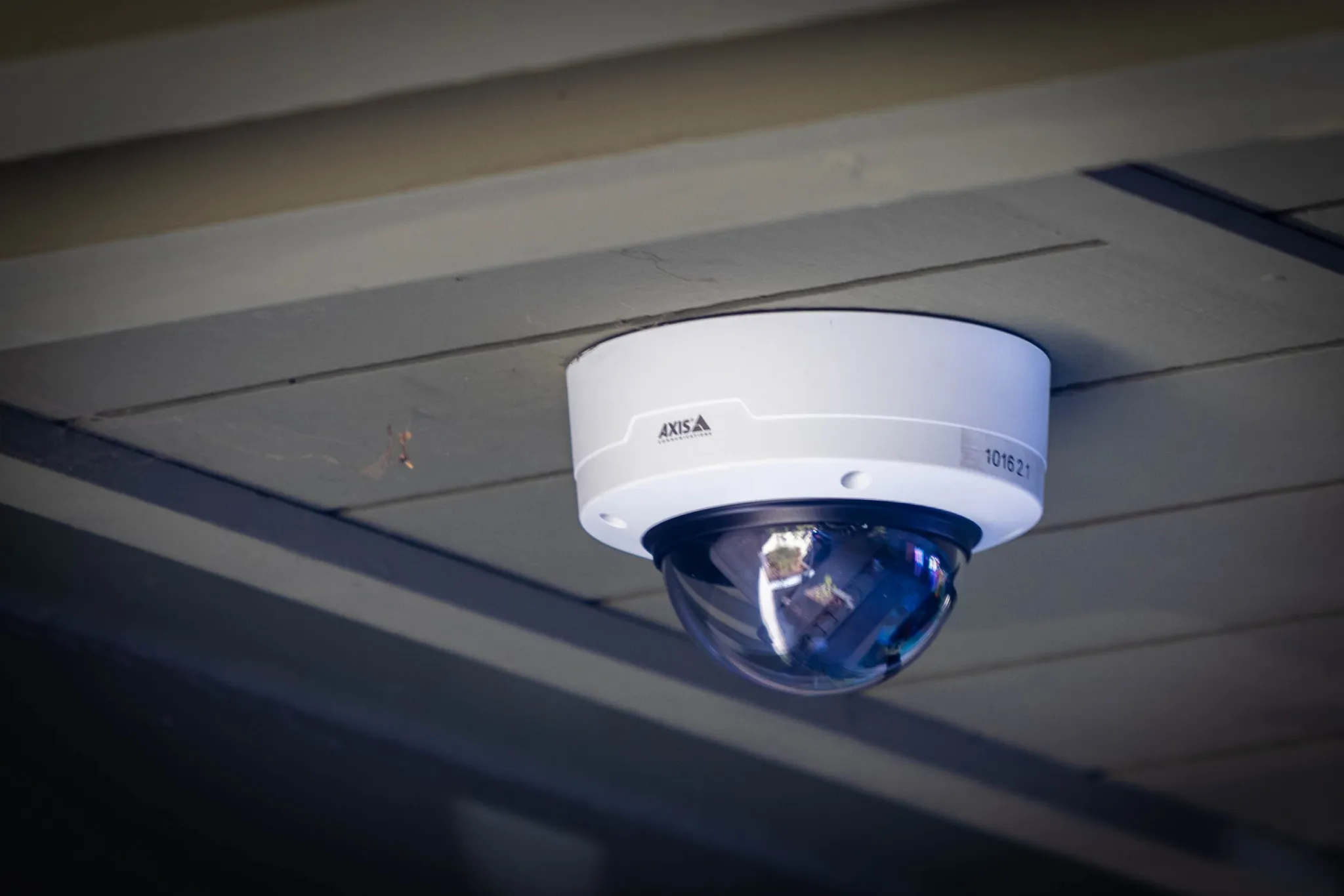
Stanford is installing replacement automated license plate readers (ALPRs) made by Canadian company Genetec, months after ending its contract with Flock Safety amid community backlash.
“Camera installation is about 50% complete, and we expect the remaining cameras to be installed and operational within the next several weeks,” Luisa Rapport, director of media relations at Stanford, wrote in a statement to The Daily. Rapport added that Stanford’s ALPR data retention period on internal servers “will continue to be 30 days” — the same length of time data was kept under Flock.
Stanford had partnered with Flock since 2024, but the company is now facing growing criticism nationally. This switch comes amidst broader concerns about data privacy and misuse by law enforcement, including a federal ruling in Oklahoma on Oct. 1 that found a Flock search by police to be unconstitutional and “a type of indiscriminate mass surveillance.”
Faculty petition organizers say the new cameras are visible on campus, but argue that Stanford’s underlying approach of installing surveillance technology hasn’t changed.
David Palumbo-Liu, a professor of comparative literature and an organizer of the original petition against Flock that gathered more than 1,000 signatures this spring, criticized the University for omitting community input. Along with other faculty, Palumbo-Liu is now organizing a presentation to the Faculty Senate on video surveillance, and is pushing for a standing committee to monitor camera systems on campus. He is also advocating for a public town hall with University administrators.
“The switch to Genetec was done, as was the installation of Flock cameras, without any consultation with the community and those affected,” Palumbo-Liu wrote in a statement to The Daily. “Stanford listened to our concerns about Flock, but it is unclear how much, if any, Genetec is an improvement.”
Palumbo-Liu, who lives in faculty housing, said a Genetec camera has replaced the Flock camera near his home, continuing to record “individuals, families, workers, guests and visitors.”
Unlike Flock, Genetec’s solar-powered cameras require minimal infrastructure, allowing for quick installation across campus.
According to Andrew Elvish, Vice President of Global Marketing at Genetec, the cameras photograph vehicles as they pass, and those images are sent to a cloud server hosted on Microsoft Azure for analysis. That analysis generates a “read” containing metadata such as the vehicle’s color, direction of travel, approximate speed, make, model and license plate number. The read is then pushed to the client’s own security software, and the original image is deleted from the cloud server.
“It usually erases it within an hour,” Elvish said of the deletion process in an interview with The Daily. “It just happens just on that [specific] server and then it goes to a customer on their system and they manage their retention policy in their own instance. We have no involvement with any of that.”
Elvish said the system is not designed to function as a traffic enforcement tool, despite capturing approximate speed. “It’s not a traffic camera,” he said. “It would be very generalized, like is [the car moving] fast or slow.”
Genetec does not retain ownership of client data once it’s transferred. When asked whether the company would be compelled to hand data over to law enforcement outside of Stanford, Elvish said that liability belongs to the client.
“It is owned, housed, and protected by the end user,” he emphasized, “We don’t sell data. We don’t sell access to data. We don’t even have a way to make data available on a large scale.”
Genetec’s Cloudrunner product has been deployed at other university campuses before, though Elvish declined to comment on Stanford’s specific installation, citing company policy not to speak about individual clients.
Despite assurances from Genetec, faculty members involved in the original Flock petition say their core concerns remain.
“Stanford simply acted without providing any statement as to how it had registered concerns and how this new system is appreciably better. The basic concerns about privacy, security, effectiveness of the new system, how long and where data is to be stored, what oversight, if any, exists, are all still in place,” Palumbo-Liu wrote.
Between September 2024 and August 2025, 20 employees in Stanford’s Department of Public Safety (SUDPS) logged 1,742 individual searches in the Flock system across 129 investigations ranging from property crime to stalking cases. It remains unclear whether Stanford plans to publish similar usage data for the Genetec system.
“It is strange that while Stanford says it’s making an effort to improve community relations, it is absolutely tone-deaf to this issue and has not taken such a basic step as to have a public meeting,” Palumbo-Liu wrote. “It astonishes me.”