
Editor’s Note: This article is a review and includes subjective thoughts, opinions and critiques.
In the column “AfroxStegner,” Shaphnah McKenzie M.A. ’27 reads and reflects on the work of Black Stegner Fellows.
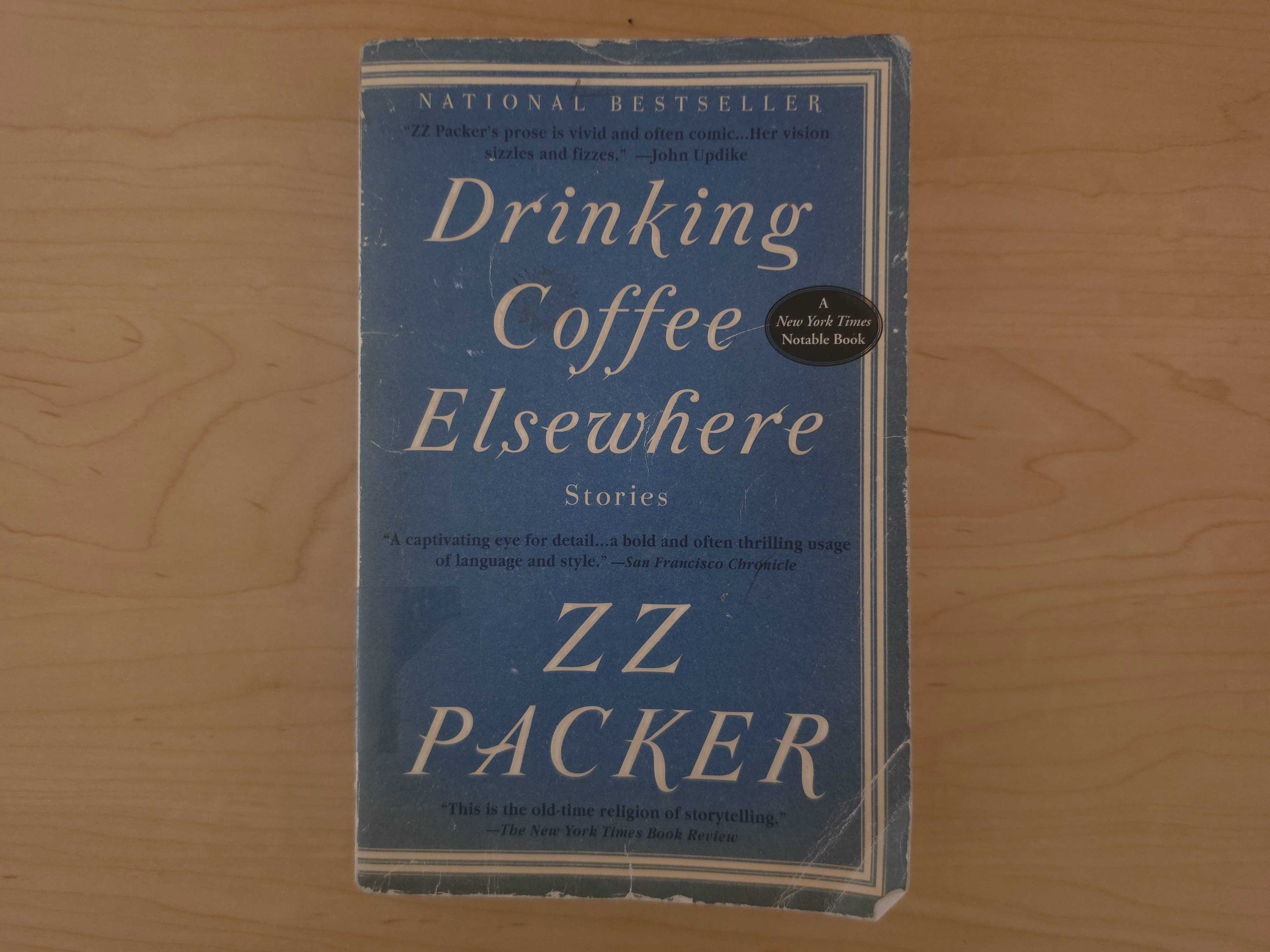
When I pitched this column, I should’ve known I wouldn’t be able to stick solely to discussions about the depiction of Black life in the works of Stegner Fellows. I’m a sucker for good prose — the kind of reader who pauses to write down and memorize particularly savory turns of phrase. I should’ve anticipated that so much of my review of Zuwena “ZZ” Packer’s “Drinking Coffee Elsewhere” would be consumed by commentary on her gift for describing anything she sets her pen to with effortless precision.
“Drinking Coffee Elsewhere” was published just two years after Packer graduated from the Wallace Stegner Fellowship program in 2001. Of the eight stories in the collection, all but one center on Black female protagonists — a bold move on Packer’s part. The more similarities between protagonists across stories, the greater the likelihood of them resembling each other too closely to keep readers entertained. Perhaps Packer’s decision to write about six different Black women and girls is a conscious rejection of the idea that all Black people think the same or that all Black lives are similar.
The protagonists of the stories range from a little girl whose all-Black Brownie troop gets into an altercation with an all-white troop at a camp (“Brownies”); to a Yale-educated Black woman who becomes an illegal immigrant in Japan (“Geese”); and to not one, but three separate Black female characters whose stories revolve around Black Pentecostalism.
I can’t say I didn’t experience a sense of deja vu while reading these stories. Many of Packer’s characters are fierce, stubborn and combative. There are even two very similar story arcs: Church girl Tia’s flirty encounter with a worldly man at McDonald’s and Sister Clareese’s similarly taboo entanglement with a blues singer.
But Packer’s return to the same kinds of characters and situations is not necessarily a bad thing. Writer Zadie Smith believes that authors have core stories that they return to over and over again. Twice, Packer creates a female character grappling with her religion — but the beauty of Packer’s repetition is that both women ultimately make different choices. One reader may identify more with Tia than Sister Clareese; for another, it may be the reverse. Packer’s work anticipates all kinds of audiences.
The déjà vu that really concerned me had to do with Packer’s stylistic choices. When I first encountered her writing through “Brownies,” I feared her penchant for appending similes and metaphors to practically every sentence would persist throughout the collection, eliminating any sense of a unique narrative voice from her characters and rendering her writing bland.
It turned out my worries were entirely misguided: The copious number of similes and metaphors in “Brownies” is really a quirk of the protagonist, nine-year-old Laurel. Figurative language is her way of making sense of a new experience, namely that of encountering real white girls up close for the first time.
The observations that Laurel makes about the girls in the white troop and their white teacher become inadvertently connected to television and the media. She describes the white girls filing off the bus with their sleeping bags as “instantly real and memorable, with their long, shampoo-commercial hair, straight as spaghetti from the box” and their teacher as being “like one of those TV-cooking-show women who talk and dice onions and smile all the time.”
The subtle genius of these comparisons is in how they encapsulate the estrangement of the Black children from the white children. Though Laurel has never interacted with white girls before, the purely positive images of them that dominate television cause her to automatically connect them to clean, desirable things. By contrast, Laurel describes the Black girls in her own troop as the refuse of the home, as “bunched-up wads of tinfoil, maybe, or rusty iron nails you had to get tetanus shots for” — revealing her subconscious racism towards herself and others like her.
In “Every Tongue Shall Confess,” another highlight of the collection, Packer takes a setting that many people who grew up in Black neighborhoods are familiar with — that of the tambourine-shaking, ground-stomping, keyboard-playing, hand-clapping, Indiana-500-all-around-the pews type of Black Pentecostal Church — and brings it to life in immaculate detail. She equates the sound of the tambourines to the “the sound of sizzling and frying.” She describes drops of sweat “plunk[ing]” into the preacher’s microphone and the bosoms of the church women “jouncing” like potato sacks. Packer is a writer who knows how to use the right verbs.
Unfortunately, the collection had its weak points, and “Geese” was one of them. As a Black woman who has lived in and studies Japan, I was looking forward to seeing what Packer would write about a place I myself love to set stories in. As a kanji lover, she thrilled me with her description of the strokes “with their black sabers clashing and warring with one another.” But she lost me not far beyond that. The premise of “Geese” is absurd — Dinah from Baltimore goes to Japan on a tourist visa, somehow finds work on that visa and continues to stay in Japan even after her visa expires, eventually becoming a shoplifting illegal immigrant.
While I commend Packer for venturing away from the US, the Japanese setting she constructs is ultimately unconvincing, like a stage with a painted backdrop. Packer’s Japanese characters hang out in the background as neighbors who complain about “gaijin” (foreigners) or as curious children who ogle at foreigners in a park. When Dinah does interact directly with a Japanese person, it is with salarymen who proposition her for sex in a subway, an advance that felt cartoonish and very different from my own experiences (I could write a whole essay on this alone). Ultimately, the story ends up feeling like it should have taken place anywhere but Japan. Perhaps the biggest disappointment is that in failing to portray Japan accurately, Packer neglects a rich opportunity to explore the racial and cultural dynamics and tensions between Black people (specifically, women) and Japanese people.
That being said, my dislike of this particular story did not negate the enjoyment I received from reading “Drinking Coffee Elsewhere.” With all its explorations of Black womanhood and its masterfully rendered sensory detail, “Drinking Coffee Elsewhere” deserves its place as one of the most celebrated short story collections of all time.