
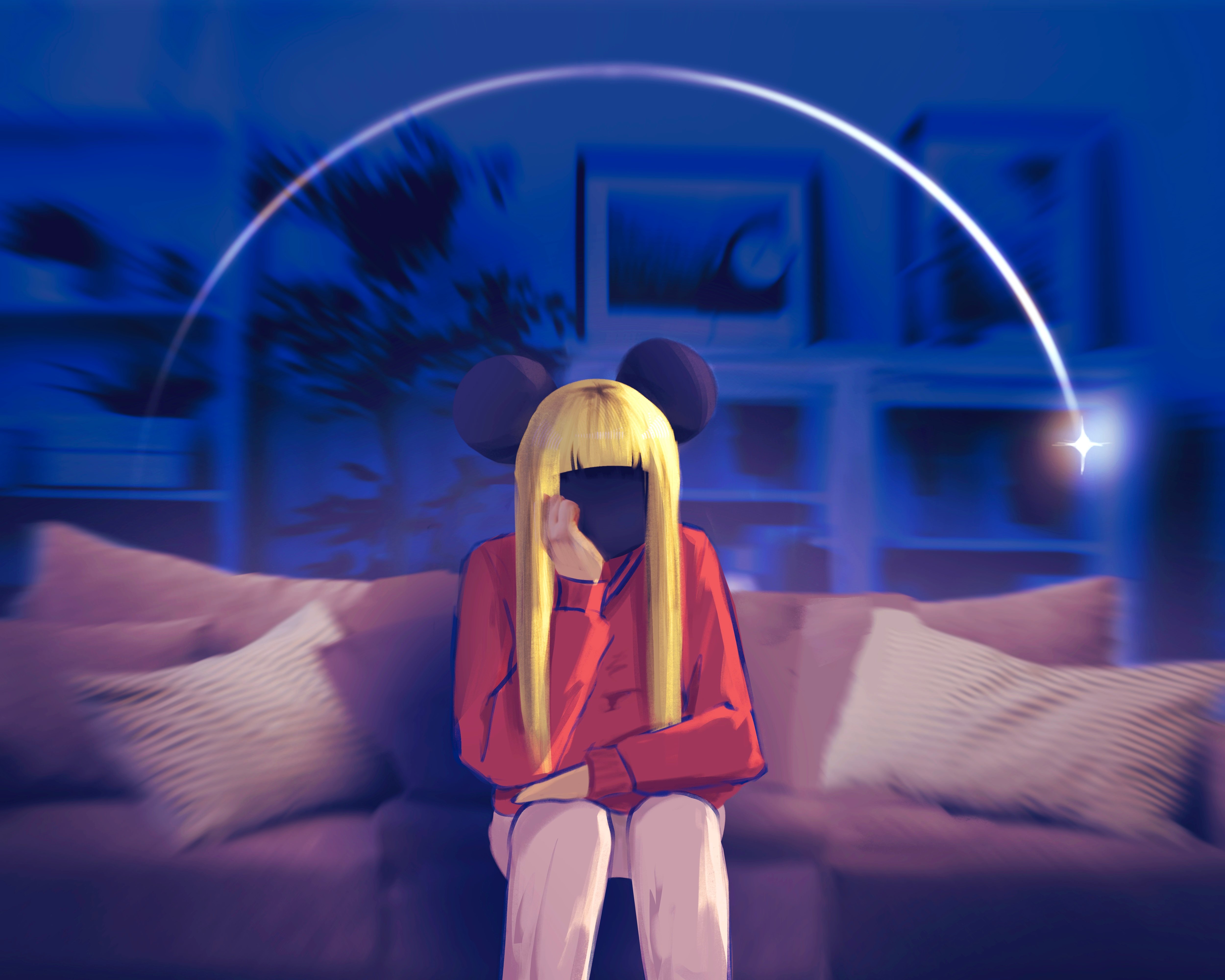
In each installment of “The DCOMs Can Console,” Shaphnah McKenzie M.A. ’27 reflects on the movies that shaped her childhood as a woman now in her twenties. What can Disney Channel Original Movies still offer us?
If there’s one image from “16 Wishes” that has stuck with me throughout the years, it’s that of Debby Ryan’s character, Abby Jensen, 22 years old, hobbling down a dark, wet road in her heels, grimacing. She’s cold and alone, and just as soon as she plops down on a bench on the sidewalk, a car zooms by and drenches her. This is the stomach-turningly grim image of adulthood that Disney Channel impressed on me when I was younger.
Abby’s happy ending doesn’t come until she finds a way to undo the wish she made that turned her twenty-two. But what about those of us who can’t just blow out a magic candle and turn back the clock? What about the many adults aged 18 through 34 who, according to broadcast records, also tuned in on the night of the ‘16 Wishes’ premiere? They must have felt like milk past its expiration date.
Even in my early twenties, I was nervous about getting older. I remember standing outside the dormitory of my university in Seoul and WhatsApping my mom on the fine clear morning of my twenty-first birthday.
“I’m getting old,” I said anxiously.
She was annoyed, or amused, or both — I don’t quite remember. But she said she used to be just like me, calling herself old old old even when she was young. Now that she was actually old (she was only in her forties), she saw how foolish it had been to live her life that way. Now that I’m twenty-six, I see how foolish I was, out there in the middle of an adventure unparalleled in its newness and its delights, its frustrations and self-discoveries, its romance — yet wasting precious minutes fretting over how old I was.
This anxiety must have come from somewhere, and if not from movies like ‘16 Wishes,’ then where else? Abby’s best friend spits the word “woman” at her as though it’s a slur. The principal of her old high school shoves her out of the building without allowing her to explain herself. And her parents?
Oh man, her parents.
They pick her up outside the high school, cart her off to an apartment, and ditch her there. They make it clear on her first visit home that they don’t want her clinging to them anymore. They even shut off the lights on their RV when they see her coming up the driveway, clearly depressed.
What’s a bigger boogeyman to a child than growing up and having your parents shut you out?
My dad is nothing like Abby’s. One day, I came out of my room — the room my mom makes up for me before every visit — and my dad asked how I was. I told him that I was anxious. He looked at me and said, “How many acres of land does this house sit on? Now tell me — how much space do you take up?”
In ‘16 Wishes,’ Abby turns and walks off into the dark, while a song tells her to push right through and ‘she’ll be drenched in the sun with open eyes.’ My dad’s words became my sun.
No matter how old a girl gets, no matter if she’s married or has her own house, she should always be welcome to flop onto her childhood bed and draw solace from the flowers in the wallpaper.
And she shouldn’t stop feeling safe just because she is alone and no longer protected by her parents.
When Abby tells Celeste, the fairy who gave her the magic candles, that she doesn’t want curtains in her new apartment, Celeste says, “Oooh, bad choice! You’re alone. You’re a woman. . .” She trails off. It’s meant to be funny, and maybe as a kid I did giggle at this. But on top of every other terror of womanhood Abby has faced, the movie adds one more: being watched through her window. Something else to keep her up at night.
In Seoul, I would go out alone after dark. Passing under street lamps, treading on shadows. It was because of the adult — or really, the childish — turmoil in me that I took to this kind of restless wandering up and down, the kind Jamaicans refer to as being “haunted.” But looking back at it now, wasn’t it also defiance that set me going?
I defied what womanhood was supposed to mean by throwing caution to the wind and marching through the streets. I kept this up in Japan, padding past shuttered buildings, shifting in and out of darkness, seeking out that feeling that’s hard to name, but which, if forced to, I would describe as the feeling of the night itself fluttering around my ribcage like a bat. The feeling of something actually alive in me.
At twenty-five I ate McDonald’s alone in an empty park in Yokohama sometime after midnight, chewed my Teriyaki Filet-O in the humid silence. There’s no denying that being a woman isn’t the same as being a man. That Abby Jensen might very well have needed those curtains to shield her from the gaze of men prowling like dogs outside her window.
And yet I wish someone had told Abby that there was a world like this one, too, for a twenty-two year old girl; the world in which a Korean man on the bus protected me from another Korean man on the bus, and in which I walked all alone through a tunnel blacker than the night on the other side, and in which I stood looking up at the skyscrapers of Seoul twinkling beneath the grey clouds obscuring the stars, without ever thinking to look behind me.
I wish someone had told her that her story could have had a happy ending, even if she’d never turned sixteen again.