
Editor’s Note: This article is a review and contains subjective thoughts, opinions and critiques.
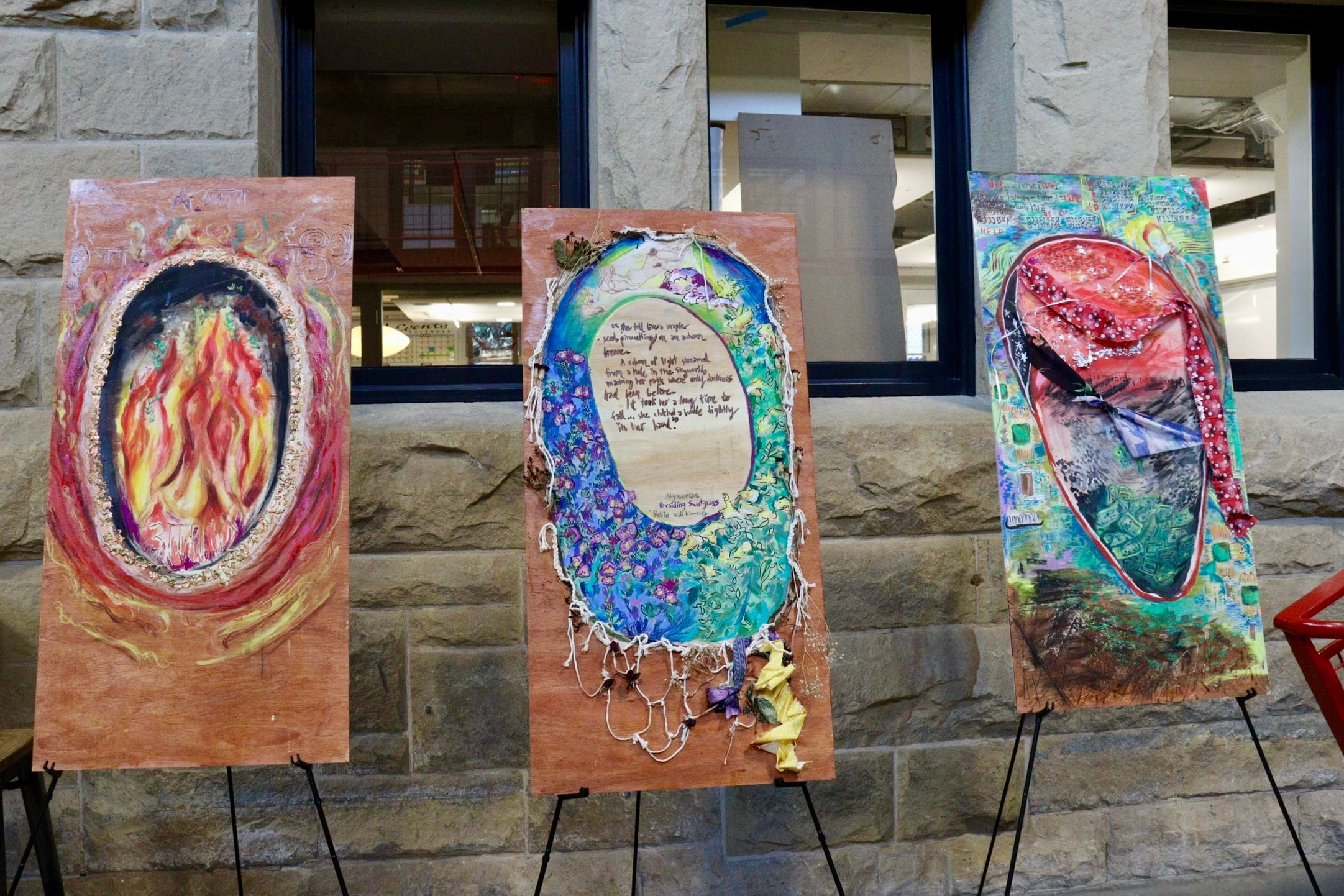
“Small Bites! Fashion! Music! Art!” A large whiteboard, placed invitingly outside the Stanford d.school, promised all these things and more at Stanford Climate Week’s inaugural Eco-Gala. Held Friday afternoon at the d.school, the public gala featured over 30 combined artistic displays, interactive exhibits and film screenings by more than 16 artists.
Climate Week, a seven-day-long event collection established in 2025, aims to inspire community members to unite against climate change. Four frosh — Audrey Hsu ’30, J Li ’30, Sophie Zeng ’30 and Pooja Verma ’30 — spearheaded the gala alongside Neva Hidajat ’27, Climate Week’s VP of Socials, and Siri Atluri ’28, another Climate Week organizer.
The four frosh became involved after Verma noticed an open posting for gala organizers on LinkedIn. They chose to host an arts-based event “to highlight creative, interdisciplinary approaches to the climate crisis,” Li said.
“Sustainability and climate solutions are often dominated by tech or finance,” Li said. “We wanted to show other interesting and inspiring ways to fight climate change.”
The gala featured work from a broad range of contributors, including well-established artists and designers, local amateurs and Stanford students.
Beyond her role as an organizer, Verma found perspective and satisfaction in contributing her own artwork to the gala.
“The significance of creating [my own] exhibit was to actually contribute to the vision I helped put together,” Verma said. “As much as innovation matters in environmentalism, storytelling and art need to be a part of the narrative to make ethical human change.”
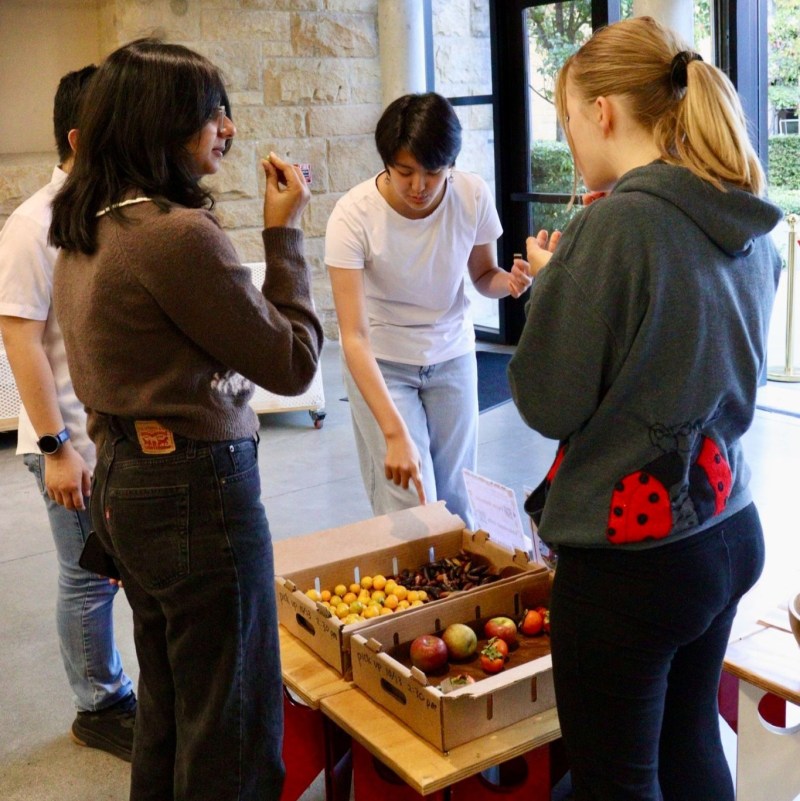
As a fan of all things creative — I’m a current student in the Structured Liberal Education program and an aspiring humanities major — as well as a fervent free food connoisseur, the Eco-Gala sounded right up my alley. The colorful, warehouse-like space of the d.school immediately proved me right. Upon entering the gala, I was greeted by a vibrant fruit stand run by the O’Donohue Family Farm. Volunteers encouraged me to try fresh-picked persimmons, finger limes and cucamelons.
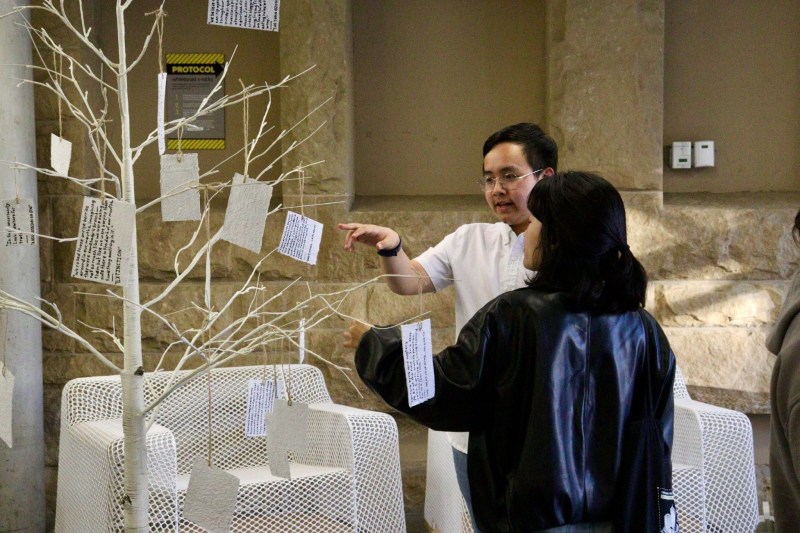
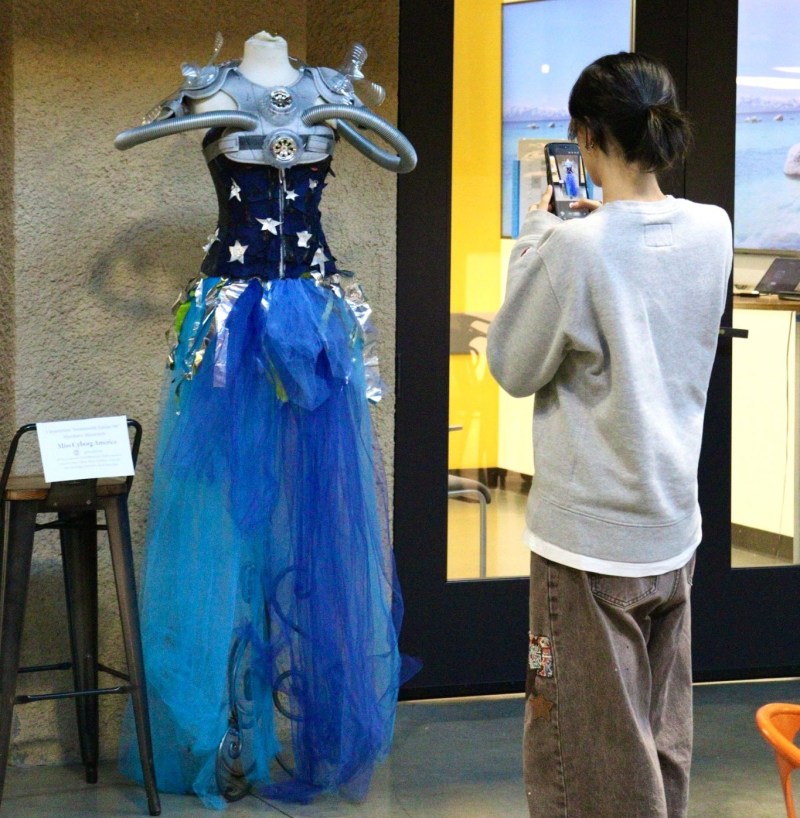
I enjoyed the lingering taste of sweet fruit on my tongue as I continued strolling through the gala, passing glimmering upcycled dresses and stark handwritten poetry. Attendees weaved in and out of the event, stopping to consider exhibits and filling the d.school with their chatter. At one table, attendees were encouraged to sketch a piece of nature on a Post-It note in exchange for a sticker; I drew a small teacup with roses and daisies. As I stuck my note onto the provided display board, I appreciated other sketched scraps of local flora: blooming petals, falling leaves, campus trees.
I also caught one of two film screenings from the ClimateMusic Project, an organization that uses environmental data — which, at the gala, included carbon emissions and sea level rise statistics — to inspire their original music and multimedia visuals.
Zeng emphasized the importance of drawing established institutions to the Eco-Gala. “ClimateMusic brings together scientists, composers, artists and technologists,” she said. “That is what I believe climate action is about on a larger scale — bringing all sorts of different people together so that we might hope to solve this humongous climate crisis collectively.”
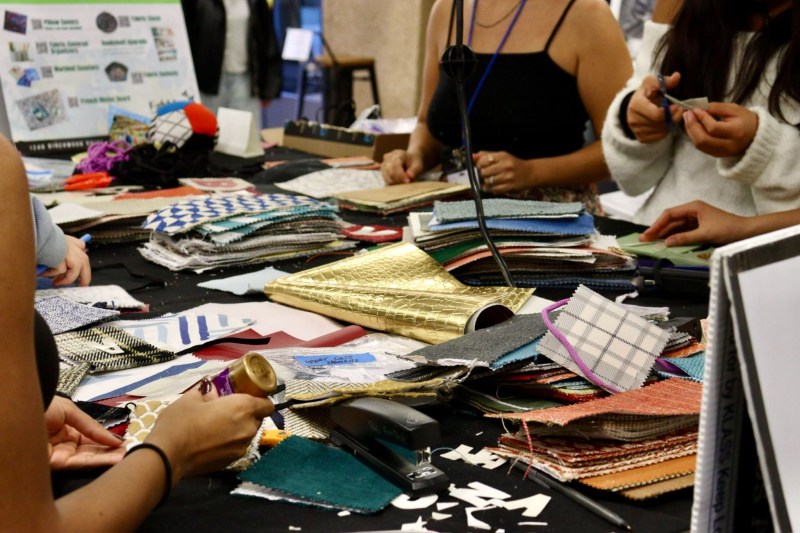
In addition to ClimateMusic, the gala featured FabMo, a Sunnyvale-based non-profit that hosted a station where attendees could upcycle discarded fabric and create decorations from waste.
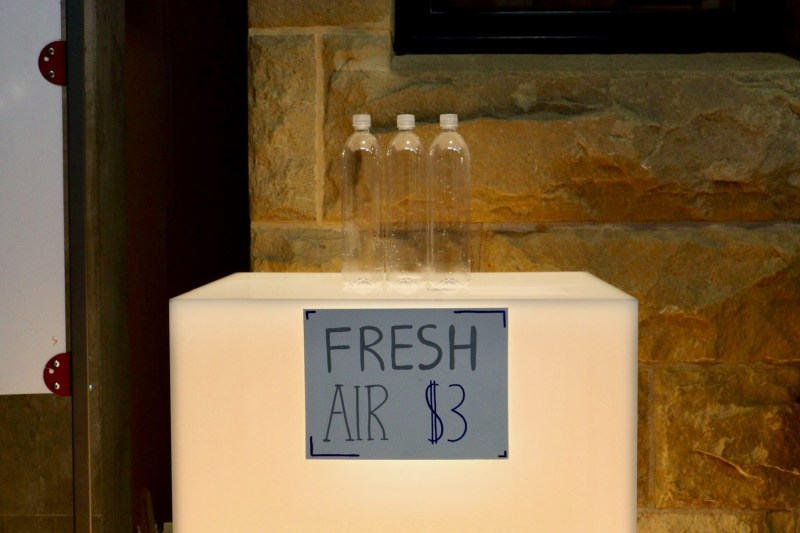
As I wandered near the back of the gala, I noticed a plain display contrasted against the event’s otherwise vibrant and maximalist nature: three tall, empty plastic bottles, advertised with a pale sign that read “FRESH AIR $3.” Attendees were encouraged to share their thoughts about the piece on a nearby whiteboard.
As I reflect on the Eco-Gala now, Zeng’s words resurface in my mind: The climate crisis is humongous. Each piece in this dazzling display of art and innovation spoke to the environmental devastation occurring on our planet, and all of them combined still weren’t enough to capture the full, global scope of the issue.
Nevertheless, I believe this year’s Eco-Gala made a beautiful, thoughtful and significant contribution to the fight against climate change. Its sheer creativity and open nature were uniquely didactic and galvanizing. Through an afternoon of art and conversation, I became mindful of the climate crisis in ways I’d never considered before.