
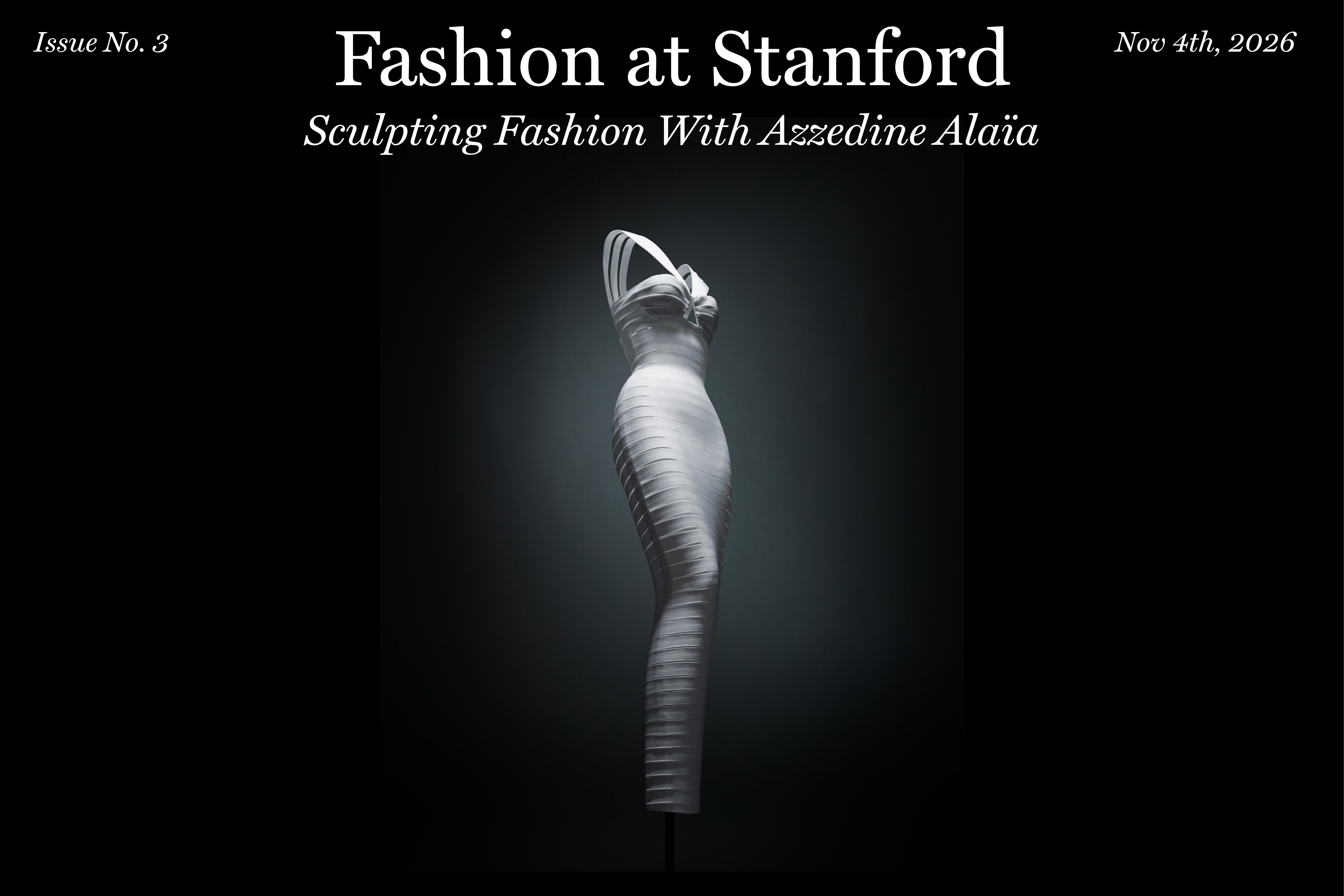
In Fashion at Stanford, Jacob Tan ’27 and Nesara Shree ’28 discuss the fashion industry at large through a Stanford lens. Read the column for fashion week breakdowns, exclusive interviews, and reportage on local fashion industry news.
This week, The Daily interviewed Laura Camerlengo, head curator of the “Azzedine Alaïa: Sculpting Fashion” exhibition coming to the San Francisco Legion of Honor on Nov. 21. The exhibition, running until April 11, 2027, will feature garments from Azzedine Alaïa’s archive in conversation with art in the Legion of Honor’s collection in the first major United States retrospective of the designer’s work.
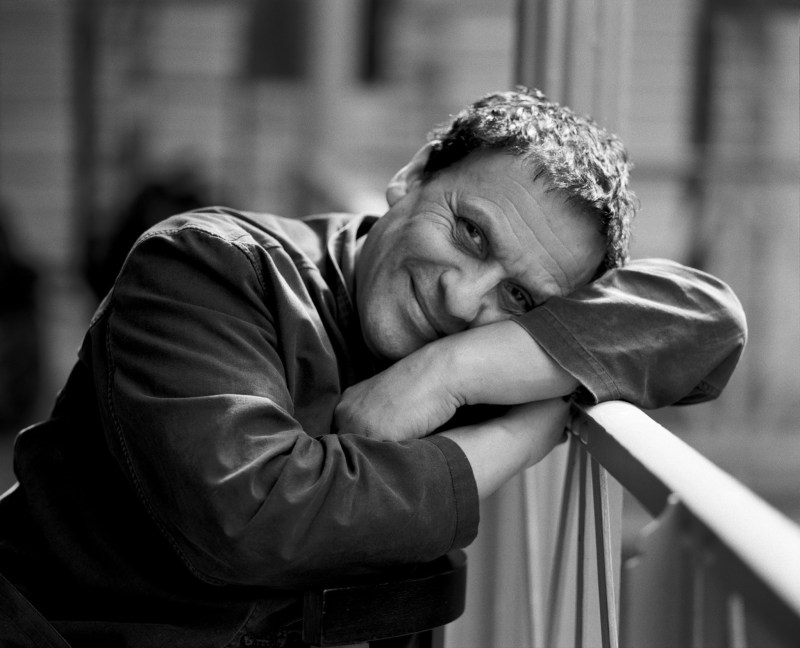
Alaïa was born in Tunis in 1935, attended the Tunis Institute of Fine Arts before moving to Paris at 21 to pursue fashion. He worked at Dior and Yves Saint Laurent (YSL), where he created the prototype for YSL’s famous Mondrian Dresses, before opening his own label at 44 in 1979.
He became famous for inventing the bandage dress and presenting his new collections off the traditional fashion calendar, consequently evading the growing luxury fashion industrial complex. Alaïa was the creative head of his eponymous label until his death in 2017.
This interview has been lightly edited and condensed for clarity.
The Stanford Daily (TSD): Can you walk us through one of those first-floor gallery pairings, and tell us more about a garment and the artwork you set it beside?
Laura Camerlengo (LC): As an example, ensembles from Alaïa’s Spring/Summer 1992 collection will be on view in Gallery 7 of the Legion of Honor. This gallery is devoted to 18th-century European (primarily French and Italian) paintings, decorative arts and furniture. Important artworks include the canapé à la Turque from 1779, a luxuriously carved, painted and gilded beechwood sofa commissioned by Queen Marie Antoinette for her private quarters at Versailles. Another seminal artwork is Canaletto’s “Venice, the Grand Canal looking East with Santa Maria della Salute.” Dating from 1749-1750, the oil on canvas painting shows one of the most well-known vistas in Venice, complete with the famous Santa Maria della Salute church in the foreground.
For the Spring/Summer 1992 collection, Alaïa drew inspiration from King Louis XV’s mistress, Madame de Pompadour, who had been educated in the buildings that housed the couturier’s atelier. Alaïa updated the silhouettes of 18th-century clothing — such as men’s equestrian redingotes (riding coats) and women’s pannier skirts with side hoops — to suit the needs of contemporary women, using corsetry and precise tailoring. Situating Alaïa’s modern designs among furnishings and paintings from the era that inspired them creates a rich visual dialogue across the centuries.
TSD: The “King of Cling” also faced controversy for the very thing that made him famous [sculpted, tight-fitting silhouettes]. Some say his view of the body was a setback for women’s liberation. What was his reaction to that controversy?
LC: As a curator, I always feel it is important to situate artworks in the context in which they were made. Speaking broadly, in the 1970s, feminist debates in the United States focused on societal acceptance of women working outside of the home as well as workplace equality. By the 1980s, as women’s presence in professional spheres became more commonplace, feminist discussions shifted to the subject of women’s sexual autonomy.
A watershed moment in these conversations came in the form of “The Scholar and the Feminist IX: Towards a Politics of Sexuality” conference, held at Barnard College, New York, in April 1982. Conference organizers saw the meeting as an opportunity to examine sexuality and sexual pleasure as pathways to empowerment; however, the conference revealed deep fissures within the feminist movement, with some supporting all forms of sexual freedom as vital for women’s agency and others viewing pornography and prostitution as expressions of patriarchy and violence.
Alaïa’s designs aligned with the perspective of some feminists who believed that women should revel in their own sexual visibility. While some women disapproved of his designs, many felt empowered. Betté McKenzie, former vice president of public relations and special events for Macy’s West, recalled, “Coming from an era of androgynous clothing, Alaïa was like a whiplash … It was a shift back to femininity after years of wearing men’s trousers reminiscent of [the 1977 film character] Annie Hall.” Alaïa often credited his powerful clients – among them, models and celebrities but also political figures – for inspiring his designs. He once said, “I have never followed fashion. It was the women who dictated my approach.”
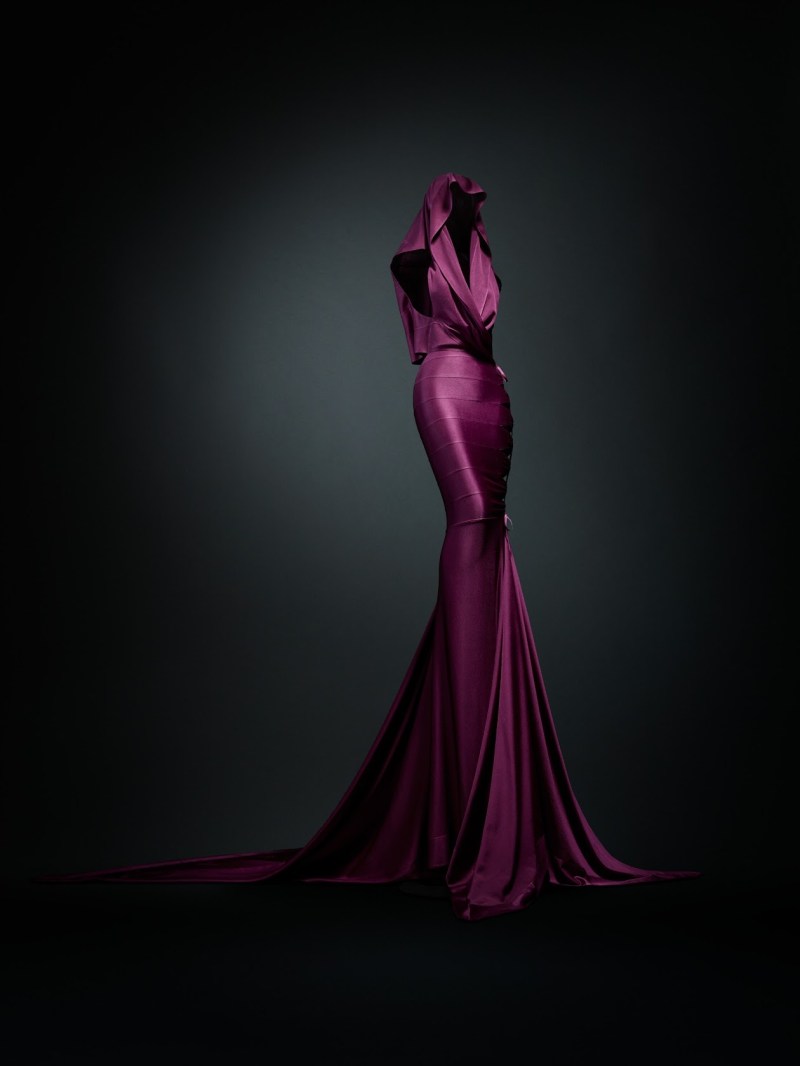
TSD: What’s one thing that is difficult to translate in an exhibition, but you wish you could convey about Alaïa’s life? What’s something surprising you learned about Alaïa in researching and curating this exhibition that I wouldn’t be able to find elsewhere? What’s one part of Alaïa’s life that you feel like is overlooked?
LC: My exhibition co-curator, Olivier Saillard, director of Fondation Azzedine Alaïa, knew [Alaïa] personally and reflects in the museum’s short film about the exhibition that [he] was a very approachable couturier. He was not removed from his clients, from his friends [or] from the public. He welcomed visitors into his atelier, where he was well-known for serving large, family-style meals. He also had a very active mind and developed deep relationships with leading figures from the arts, design, technology and many other disciplines.
TSD: In addition to this exhibit, the SF Museum of Modern Art is hosting another fashion exhibit in the spring, which will then be followed by Vogue World in San Francisco. What do you make of all these fashion events happening concurrently in San Francisco?
LC: San Francisco has been a leading US fashion city since its inception in the 19th century, from the early importation of the best of European (usually French) and East Coast (often New York) high fashion, to the development of local, now global, businesses, like Levi Strauss & Co. Since the 1950s, our museums have presented the landmark fashion exhibitions to local, national and international audiences. It is exciting to see San Francisco’s long history of engagement with fashion be recognized through the convergence of these events.