
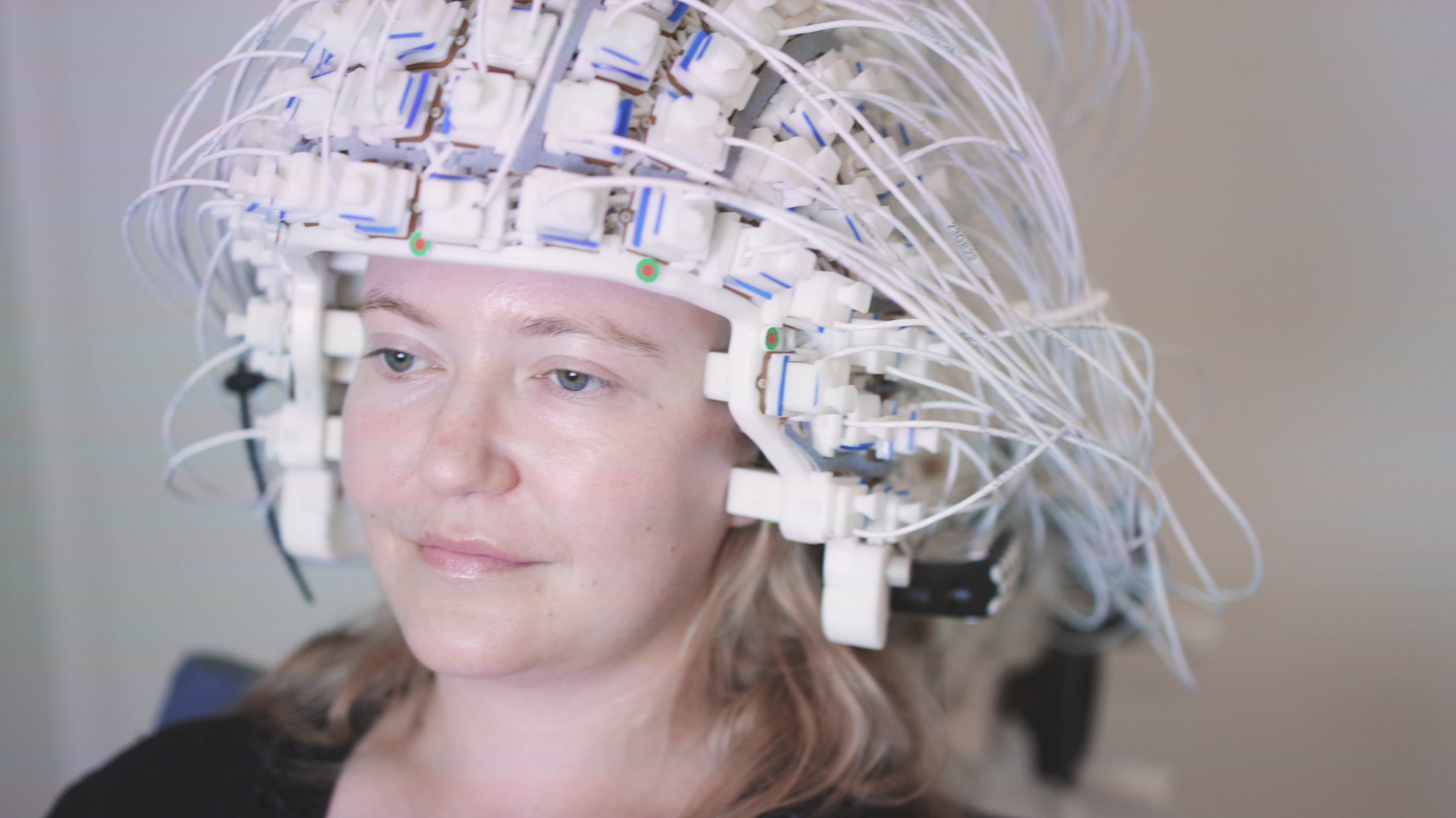
The Stanford Wu Tsai Neurosciences Institute launched a university-wide effort on Nov. 2 to develop brain imaging technologies and computational models that will illustrate human brain activity. The initiative, known as the Stanford Digital Brain Project, aims to produce data and use it to train foundation AI models for future theoretical and clinical research in neuroscience.
“This visionary project is exactly the kind of ambitious, collaborative science that Stanford is singularly positioned to undertake,” University President Jonathan Levin ’94 told the Stanford Report.
To predict and theorize clinical diagnosis and treatment without using actual people, “[the initiative] requires a lot of concerted effort, from physicists and cognitive scientists to computer scientists,” said Seda Akibiyik, a postdoctoral scholar involved with the project’s data collection in the psychology department’s Vision and Perception Neuroscience Lab.
The interdisciplinary initiative connects faculty from the Wu Tsai Neurosciences Institute, the School of Humanities and Science, the School Medicine and the School of Engineering.
“The project aims to create a large artificial neural network model,” Polrack said. “[Working with experts] ensures we’re looking at the question from lots of different directions.”
Cross-collaboration between departments amplifies the project’s scope. “There’s value in bringing experts together and learning from each other and changing each other’s minds. It broadens our own horizons in how we think about science,” said Akibiyik.
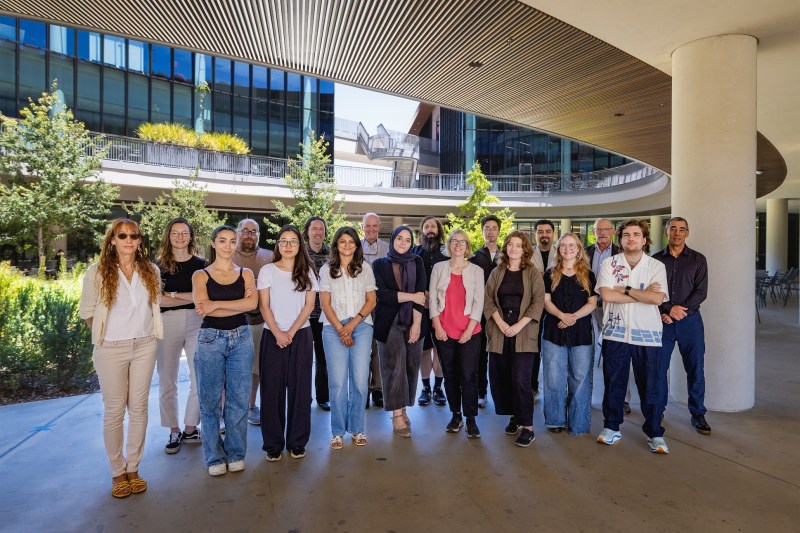
The team was motivated by modern machine learning techniques and recent imaging advances that would make it possible to document brain activity noninvasively and in high resolution. The resulting model would be used to support treatment, according to psychology and computer science professor Daniel Yamins, a Wu Tsai Neurosciences Institute faculty scholar.
The project also hopes to generate accurate predictions about neural perturbations, which are ways in which scientists disrupt brain activity during experiments.
“Let’s say you wanted to change the brain state to go from a diseased to a healthy state. Where do you perturb so that will happen?” Yamins said. The project aims to answer these questions.
The research team plans to collect data from recruited subjects by using ultra-high-field 7-Tesla Functional Magnetic Resonance Imaging (7T fMRI) scanners and a wearable brain-scanning helmet. The helmet is an Optically Pumped Magnetometer Magnetoencephalography (OPM-MEG), which measures tiny magnetic fields produced outside the head by electrical current flows of neurons.
Magnetoencephalography helps map brain activity. “When neurons in your brain fire, they create electrical fields. You can measure those by putting electrodes on people’s heads,” said Russell Poldrack, a professor of psychology, psychiatry and behavioral sciences.
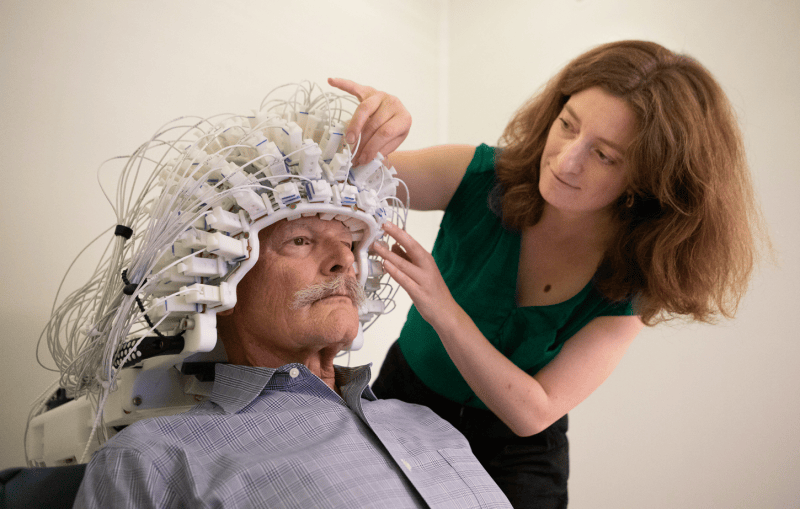
Both of the 7T fMRI and OPM-MEG imaging techniques are essential for the project to succeed. 7T fMRI is useful for tracking brain activity in specific areas, but cannot record time well. OPM-MEG can image with millisecond precision, but it struggles to track the specific location of the brain signal. “If you use only one, you’re losing out on important aspects,” Akibiyik said.
Researchers are optimistic that the project will revolutionize neuroscience research and clinical care. “We’re scientists. Instead of using readily available technologies, we develop new technology. We have an opportunity to use things that haven’t been used before,” said psychology professor Kalanit Grill Spector, one of the leaders of the project’s data collection efforts.
The team is awaiting Institutional Review Board approval to recruit participants.
The Stanford Digital Brain Project joins other efforts to develop neural-predictive technologies such as Meta’s initiative Transformer for In-silico Brain Experiments (TRIBE). TRIBE, which was one of the main inspirations for the research team, collects data to construct a digital twin of neural activity to understand how the brain processes complex stimuli. Meta hopes it will enable neuroscientists to accelerate breakthroughs and test theories without requiring human subjects.
“It’s one of the most successful kinds of brain foundation models,” Poldrack said. In their 2026 paper, Meta demonstrated how much the model improves given the amount of data. Poldrack is inspired by Meta’s breakthroughs.
“[The paper] shows that we’re far from being at the limit,” he said. The team hopes to develop their model with deep data, accrued from a smaller cohort.
If the project succeeds, Poldrack says it will be magnitudes larger than any existing data sets. “We will share the data so that other people can take advantage of them as well,” he says.
The project not only aims to expand the field of neuroscience, but also to transform how scientists collaborate. “I haven’t seen an effort like this. Where so many different professor investigators and labs come together to work on this shared project and goal,” said Grill-Spector. “This could be a new way of doing science.”