
Carla Galaise ’27 has been food insecure her entire life. In her words, it’s been “exhausting.”
Before moving to Stanford, Galaise attended community college as a single mother, relying on food stamps and her school’s food pantry to support herself and her son, now 11 years old.
“I came to class so foggy-headed. When you don’t have those basic needs met, nothing else really matters,” Galaise said. “Even if you have food in the moment, if you don’t know where it’s going to be tomorrow, it messes with [you].”
Nearly one in eight Americans receive food stamps from the Supplemental Nutrition Assistance Program (SNAP). Recipients, such as Galaise, faced food stamp delays during the longest U.S. government shutdown in history, which lasted 43 days and ended Wednesday night.
California used state money to fund its SNAP program, CalFresh, during the shutdown. “Benefits were delayed due to the Trump administration’s decision to oppose the issuance of full benefits during the shutdown,” the California Department of Social Services (CDSS) website states.
Mona Hicks, the senior associate vice provost and dean of students, wrote to The Daily that the Dean of Students Office (DoS) does not have aggregate data on how SNAP cuts impacted Stanford students.
“DoS is aware of individual students who rely on those funds. As a result, we are continuing to work in close collaboration with our campus partners, particularly FLISSC [First-Generation and/or Low-Income Student Success Center],” Hicks said.
Now that the shutdown is over, benefits will continue as usual. For people who recently applied to CalFresh, the CDSS website states benefits may be delayed but will be provided soon.
Worried about her food stamps during the shutdown, Galaise said she switched out of “thriving” and back to “surviving,” saving money and food stamps in case of total SNAP cuts.
“The only reason I knew to do that is because I’ve experienced losing my food stamps, and it sparks all of those survival skills,” she said.
About a week into November, despite warnings from SNAP about cuts, she received all of her food stamps. “I was so relieved. At Stanford, it’s all about, how can you thrive? If you’re still surviving, then you feel like you’re left behind,” she said.
While her role as a food security advocate has helped Galaise feel more comfortable sharing her story, she said that food insecurity is “absolutely stigmatized” at Stanford.
“Food insecurity here looks extremely different than it does at community college, but it’s still happening,” she said. “I think that’s important to talk about because this is the one place you think it wouldn’t be happening.”
When she arrived at Stanford, she felt “such embarrassment” about food insecurity.
“People just don’t want to talk about it. I was like, ‘I can’t go to the dean’s office and ask them for food. I’m the only one experiencing that,’” Galaise said.
Now, Galise works as a student office assistant and basic needs intern at DoS, providing in-person administrative and office support. Since the beginning of the shutdown, DoS has heard directly from students on SNAP or CalFresh benefits who have been struggling, Hicks said.
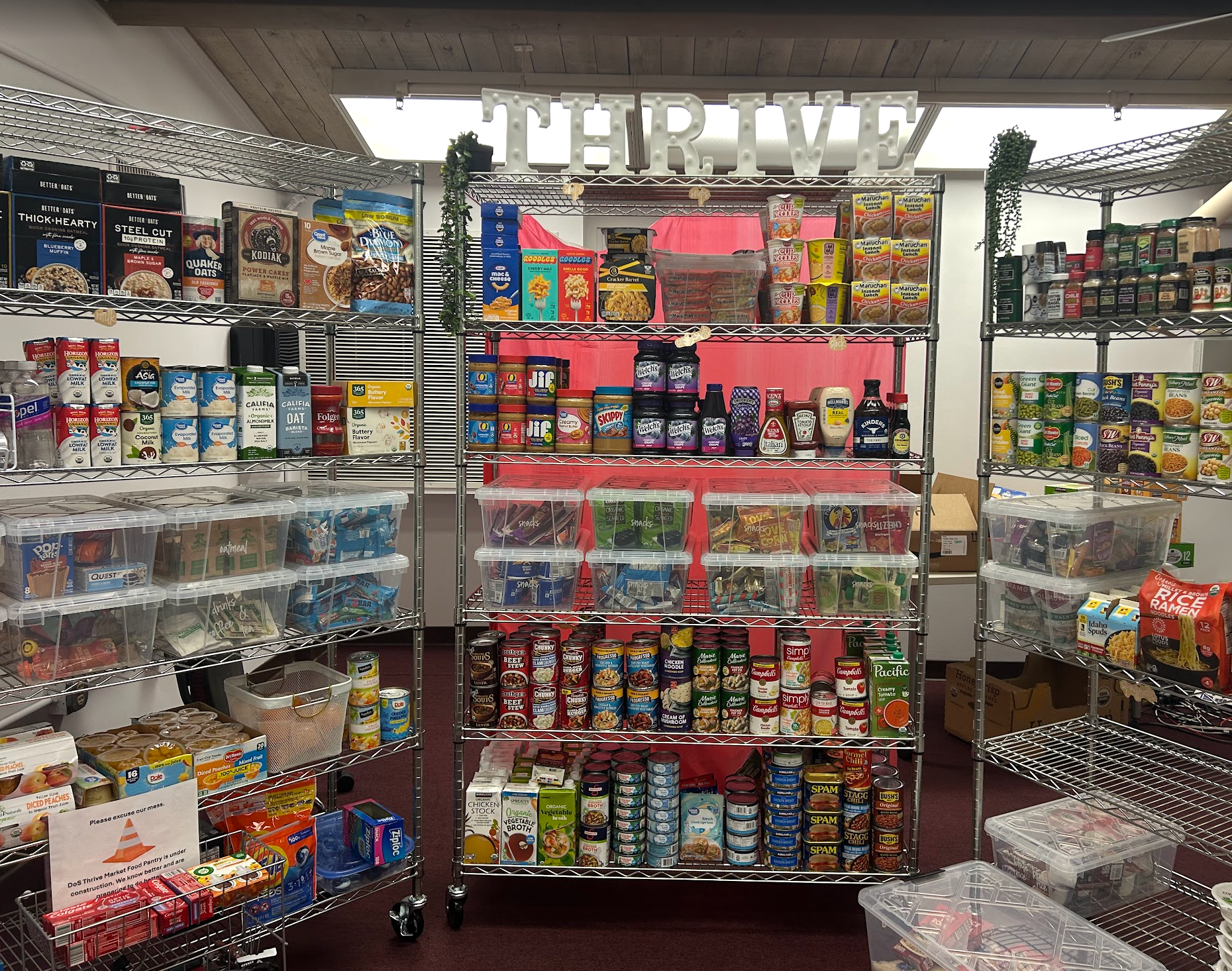
Along with developing a basic needs webpage of resources, DoS opened Thrive Market food pantry on Nov. 3. The market, which DoS is building out with shelf-stable foods, is located on the second floor of Tresidder Memorial Union. The disruption to SNAP funding prompted a “rush to get food on the shelves” so students could find resources on campus during the uncertainty of the shutdown.
Other resources available to students like Galaise include Stanford Residential and Dining Enterprises (R&DE), which hosts monthly food pantry pop-ups where eligible students can receive produce, dairy, eggs and non-perishable items at no cost. Additionally, Territorial Markets is offering a SNAP Special Program to provide free groceries to those impacted by SNAP cuts.
Several off-campus clubs are also helping provide food resources. From Nov. 17-21, two Palo Alto Rotary Clubs and a Kiwanis Club are holding a food drive for the Downtown Streets Team Food Closet at All Saints Episcopal Church Palo Alto.
Richard Schoelerman, a member of the Rotary Club, said his club has been helping the food closet for almost two years. In light of possible SNAP delays, this week’s food drive will support people who need extra food assistance at this time.
“Working with the other two service clubs, we decided that all three of us could do a better job of raising more food donations,” Schoelerman said. “It just so happens that it came at this time where the government shutdown came along.”